
Palacio de La Moneda, a neoclassical landmark in Santiago de Chile
Published on 09/03/2026 at 18:30 | Editorial responsibility: Rafael Müller, Editor-in-Chief AD HOC NEWS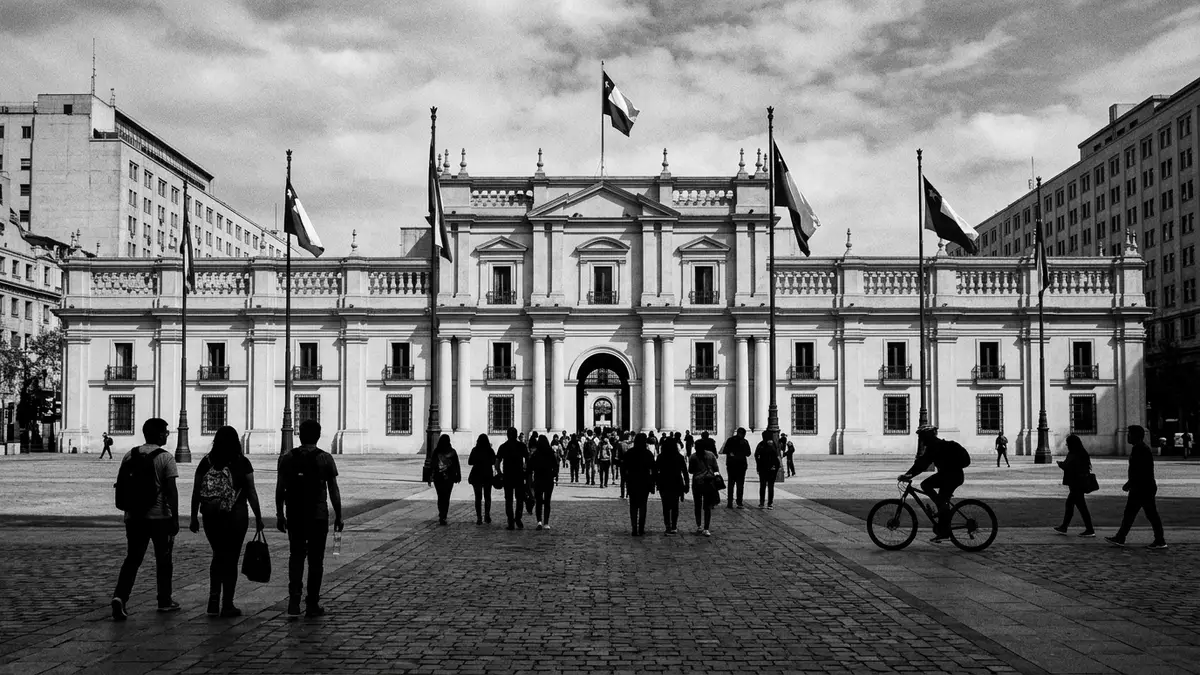
Palacio de La Moneda in Santiago de Chile is a neoclassical government palace that occupies an entire city block and serves as the seat of the President of Chile. Designed in the late eighteenth century and inaugurated as a mint in 1805, it later became the presidential palace in the nineteenth century, giving the building a layered political and architectural character that visitors can trace in its façades and courtyards.Inaugurated in 1805
From royal mint to presidential palace
Palacio de La Moneda began life at the end of the eighteenth century as a purpose-built mint for the Kingdom of Chile, reflecting the importance of Santiago as a colonial administrative centre.Originally built to house the first Mint The project was entrusted to the Italian architect Joaquín Toesca, who had trained in Rome and brought European neoclassical principles to the emerging capital, giving the building its clear lines and balanced proportions.Proyecto ideado por Joaquín Toesca
The palace was inaugurated in 1805 as the Royal Mint of Santiago, housing workshops and machinery for producing coins for the Spanish Crown in the Americas.Fue inaugurado en 1805 para servir como sede de la Real Casa de Moneda After Chile achieved independence, the building took on a different role: since 1845 it has served as the seat of the executive branch of the Republic of Chile, housing the offices of the President of the Republic along with ministries linked to the presidency.Seat of the executive branch since 1845
Neoclassical architecture on a full city block
Architecturally, Palacio de La Moneda is an example of neoclassicism with Roman Doric influences, expressed in a horizontal composition that emphasises order and symmetry in its façades.Neoclassical style with Roman Doric influences The main elevation faces Moneda Street and presents a rhythm of pilasters and evenly spaced openings, with a central entrance framed by classical detailing that announces the building’s governmental function to anyone approaching from the north.
The palace occupies an entire block in Santiago’s Civic District, bordered by Moneda Street to the north, Morandé Street to the east, Alameda del Libertador Bernardo O’Higgins to the south and Teatinos Street to the west.Occupies an entire block in the Civic District Its setting is framed by two public squares: Plaza de la Constitución lies to the north and Plaza de la Ciudadanía to the south, so the building is literally embedded in the civic landscape of central Santiago.Flanked by Plaza de la Constitución and Plaza de la Ciudadanía
Courtyards and government life inside La Moneda
Behind its neoclassical façades, Palacio de La Moneda is organised around courtyards that bring light into the surrounding offices and ceremonial rooms. One of these interior spaces, the Patio de los Naranjos, is a named courtyard associated with the palace and forms part of the route through the building between its northern frontage and the governmental areas further inside.Patio de Los Naranjos
Palacio de La Moneda serves as the official seat of the President of Chile and houses offices linked to the Ministry of the Interior, the General Secretariat of the Presidency and the General Secretariat of Government.Seat of the president and three cabinet ministers This mixture of courtyards, administrative wings and ceremonial spaces means that the palace is both an architectural object and an active centre of government, with its stone façades facing the plazas and its interior spaces accommodating the daily workings of Chile’s executive power.
Visiting Palacio de La Moneda: what travellers from Western Europe should know
- Palacio de La Moneda stands in the Civic District of central Santiago de Chile, occupying a full block between Moneda, Morandé, Alameda del Libertador Bernardo O’Higgins and Teatinos streets.
- The terrain around the palace is urban and level, with paved plazas such as Plaza de la Constitución to the north and Plaza de la Ciudadanía to the south providing broad open spaces.
- The building lies close to central metro stations on the Santiago network, including Estación Moneda and Universidad de Chile, which connect the area to other neighbourhoods.
- The official language is Spanish and the currency is the Chilean peso.
- Entry requirements depend on your nationality; UK travellers can check the FCDO travel advice at gov.uk/foreign-travel-advice, Irish travellers the Department of Foreign Affairs at ireland.ie.
Searching for Palacio de La Moneda on social platforms
These links open searches for Palacio de La Moneda on each platform.
Frequently asked questions about Palacio de La Moneda
Where is Palacio de La Moneda located in Santiago de Chile?
Palacio de La Moneda is in the Civic District of central Santiago de Chile, occupying a full city block bordered by Moneda, Morandé, Alameda del Libertador Bernardo O’Higgins and Teatinos streets.
What can visitors expect when they see Palacio de La Moneda?
Visitors encounter a neoclassical government palace with stone façades, interior courtyards and broad plazas to the north and south that frame the building in the city centre.
What makes Palacio de La Moneda distinctive among government buildings?
Palacio de La Moneda is distinctive for combining its original role as an eighteenth-century mint with its later function as the presidential palace, all expressed in a neoclassical, full-block composition.


