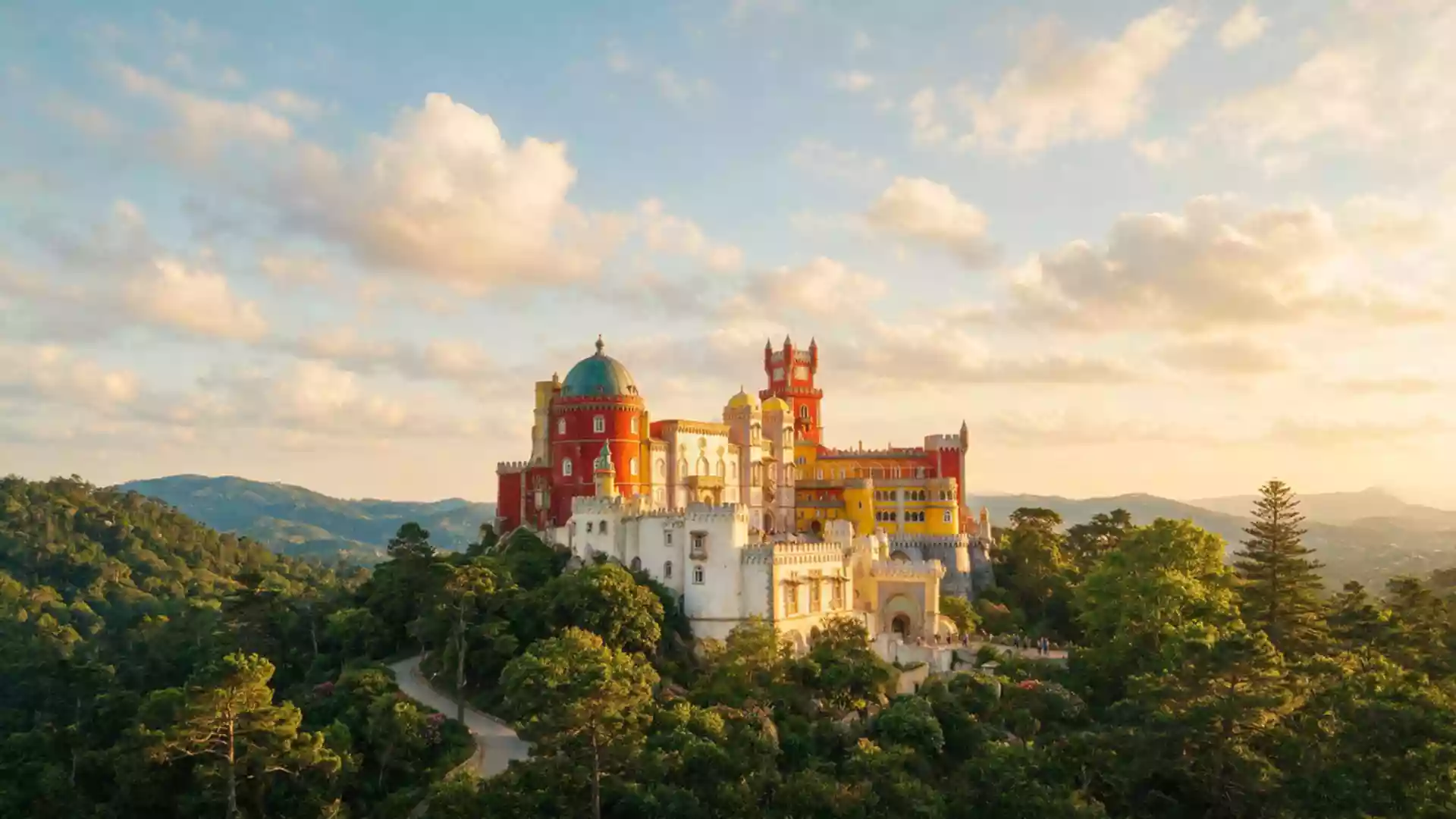
Palacio da Pena, Sintra’s Romantic hilltop palace of colour
Published on 09/01/2026 at 16:51 | Editorial responsibility: Rafael Müller, Editor-in-Chief AD HOC NEWS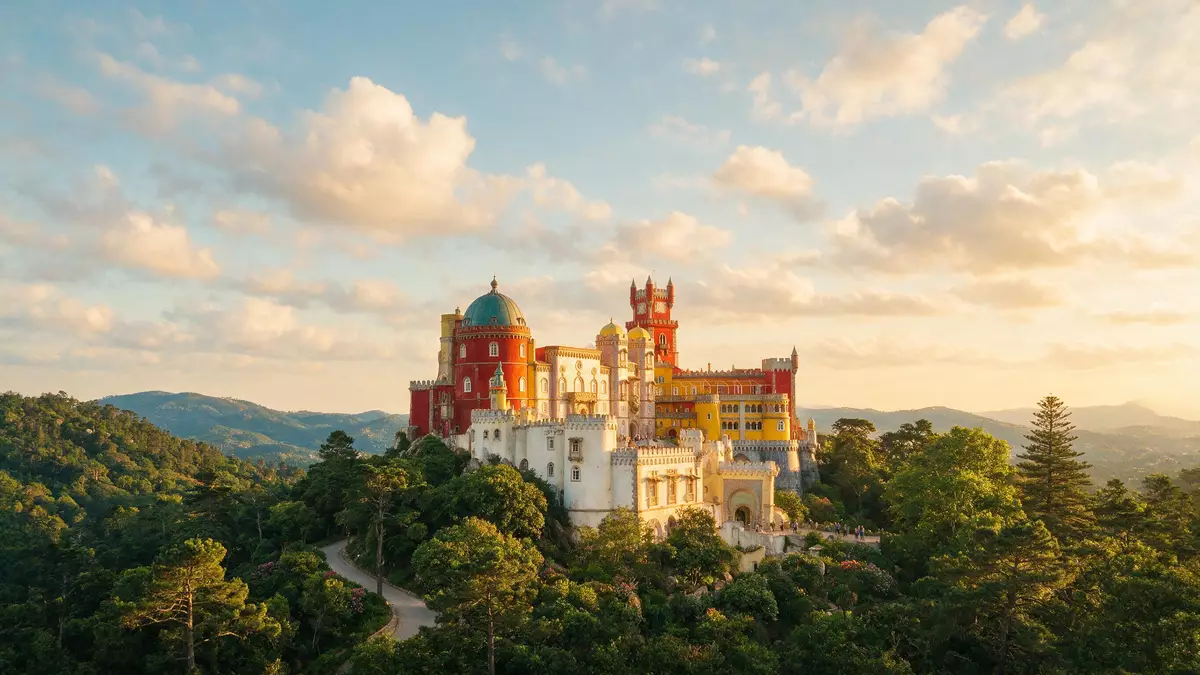
Palacio da Pena crowns a rocky summit above Sintra in Portugal, where a 19th?century Romantic palace wraps around the remains of a sixteenth?century monastery in vivid colour and eclectic forms.Palácio Nacional da Pena The complex took shape under King Ferdinand II in the nineteenth century and became part of the Cultural Landscape of Sintra recognised on the UNESCO World Heritage List in 1995.World Heritage listing
A Romantic palace woven around a monastery
The hilltop where Palacio da Pena stands has a long religious history, marked by the Real Monastery of Our Lady of Pena founded in the early sixteenth century under King Manuel I.early sixteenth?century monastery Parts of that convent, including cloister ranges and the chapel, remain embedded in the northern sector of the palace, where more compact courtyards and thick walls recall the monastic origin.
The transformation from monastery to palace is tied to Ferdinand II, a German?born prince who became king of Portugal through his marriage to Queen Maria II and acquired the ruined convent and surrounding forest in 1838.purchase in 1838 Construction of the palace complex unfolded from the late 1830s into the middle of the nineteenth century, with major works recorded between 1839 and 1849 and completion around 1854, creating one of Portugal’s earliest Romantic palaces.works between 1839 and 1849
Eclectic architecture and vivid colours
Palacio da Pena is widely described as a major expression of nineteenth?century Romanticism in architecture, combining revivalist styles and historical references on a single crag.Romanticism in architecture The overall composition fuses Neo?Manueline motifs with elements of Neo?Gothic, Neo?Moorish and Romanesque Revival, set against stretches of wall in strong colours that stand out against the surrounding vegetation.revivalist mix of styles
The design is closely associated with Baron Wilhelm Ludwig von Eschwege, a Prussian engineer and architect who worked for Ferdinand II in the 1840s, drawing on Central European castle imagery and combining it with Portuguese decorative traditions.Baron Wilhelm Ludwig von Eschwege Visitors encounter towers with battlements, terraces with balustrades and sculpted figures such as the monumental Triton beneath an entrance, alongside azulejo tile panels and carved stonework that tie the exuberant silhouette back to Iberian craftsmanship.
Palace interiors and the surrounding park
Inside Palacio da Pena, many rooms preserve the character of a nineteenth?century royal summer residence, with period furniture, textiles and decorative schemes that reflect Romantic taste.royal summer residence interiors Staterooms, smaller chambers and service areas occupy both the former convent quarters and the later palace wings, creating a sequence where monastic masonry and more ornate plasterwork coexist.
The palace is set within an extensive park laid out in the nineteenth century, where paths thread through dense planting and rocky outcrops, framing views of the colourful buildings above and of the wider Sintra hills.park and hill setting Together, the palace and its park form a key component of the Cultural Landscape of Sintra, a World Heritage site that links historic residences, gardens and rugged topography.
Visiting Palacio da Pena: what travellers from Western Europe should know
- Palacio da Pena stands on the Sintra mountains west of Lisbon, above the town of Sintra, reached by road from the town and by paths through the surrounding park.
- The approach from Sintra involves an ascent on foot or by vehicle along steep, winding routes, and movement within the complex includes staircases and terraces at varying levels.
- The palace lies within Portugal, where the official language is Portuguese and the currency is the euro.
- Other historic sites of the Sintra hills, including Moorish fortifications and additional palaces, lie within sight of the grounds and can be combined in one wider visit.
Searching for Palacio da Pena on social platforms
These links open searches for Palacio da Pena on each platform.Frequently asked questions about Palacio da Pena
Where is Palacio da Pena located?
Palacio da Pena is situated on the Sintra mountains above the town of Sintra in Portugal, forming part of the wider Cultural Landscape of Sintra.
What can visitors expect during a visit?
Visitors encounter a nineteenth?century Romantic palace with colourful towers, historic interiors and a surrounding park of paths, viewpoints and dense planting on steep terrain.
What makes Palacio da Pena distinctive among European palaces?
Its eclectic mix of revivalist styles, vivid colours and integration of a sixteenth?century monastery on a rugged summit give Palacio da Pena a striking character within European Romantic architecture.