
Otaru Unga preserves a working port in stone and water
Published on 09/24/2026 at 02:37 | Editorial responsibility: Rafael Müller, Editor-in-Chief AD HOC NEWS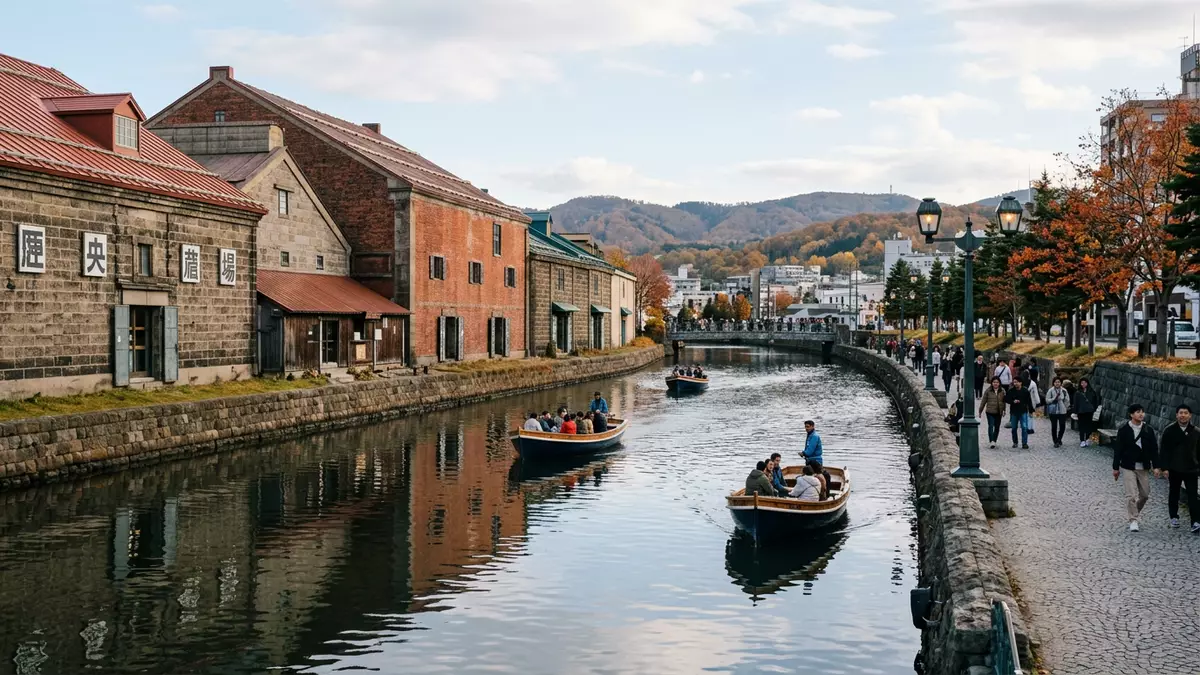
Otaru Unga is a 1,140-metre waterway beside the historic port of Otaru in Hokkaido, Japan. Its curving channel, stone warehouses and gas lamps preserve a visible connection between maritime commerce and the city’s cultural life.
Otaru Unga and the making of a port waterway
Otaru Unga was completed in 1923 after a reclamation project that ran from 1914. The work created a waterway between the shoreline and reclaimed land running parallel to the coast.
The channel measured 40 metres wide in its original form. Warehouses stood along the reclaimed side, with bridges connecting the new land to the mainland. Barges used the waterway to move cargo between ships anchored in the bay and storage buildings beside the shore. The canal’s 1923 completion and original design remain central to its identity.
Its history belongs to the Meiji and Taisho periods, when Otaru developed as a commercial port. Trade, coal and the herring industry shaped the city’s economic geography. The railway connection to inland coalfields also strengthened the harbour’s role within Hokkaido.
Stone warehouses along Otaru’s waterfront
The canal is lined with heavy stone warehouses built for the trading port in the late nineteenth and early twentieth centuries. Their long façades face the water, while tiled roofs and repeating windows create a continuous architectural edge.
These buildings no longer function as cargo stores. Restaurants, shops and museums occupy former warehouses, placing food, retail and cultural displays inside structures linked to Otaru’s maritime trade. The warehouse buildings beside the canal are part of the area’s architectural character.
A paved walkway follows the channel. Gas lamps line the waterfront, and their warm light reflects on the water after dusk. The combination of masonry, water and illumination gives Otaru Unga a clearly defined streetscape without separating the historic fabric from the city around it.
The northern section retains the canal’s original width and has small vessels along the water. Other sections have walking paths beside the channel. This creates a distinction between a waterway that retains working harbour associations and a promenade used for urban strolling.
From cargo route to preserved townscape
Otaru Unga lost its former freight role as cargo-handling methods changed. A wharf completed in 1937 enabled steamships to unload without the same reliance on barges. The canal subsequently became associated with disused vessels and declining port activity.
In 1966, plans proposed reclaiming the canal and removing warehouses for a broad road. Residents organised a preservation movement in 1973, linking the waterway with Otaru’s historic townscape. The campaign lasted through the 1970s and reached a compromise in the 1980s.
Part of the canal was reclaimed for a road, while the remaining waterway was retained. Walkways and gas lamps were added, and warehouse buildings were restored for new uses. This change left Otaru Unga as a place where industrial history is visible through structures that also support contemporary urban life.
The preserved channel is therefore not a frozen industrial relic. It is a public waterfront composed of a historic waterway, adapted warehouses, bridges, paved paths and boats. Its identity rests on the close relationship between those elements.
Visiting Otaru Unga: what travellers from Western Europe should know
- Otaru Unga lies in Minatomachi, beside Otaru’s harbour. JR Otaru Station is the principal railway reference point, and the canal is reached on foot from the station.
- The waterfront route follows paved paths beside the water. Bridges, warehouse fronts and gas lamps form the main features along the walk.
- The northern section retains the original 40-metre width. Small fishing vessels and cruise boats occupy parts of the channel.
- The official language is Japanese and the currency is the Japanese yen.
- Entry requirements depend on your nationality; UK travellers can check the FCDO travel advice at gov.uk/foreign-travel-advice, Irish travellers the Department of Foreign Affairs at ireland.ie.
Searching for Otaru Unga on social platforms
These links open searches for Otaru Unga on each platform.
Frequently asked questions about Otaru Unga
Where is Otaru Unga?
Otaru Unga is in Minatomachi, beside the harbour of Otaru in Hokkaido, Japan. JR Otaru Station provides the main railway connection to the waterfront.
What can visitors expect at Otaru Unga?
The waterfront includes a paved walkway, gas lamps, bridges, stone warehouses and sections of visible canal water. Former warehouses contain restaurants, shops and museums.
What makes Otaru Unga distinctive?
Its 1923 waterway preserves the layout of a reclaimed harbour canal. Stone warehouses and adapted public spaces keep the former freight route legible within Otaru’s urban waterfront.


