
Onze-Lieve-Vrouwekathedraal in Antwerpen and its soaring Brabant Gothic tower
Published on 09/21/2026 at 19:25 | Editorial responsibility: Rafael Müller, Editor-in-Chief AD HOC NEWS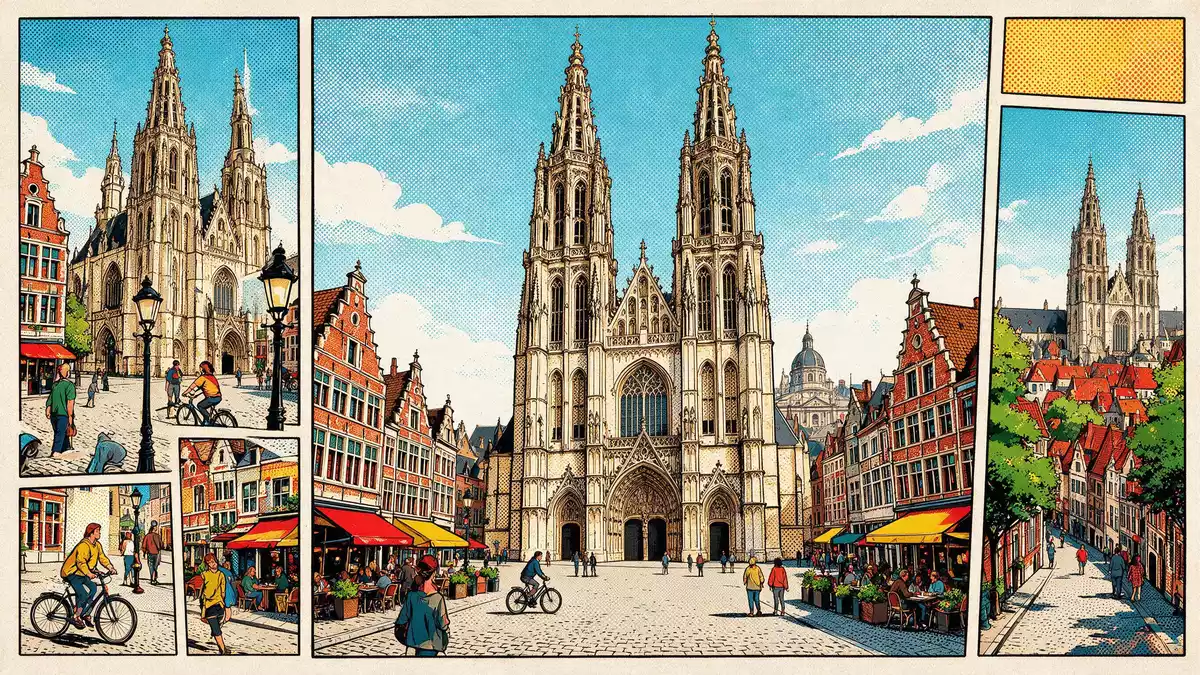
Onze-Lieve-Vrouwekathedraal, known in English as the Cathedral of Our Lady, dominates the historic centre of Antwerpen with a soaring Gothic tower and a broad stone church dedicated to Mary. Rising above the Handschoenmarkt and neighbouring squares, it serves as the seat of the Roman Catholic Diocese of Antwerp and as a major example of Brabant Gothic architecture in Belgium.
A Gothic giant rooted in centuries of Marian worship
The story of Onze-Lieve-Vrouwekathedraal reaches back many centuries before its Gothic walls and tower took shape. Worship of Our Lady on this site began with a modest chapel that stood here in the medieval period, an early focus of devotion in what would become Antwerpen’s central district.chapel dedicated to Mary In 1124 this early place of worship acquired parish status and developed into a larger Romanesque church, whose foundations remain beneath the present cathedral and underline the depth of continuity on the site.larger Romanesque church
Construction of the existing Gothic church began in 1352, an ambitious undertaking that aimed to create the largest Gothic church in the Netherlands of that period.construction was begun in 1352 Work on the fabric continued for nearly 170 years, and the church was completed in 1521, giving Antwerpen a vast late medieval cathedral that still anchors the Old Town today.completed in 1521 Only later, in 1559, did the building become the cathedral of Antwerp when it was designated as the diocesan seat, a status it retains in its present form.made the Diocese church of Antwerp in 1559
Brabant Gothic architecture and the tall northern tower
Architecturally, Onze-Lieve-Vrouwekathedraal is a landmark of Brabant Gothic, a regional variant of the Gothic style that flourished in the former Duchy of Brabant, now spanning parts of Belgium and the Netherlands.Brabantine Gothic variant The building is constructed primarily of natural stone in raw and light tones, and its exterior displays a dense integration of architectural and sculptural work, with buttresses, pinnacles and tracery combining into a lace-like silhouette against the sky.constructed primarily of natural stone
The most striking element of the ensemble is the tall northern tower, a belfry whose openwork stone spire rises above the city and forms part of the group of belfries in Belgium and France inscribed on the UNESCO World Heritage List in 1999.UNESCO World Heritage designation Originally, the medieval project envisaged two towers of equal height, but only the northern one reached its full development, while the southern side of the west front remained lower and more understated.intention to provide two towers From the surrounding streets and squares, especially the Handschoenmarkt and Groenplaats, the tower’s vertical emphasis contrasts with the long horizontal body of the nave and choir, illustrating how Brabant Gothic combined strong upward lines with a broad ground plan.
An interior of stone, light and renowned artworks
Inside, Onze-Lieve-Vrouwekathedraal reveals a spacious, relatively sober interior typical of Brabant Gothic, where complex structural systems support high vaults above open naves and aisles.sober and open interior architecture Slender stone columns rise to meet the vaulting, and the plan organises chapels and side spaces along the outer walls, so that visitors move between towering arcades, side chapels and views into the choir. Historic episodes, including a destructive fire in 1533 and later iconoclastic damage, were followed by reconstruction and restoration campaigns that shaped the current mixture of medieval fabric and later fittings.destructive fire in 1533
The cathedral is also known for its collection of religious art, particularly altarpieces by Peter Paul Rubens, whose paintings returned to the building in the nineteenth century after having been removed during the French Revolutionary period.Rubens paintings removed and returned These works, set within chapels and on major altars, combine with stained glass, sculpture and liturgical furnishings to create an interior where late Gothic architecture and Baroque art share the same space. Together, the tall tower, the long nave and the significant artworks make Onze-Lieve-Vrouwekathedraal a central reference point for understanding Antwerpen’s religious and artistic heritage.
Visiting Onze-Lieve-Vrouwekathedraal: what travellers from Western Europe should know
- Onze-Lieve-Vrouwekathedraal stands by the Handschoenmarkt in the historic centre of Antwerpen, with entrances facing this square and nearby Groenplaats, reached on foot from the surrounding streets.
- The building’s interior involves movement along stone floors and through chapels and aisles, with staircases in the towers that are narrow and steep compared with ordinary domestic stairs.
- Antwerpen lies in Belgium, where the official languages include Dutch; the national currency is the euro.
Searching for Onze-Lieve-Vrouwekathedraal on social platforms
These links open searches for Onze-Lieve-Vrouwekathedraal on each platform.Frequently asked questions about Onze-Lieve-Vrouwekathedraal
Where is Onze-Lieve-Vrouwekathedraal located?
Onze-Lieve-Vrouwekathedraal stands at the Handschoenmarkt in the historic centre of Antwerpen, with further entrances opening towards Groenplaats and neighbouring streets.
What can visitors expect inside the cathedral?
Visitors encounter a spacious Gothic interior with high vaults, stone columns, side chapels and significant religious artworks, including major altarpieces by Peter Paul Rubens.
What makes Onze-Lieve-Vrouwekathedraal distinctive among European churches?
The combination of its tall northern tower, recognised within a UNESCO World Heritage belfry group, its Brabant Gothic stone architecture and its Rubens artworks gives the cathedral a distinctive profile.


