
Olympic National Park and its three landscapes
Published on 09/12/2026 at 15:55 | Editorial responsibility: Rafael Müller, Editor-in-Chief AD HOC NEWS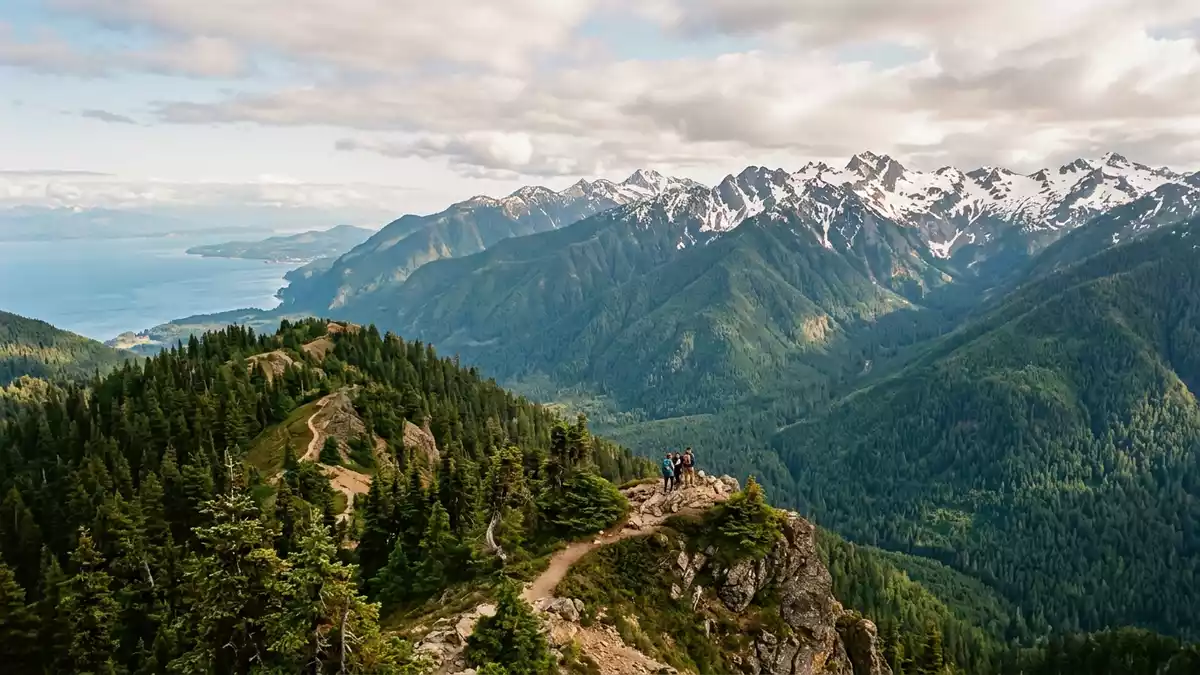
Olympic National Park near Port Angeles stretches from rocky coast to glacier-backed peaks, with ancient forest between the two. Its scale and variety shape the park’s identity as much as any single landmark.
Coast, forest and mountains in one park
The park lies in north-western Washington and reaches across the Olympic Peninsula. Its protected landscapes include a coastline, temperate rainforest and high mountain country, and the park is tied to the Olympic Mountains by name and setting.Olympic National Park
UNESCO describes the place as a national park with exceptional ecosystem diversity, from ocean edge to alpine meadows and glaciated peaks.ecosystem diversity That breadth gives the park its unusual structure: surf, forest and high ridges belong to the same protected landscape.
Port Angeles and the park’s northern gateway
Port Angeles is the practical gateway on the park’s north side. The Olympic National Park Visitor Center and the Wilderness Information Center stand there, and U.S. Highway 101 links the town to the park’s separate spur roads.Port Angeles visitor centre
The approach to Hurricane Ridge rises from Port Angeles on a paved mountain road, and the park’s interior has no road crossing the rugged core. That layout makes the peninsula feel divided into distinct zones rather than a single open plain.Hurricane Ridge road
A park shaped by wilderness designations
Olympic National Park was established in 1938, and its name has long been linked with the wider Olympic Peninsula rather than with one built monument or town. The designation sits beside later UNESCO recognition: biosphere reserve status from 1976 and World Heritage listing in 1981.established in 1938
The park also carries a strong wilderness character, with coast, forest and high ground protected as a connected whole. UNESCO’s description names old-growth forest, wild coastline and glacier-clad peaks as the central elements of that landscape.World Heritage listing
Visiting Olympic National Park: what travellers from Western Europe should know
- Olympic National Park is reached through Port Angeles on the north side, with Highway 101 providing access to the park’s spur roads.
- The park includes a mountainous interior, a coastline and forest land with no road across the centre.
- Hurricane Ridge rises from Port Angeles on a paved mountain road, while some other roads in the park are gravel.
- The Olympic National Park Visitor Center and the Wilderness Information Center are in Port Angeles.
Searching for Olympic National Park on social platforms
These links open searches for Olympic National Park on each platform.
Frequently asked questions about Olympic National Park
Where is Olympic National Park?
It lies in north-western Washington on the Olympic Peninsula, with Port Angeles on its northern edge. The park stretches from coast to mountains across a broad protected landscape.
What does a visit involve?
The park brings together coast, forest and mountain terrain, so a visit can move between very different settings. Roads, trails and visitor facilities are spread across separate parts of the peninsula.
What makes it distinctive?
Its defining feature is the combination of coastline, old-growth forest, alpine meadows and glacier-clad peaks in one national park. UNESCO’s World Heritage description also places strong emphasis on that ecological range.


