
Old Trafford, Manchester’s enduring football bowl
Published on 09/12/2026 at 06:12 | Editorial responsibility: Rafael Müller, Editor-in-Chief AD HOC NEWS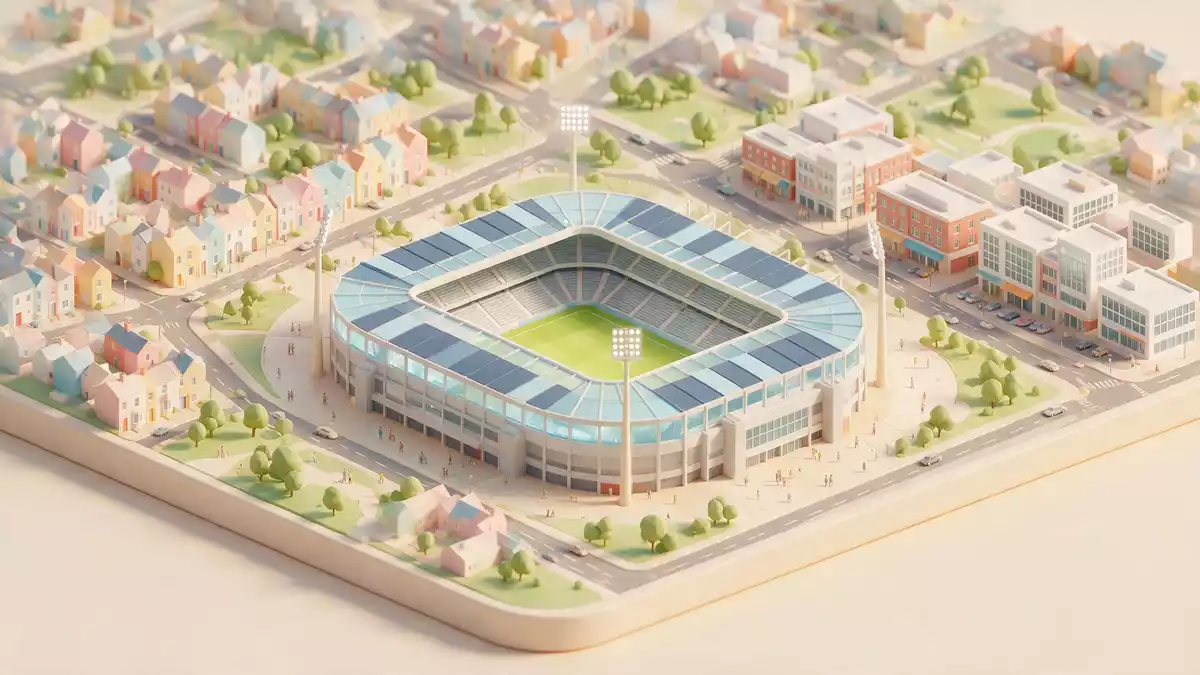
Old Trafford in Manchester is the football stadium in the Trafford district that has served as the home ground of Manchester United since 1910. The ground’s defining feature is its broad, enclosed bowl of stands wrapped around a single rectangular pitch, a form rooted in early twentieth?century football architecture and gradually reshaped through later expansions.football stadium in the Trafford district
From Archibald Leitch’s 1910 stadium to the Theatre of Dreams
The story of Old Trafford begins in the years just before the First World War, when Manchester United left their earlier ground at Bank Street for a purpose?built stadium beside the Bridgewater Canal. Club chairman John Henry Davies engaged Scottish architect Archibald Leitch, already known for major grounds such as Hampden Park and Craven Cottage, to design the new venue.John Henry Davies engaged the Scottish architect Archibald Leitch Construction work was completed in 1909 and the first competitive match at Old Trafford took place on 19 February 1910, when Manchester United faced Liverpool in a league fixture.construction 1909–1910 and inauguration on 19 February 1910
Leitch’s original design gave Old Trafford the character of a large rectangular pitch surrounded by open terraces on three sides and a covered stand along the south touchline. That arrangement reflected the priorities of early professional football, with most spectators standing and only one side offering seating under cover.covered stand along the south touchline The capacity at opening was roughly 80,000, placing Old Trafford among the largest football grounds in Britain at the time.originally opened with a capacity of approximately 80,000 Over the decades the stadium acquired its enduring nickname “The Theatre of Dreams”, tied to Manchester United’s long sequence of matches on this pitch.home since 1910 and designed by Archibald Leitch
A bowl of stands shaped by a century of changes
Seen from the outside, Old Trafford reads as a broad rectangle of concrete and steel with four principal stands enclosing the pitch: the Sir Alex Ferguson Stand to the north, the South Stand along the original touchline, and the East and West Stands behind the goals.description of stands and later tiers Inside, the seating rises in tiers, creating a continuous rim of spectators around the grass and reinforcing the impression of a single bowl rather than four separate structures. The corners, once open to the elements, have been progressively filled in with additional tiers, tightening that sense of enclosure and bringing the stands visually together.
The South Stand still occupies the position of Leitch’s original main stand and carries hospitality areas, media facilities and player changing rooms, layered behind the seating. The opposite Sir Alex Ferguson Stand has grown taller through successive extensions, with extra tiers added in the 1990s and early 2000s that push the stadium’s capacity well beyond its all?seater conversion of that era.conversion to all?seater and added second tiers From many seats in the upper levels, the view takes in not only the pitch but also parts of the surrounding Trafford district and the industrial landscape that originally helped define the area.location near Trafford Park industrial estate
War damage, rebuilding and modern football use
Old Trafford’s bowl has not remained unchanged since 1910. During the Second World War the stadium suffered heavy bomb damage because of its proximity to Trafford Park industrial estate, with parts of the stands destroyed and the pitch left unusable.heavily damaged by German air raids during World War 2 Manchester United spent several seasons sharing Maine Road, the home of local rivals Manchester City, while rebuilding work took place.shared Maine Road from 1941 to 1949 due to war damage Post?war reconstruction restored the bowl and introduced new roofing and seating arrangements, but retained the essential rectangular layout established by Leitch.
Later decades brought further changes, especially as football moved towards all?seater stadia. Standing terraces such as the famous Stretford End were converted into seated areas, and roofs were extended or rebuilt to cover larger sections of the crowd.post?war rebuilding and later roof extensions Old Trafford has hosted league matches, FA Cup ties and international fixtures, making its bowl the stage for a wide range of football occasions.FA Cup ties and international fixtures The pitch dimensions and seating arrangement meet modern requirements for top?level football, yet traces of early twentieth?century stadium design remain visible in the proportions of the stands and the relationship between the main stand and the rest of the bowl.
Visiting Old Trafford: what travellers from Western Europe should know
- Old Trafford stands on Sir Matt Busby Way in the Trafford district of Manchester, west of the city centre, and is reached by local rail and tram services that serve the surrounding area.
- The stadium interior is spread across multiple tiers of seating reached by staircases and concourses, with significant climbs to the upper levels and long walks around the bowl on match days or tours.
- The immediate surroundings include the Bridgewater Canal and large commercial developments, so approaches on foot pass between water, stadium structures and urban streets rather than open parkland.
- The official language is English and the currency is the pound sterling.
Searching for Old Trafford on social platforms
These links open searches for Old Trafford on each platform.
Frequently asked questions about Old Trafford
Where is Old Trafford located in Manchester?
Old Trafford stands on Sir Matt Busby Way in the Trafford district of Manchester, close to Trafford Park and the Bridgewater Canal in north?west England.
What can visitors expect when they enter the stadium bowl?
Visitors encounter a continuous ring of stands around a single grass pitch, with seating on several tiers and long internal concourses that follow the rectangular form of the stadium.
What makes Old Trafford distinctive among football grounds?
Its character comes from the combination of Archibald Leitch’s early twentieth?century stadium layout, later expansion into a full bowl of stands and its uninterrupted role as Manchester United’s home ground since 1910.


