
Old San Juan and the masonry that encircles a Caribbean city
Published on 09/24/2026 at 04:30 | Editorial responsibility: Rafael Müller, Editor-in-Chief AD HOC NEWS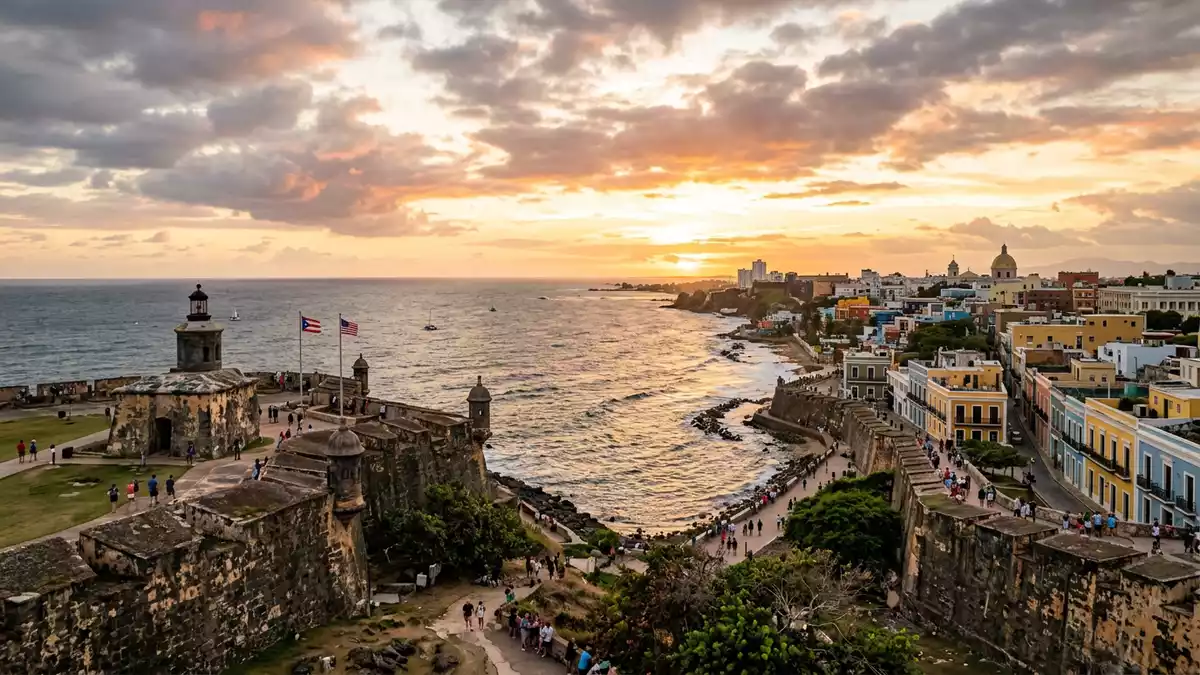
Old San Juan occupies a historic islet at the entrance to San Juan Bay, where streets, plazas and masonry defences form a tightly woven urban landscape. The district’s most visible feature is its fortification system, built across centuries and joined to La Fortaleza, Castillo San Felipe del Morro and Castillo San Cristóbal.
Old San Juan: a city framed by fortifications
The walls are not isolated monuments placed beside the city. They run through its historic fabric, enclosing streets and connecting civic buildings with gates, bastions and defensive platforms. Masonry surfaces, steep slopes and broad views towards the bay give the district a physical character unlike an ordinary colonial quarter.
Construction of the city’s defensive works began during the Spanish colonial period. The system developed from the sixteenth century into the twentieth century, combining European military architecture with the conditions of a Caribbean harbour. Its principal materials include sandstone, brick and plaster, with repairs and additions visible across the surviving structures. the UNESCO World Heritage property includes La Fortaleza, several forts and a large portion of the original city wall.
From Spanish stronghold to living historic district
San Juan was settled by Spain in the early sixteenth century, and defensive construction followed the establishment of the city. La Fortaleza belongs to this early history. Its functions have included fortress, arsenal, prison and residence of the Governor-General; it serves as the seat and residence of the Governor of Puerto Rico.
Castillo San Felipe del Morro occupies the rocky western edge of the islet. Its layered walls, ramps and lookout points face the entrance to San Juan Bay. Castillo San Cristóbal rises on the eastern side of the old city, while San Juan de la Cruz, known as El Cañuelo, stands across the water. Together, these structures show how the harbour was defended from several positions. the principal fortifications form the central historic group associated with Old San Juan.
Plazas, gates and the colour of the old city
Old San Juan is also a street-level city of public squares, churches, civic buildings and compact blocks. Painted façades line streets paved with stone, while balconies, shutters and arcades add detail above the carriageways. The result is a district where military architecture and everyday urban life occupy the same small area.
The San Juan Gate remains in the western section of the wall. The gate once formed part of the city’s main access system, while the wall itself enclosed the settlement and protected its inhabitants. The fortifications retain evidence of several architectural languages, including Italian Renaissance, Baroque and French Enlightenment influences. the surviving San Juan Gate links the defensive circuit with the streets inside it.
Old San Juan entered the UNESCO World Heritage list in 1983 together with La Fortaleza and San Juan National Historic Site. The designation records a connected group of buildings, walls and harbour defences rather than a single monument. the Spanish fortification system reflects more than four centuries of military architecture in the Caribbean.
Visiting Old San Juan: what travellers from Western Europe should know
- Old San Juan lies on the historic islet beside San Juan Bay. Streets from the modern city lead into the district, and local buses and taxis connect it with wider San Juan.
- The historic quarter contains slopes, stone paving, steps and broad fortress ramps. El Morro and San Cristóbal include masonry passages, elevated platforms and uneven surfaces.
- The official language is Spanish and the currency is the US dollar.
- La Fortaleza, the city wall, San Juan Gate, El Morro and San Cristóbal are separate landmarks within the same historic district.
Searching for Old San Juan on social platforms
These links open searches for Old San Juan on each platform.
Frequently asked questions about Old San Juan
Where is Old San Juan?
Old San Juan is the historic district of San Juan, Puerto Rico, on an islet beside San Juan Bay. Its streets connect the city’s colonial buildings with harbour fortifications.
What can visitors expect in Old San Juan?
Visitors encounter plazas, churches, painted façades, stone streets, city walls and large forts. The district combines a working urban quarter with preserved military structures.
What makes Old San Juan distinctive?
Its distinctive feature is the relationship between the inhabited city and the defensive circuit around it. La Fortaleza, El Morro, San Cristóbal and the walls belong to a World Heritage property inscribed in 1983.


