Old San Juan, a walled Caribbean city of stone and colour
Published on 09/14/2026 at 21:23 | Editorial responsibility: Rafael Müller, Editor-in-Chief AD HOC NEWS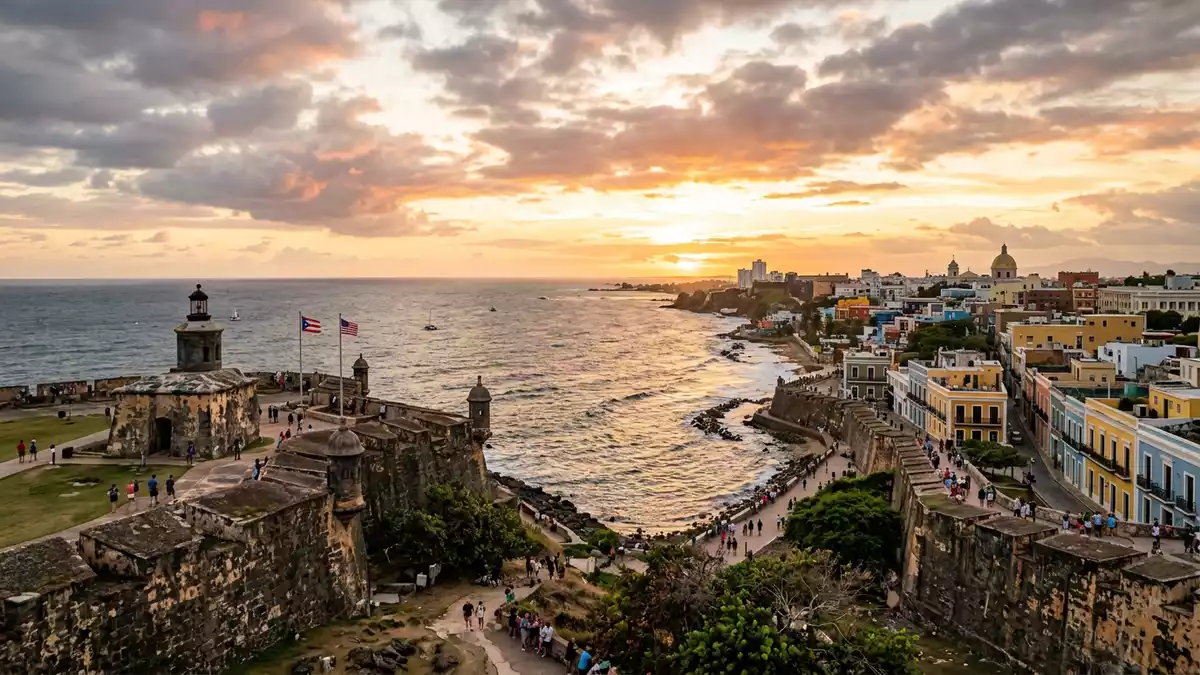
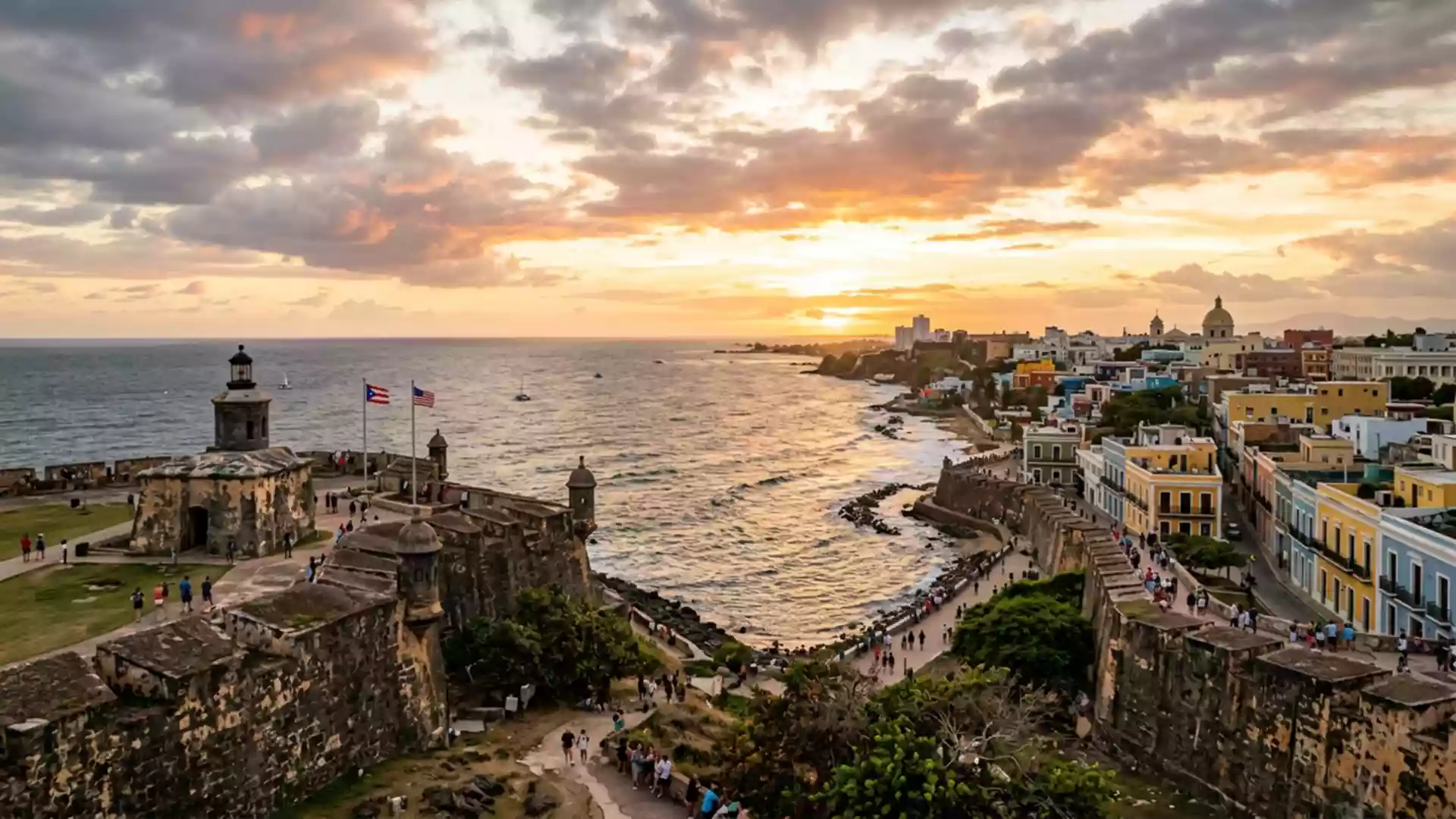
Old San Juan in San Juan, Puerto Rico, is a historic walled city where massive stone fortifications enclose a compact grid of cobbled streets and colourful townhouses from the Spanish colonial era. The district occupies the north-western part of the San Juan Islet and has long served as the historic urban core of Puerto Rico’s capital.
Stone walls and Atlantic bastions
The most striking first impression of Old San Juan is its ring of fortifications, a continuous system of defensive walls and bastions built in masonry along the edges of the San Juan Islet. These structures surround the historic quarter and face both the Atlantic Ocean and the entrance to San Juan Bay, forming a visible reminder of the city’s former role as a strategic harbour for the Spanish empire in the Caribbean.historic colonial district At the western tip of the islet stands Castillo San Felipe del Morro, commonly known as El Morro, a multi-level fortress that projects out towards the sea and guards the bay’s narrow entrance.Castillo San Felipe del Morro
The fortification system, which includes El Morro, Castillo San Cristóbal, La Fortaleza and extensive city walls, has been recognised as part of La Fortaleza and San Juan National Historic Site and inscribed on the UNESCO World Heritage List since 1983.La Fortaleza and San Juan National Historic Site Within the walls, the Old San Juan Historic District is listed in the United States National Register of Historic Places and designated a National Historic Landmark District, underlining its importance as one of the oldest continuously inhabited urban centres in the Americas under United States jurisdiction.Old San Juan Historic District
Grid of cobbled streets and colonial façades
Step inside the walls and Old San Juan reveals a dense urban grid laid out in straight streets that climb and descend between the harbour edge and the interior ridges of the islet. Many of these streets are paved with cobblestones and lined with townhouses that rise to two or more storeys, their façades painted in strong colours and detailed with balconies, window surrounds and doorways that reflect Spanish colonial architectural traditions.cobblestone streets and colourful houses Internal courtyards, arcades and shaded ground floors give the buildings a layered relationship to the narrow streets outside.
Old San Juan occupies a compact area on the San Juan Islet, separated from the main island of Puerto Rico by a narrow stretch of water that forms part of San Juan Bay.Old San Juan occupies 47 hectares Within this area lie numerous squares, churches and civic buildings with masonry construction and tiled roofs, some dating to the sixteenth and seventeenth centuries. Among the notable historic structures are the San Juan Cathedral, the Church of San José and La Casa Blanca, all located within the Old San Juan Historic District and forming part of a streetscape that shows successive layers of Gothic, Renaissance, Baroque and later styles.oldest buildings under U.S. jurisdiction
Layers of history in a Caribbean capital
The origins of Old San Juan reach back to the early sixteenth century, when the Spanish founded the city as a fortified port and capital for their colony on the island of Puerto Rico. Juan Ponce de León, who established an initial settlement inland at Caparra, moved the main town to the present peninsular site on the San Juan Islet during the 1500s to benefit from its harbour and defensible position.city founded in 1509 Over subsequent centuries, the built fabric within the walls took shape as administrative buildings, churches, barracks and merchants’ houses, creating a compact urban landscape that reflected Spanish colonial rule until 1898, when the island passed to United States control following the Spanish–American War.buildings constructed between 1521 and 1898
The historic district is formally recognised as a Puerto Rico Registered Historic Zone and its fortifications have been described as one of the most complete examples of Spanish military architecture in the Caribbean.most complete example of Spanish military architecture Within this framework, the everyday urban fabric of Old San Juan has gained protection and restoration, preserving its straight streets, plazas and façades while accommodating museums, cafés and other uses that occupy the historic buildings. The result is a district where centuries of construction, adaptation and conservation can be read directly in stone, plaster and timber along the streets.
Visiting Old San Juan: what travellers from Western Europe should know
- Old San Juan occupies the north-western part of the San Juan Islet on Puerto Rico’s Atlantic coast, reached by bridges and roads that connect the islet with the wider metropolitan area of San Juan.
- The historic quarter includes long stretches of stone wall, sloping streets and stairways, and some viewpoints near cliff edges above the ocean, so moving around involves gradients, uneven surfaces and occasional narrow passages.
- The official languages are Spanish and English and the currency is the United States dollar.
- San Juan National Historic Site includes Castillo San Felipe del Morro and Castillo San Cristóbal within Old San Juan, and visitors reach these fortifications on foot along cobbled streets and paved paths.
- Entry requirements depend on your nationality; UK travellers can check the FCDO travel advice at gov.uk/foreign-travel-advice, Irish travellers the Department of Foreign Affairs at ireland.ie.
Searching for Old San Juan on social platforms
These links open searches for Old San Juan on each platform.Frequently asked questions about Old San Juan
Where is Old San Juan located?
Old San Juan occupies the north-western part of the San Juan Islet on the northern coast of Puerto Rico, forming the historic quarter of the city of San Juan.
What can visitors expect on a visit to Old San Juan?
Visitors encounter stone fortifications, cobbled streets, plazas and churches within a compact walled district, with historic townhouses and civic buildings arranged along a regular street grid.
What makes Old San Juan distinctive among Caribbean cities?
Old San Juan combines a continuous system of coastal fortifications, recognised as a UNESCO World Heritage property, with a long-inhabited colonial streetscape that preserves early Spanish urban planning and architecture.