Old City of Luxembourg hosted UNESCO walks on 16-18 October
Published on 10/21/2026 at 11:38 | Editorial responsibility: Rafael Müller, Editor-in-Chief AD HOC NEWSUNESCO walks and heritage setting
- The Luxembourg City Tourist Office scheduled UNESCO walks from 16 to 18 October 2026.
- Each route began at Place Guillaume II and explored Luxembourg City’s listed fortifications and old quarters.
- UNESCO inscribed the City of Luxembourg’s Old Quarters and Fortifications in 1994.
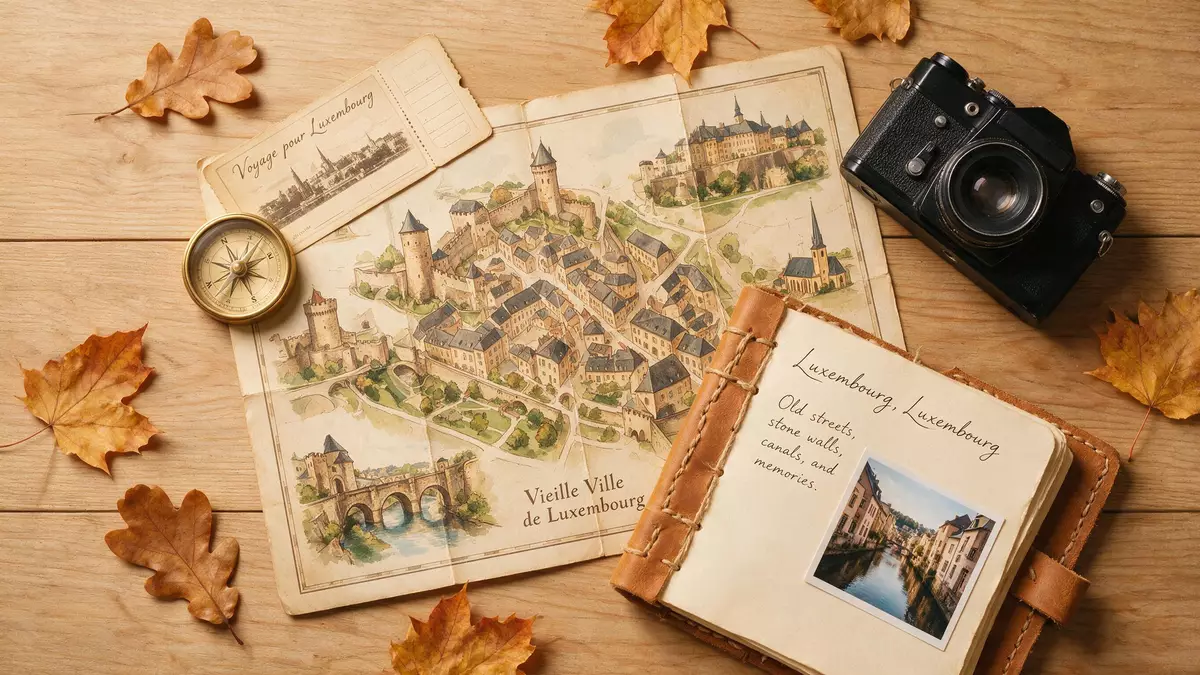
Old City of Luxembourg (Vieille Ville de Luxembourg) was the setting for UNESCO Walks from 16 to 18 October 2026, linking the historic centre of Luxembourg with its listed fortifications. Organised by the Luxembourg City Tourist Office as part of the European Heritage Days, the guided programme showed how the old quarters and defensive remains form one World Heritage property.
UNESCO Walks traced Luxembourg’s old quarters
The programme listed one walk each day at 2.30pm. The English-language walk took place on 16 October, the French-language version on 17 October and the Luxembourgish version on 18 October. The published programme named Luxembourg City as the venue and described the route as a guided discovery of the fortifications and old quarters inscribed on the UNESCO World Heritage List.
The walks began at Place Guillaume II. The City of Luxembourg’s event listing confirmed the three-language schedule and placed the programme within the European Heritage Days from 16 to 18 October 2026. The official heritage programme also identified the Luxembourg City Tourist Office as organiser.
Fortifications connect the city’s historic layers
The walk concerned a World Heritage property that combines the old quarters with surviving elements of a former fortress. UNESCO describes the Old City as standing where the Alzette and Pétrusse rivers meet, on a steep rocky outcrop that provided a natural defensive position.
The site began with a small castle built shortly after the middle of the tenth century. A settlement near it gained a stone defensive wall in the twelfth century, while the fortifications were extended in the fourteenth and fifteenth centuries. Later rulers reinforced the fortress, and the city remained one of Europe’s major fortified sites until the dismantling of its walls in 1867. The UNESCO World Heritage record says that gates, forts, bastions, redoubts and casemates remain among the surviving traces.
That history gave the October programme a direct link to the terrain. Rather than treating the old town as a collection of isolated buildings, the route presented streets, ramparts and river valleys as parts of a fortified urban landscape. The City of Luxembourg’s official event schedule described the walks as taking place on Friday 16, Saturday 17 and Sunday 18 October.
Why the October programme mattered to the World Heritage site
The event was not a general city tour. Its stated subject was the relationship between the old quarters and the fortifications, the two elements named in the World Heritage title. UNESCO inscribed the property in 1994 under criterion (iv), recognising it as an example of a fortified European city with major remains of military architecture.
For visitors, the programme offered a time-specific way to read the centre of Luxembourg through its defensive geography. The steep outcrop, narrow historic streets and surviving military structures are not separate attractions in the official description; together they show how the city developed around defence, administration, worship and trade.
Visiting Old City of Luxembourg: what travellers from Western Europe should know
- The UNESCO Walk programme ran from 16 to 18 October 2026 in Luxembourg City, with one language scheduled for each day.
- The meeting point was Place Guillaume II, and the route concerned the old quarters and fortifications included in the World Heritage property.
- The historic centre lies at the meeting point of the Alzette and Pétrusse rivers, on a steep rocky outcrop with narrow historic streets and surviving defensive structures.
Further European Heritage Days activities took place elsewhere in Luxembourg during the same 16 to 18 October programme, but the UNESCO Walk was the item specifically centred on the old quarters and fortifications.
Searching for Old City of Luxembourg on social platforms
These links open searches for Old City of Luxembourg on each platform.
Frequently asked questions about Old City of Luxembourg
When did the UNESCO Walk take place at Old City of Luxembourg?
The programme ran from 16 to 18 October 2026, with English on 16 October, French on 17 October and Luxembourgish on 18 October.
Where did the UNESCO Walk begin?
Each walk began at Place Guillaume II in Luxembourg City and explored the old quarters and fortifications.
What is Old City of Luxembourg?
It is the historic urban area within the City of Luxembourg’s World Heritage property, recognised with its fortifications by UNESCO in 1994.