
Oia on Santorin: a village carved into the caldera
Published on 08/31/2026 at 12:59 | Editorial responsibility: Rafael Müller, Editor-in-Chief AD HOC NEWS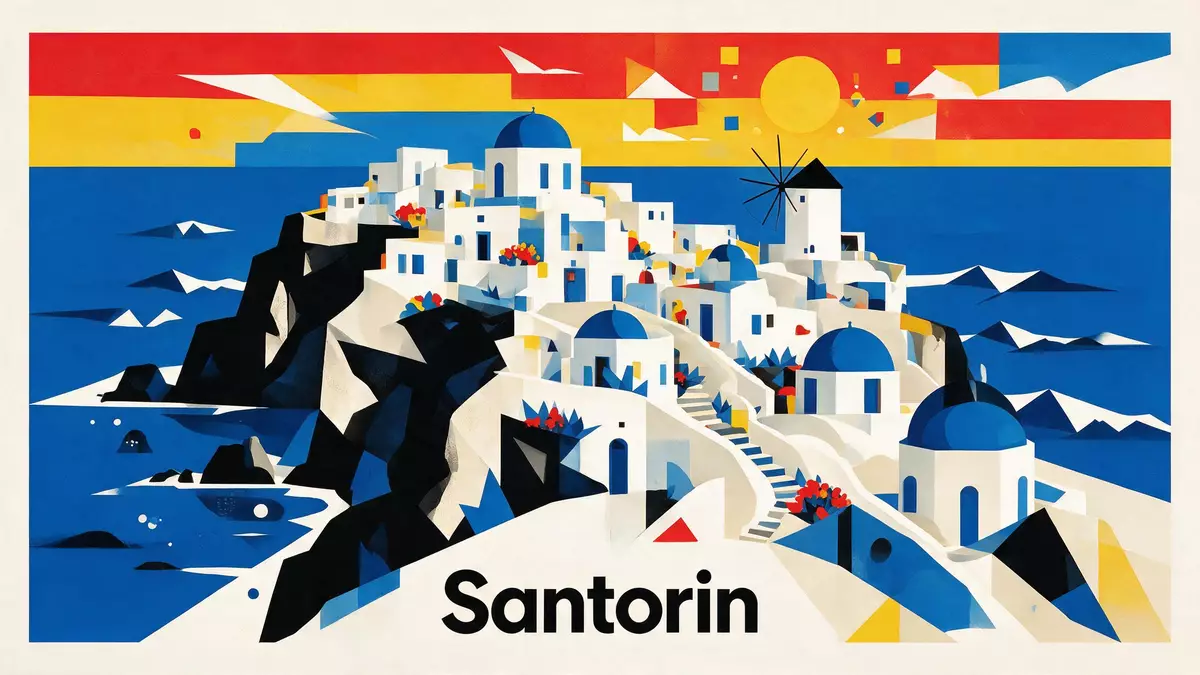
On the north-western edge of Santorin in Greece, Oia stretches along the rim of the island’s volcanic caldera, with whitewashed houses and churches stepping down the cliff towards the Aegean Sea. The village’s form reflects centuries of life built into and above the rock, from excavated cave dwellings to larger captains’ homes linked to its maritime history in the nineteenth century.
Oia along the caldera rim
Oia occupies the northern edge of Santorin’s flooded volcanic crater, forming a long ribbon of settlement above the dark cliffs of the caldera and facing the open Aegean Sea.extends along the northern edge of the caldera Houses, paths and terraces step down from the main ridge, so that much of the built fabric appears to cascade towards the water while remaining anchored to the rock.
The setting is the result of a major volcanic episode in the second millennium BC, when an eruption reshaped the island group and left the sea-filled basin that Oia overlooks.the caldera is a sea-filled volcanic crater From the village, the outer islands that rim the caldera can be seen across the water, while the steep drop below the houses makes the contrast between white façades and dark rock one of the most striking aspects of Oia’s landscape.white buildings cascade down volcanic cliffs toward the Aegean Sea
Cave houses and captains’ homes
Oia’s architecture centres on two main house types associated with different social and economic histories: cave houses cut into the volcanic slope and larger captains’ houses standing above them.two main groups of buildings known as yposkafa and kapetanospita The cave houses, also called hyposkafa, are excavated into the rock, with compact interiors that follow the thickness and strength of the volcanic material. Their façades line the paths and terraces closest to the cliff edge, forming a dense frontage of white walls, small doors and church domes at varying levels.yposkafa residences are carved in the volcanic rocks
Above the zone of cave houses, Oia’s captains’ homes, or kapetanospita, occupy the inland side of the ridge with more expansive layouts and a different relationship to the street.kapetanospita were the captains’ homes These houses reflect the prosperity of Oia’s seafaring community in the eighteenth and nineteenth centuries, when shipowners and captains invested in larger, stone-built residences with distinct façades and elevated views over the caldera.prosperous captains’ houses date from the seventeenth to nineteenth centuries Churches with blue domes, small courtyards and narrow alleys thread between both house types, tying together the cliffside and ridge in a compact urban fabric.
From Venetian castellia to traditional settlement
Oia’s recorded history reaches back to the thirteenth century, when the broader island fell under Venetian feudal rule and fortified settlements were established on Santorin.recorded history dates back to the thirteenth century under the Duchy of Naxos In this period, the settlement at Apanomeria, linked with Agios Nikolaos Castle, formed one of the castellia, or local citadels, that organised defence and control along the island’s cliffs.the village was built around the thirteenth century as the castle of Agios Nikolaos The fortified core is still legible in the remains of the kastell area, which occupies a prominent point above the caldera and acts as a reference for the surrounding village.
Across later centuries, Oia developed as a maritime community, reaching a peak of activity in the nineteenth century when shipping and trade connected Santorin with ports in the eastern Mediterranean and beyond.the settlement flourished as a maritime centre in the late nineteenth century The twentieth century brought both damage and adaptation: a major earthquake in 1956 caused widespread destruction in Oia and contributed to depopulation, while later restoration efforts and recognition of its architectural value led to Oia being declared a traditional settlement in 1993, a status that supports the preservation of its Cycladic and Thiran character.Oia was declared a traditional settlement in 1993
Visiting Oia: what travellers from Western Europe should know
- Oia lies on the north-western edge of Santorin, above the caldera, and is reached by road from other settlements on the island, including Fira and the port areas.
- The village is built on steep volcanic cliffs, with many paths involving steps and gradients; moving between levels often means using narrow stairways along the caldera side.
- On the inland side of Oia, streets such as Nomikos Street form the main axis, while paths towards the caldera lead to terraces, churches and clusters of cave houses overlooking the Aegean Sea.
- The official language is Greek and the currency is the euro.
Searching for Oia on social platforms
These links open searches for Oia on each platform.Frequently asked questions about Oia
Where is Oia located?
Oia is a village on the island of Santorin in Greece, set along the north-western rim of the volcanic caldera above the Aegean Sea.
What should visitors expect in Oia’s layout?
Visitors encounter a compact settlement built on steep cliffs, with white façades, churches with blue domes, cave houses and captains’ homes linked by stepped paths and narrow alleys.
What makes Oia distinctive among Santorin’s settlements?
Oia’s distinctive character lies in its combination of caldera-edge setting, excavated cave houses, historic captains’ residences and the remains of its Venetian-era castle above the volcanic basin.


