
Nyerere National Park and the wild heart of southern Tanzania
Published on 08/28/2026 at 18:31 | Editorial responsibility: Rafael Müller, Editor-in-Chief AD HOC NEWS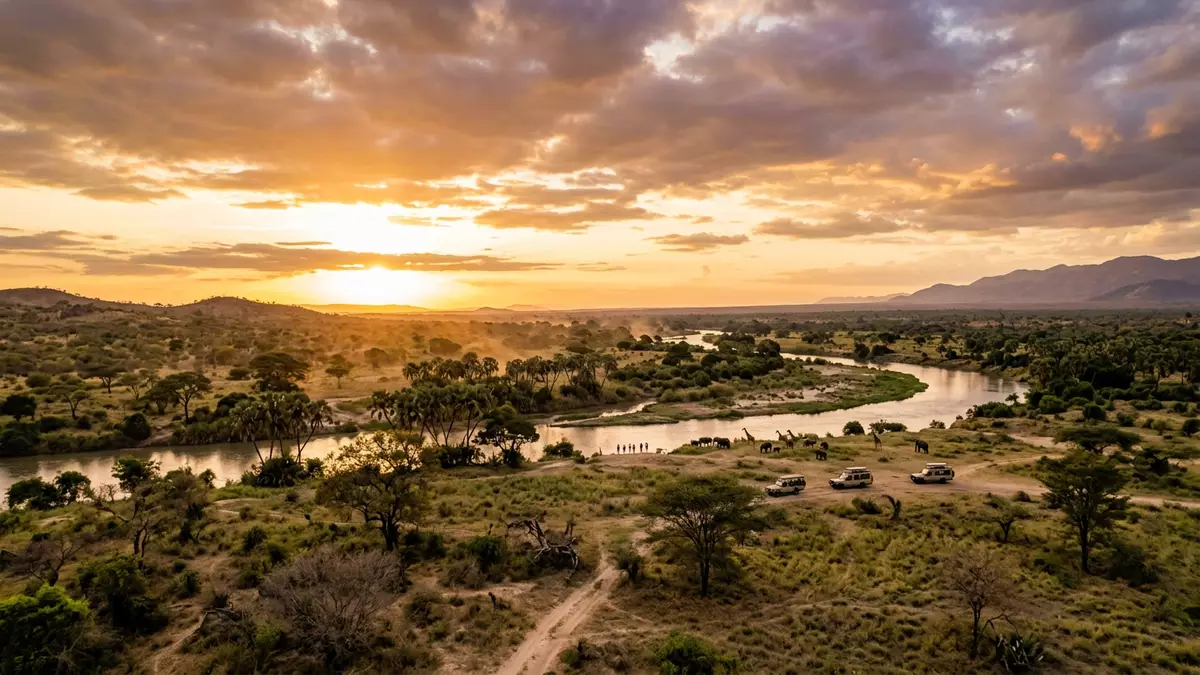
Nyerere National Park in southern Tanzania is a protected landscape on an immense scale, where the Rufiji River and broad miombo woodlands form one of East Africa’s largest continuous wildlife areas. The park takes its name from Julius Nyerere, Tanzania’s first president, and occupies a substantial portion of the historic Selous Game Reserve, reclassified as a national park in 2019 to safeguard its ecological core under the management of Tanzania National Parks.
A national park carved from the Selous ecosystem
Nyerere National Park lies in southeastern Tanzania, extending across parts of the Morogoro, Lindi, Pwani and Ruvuma regions and forming the northern and central photographic-tourism sector of the former Selous Game Reserve.Nyerere National Park The greater Selous protected landscape was established in 1922 and later designated a UNESCO World Heritage Site in 1982 for its biodiversity and largely undisturbed natural habitats.UNESCO World Heritage Site in 1982
In 2019 the Tanzanian government separated roughly 30,000 km² of the former reserve, including much of the Rufiji basin traditionally visited on photographic safaris, to create Nyerere National Park as a dedicated national-park unit focused on non-consumptive tourism and conservation.In 2019 the Government of Tanzania decided This national park zone covers about 30,893 km² (11,928 sq mi), making it the largest national park in Tanzania and part of one of the world’s largest protected wildlife landscapes.covers approximately 11,583 square miles
Rufiji River, lakes and miombo woodlands
The defining feature of Nyerere National Park is the Rufiji River, Tanzania’s largest river system, which flows across the park in a branching network of channels, oxbow lakes and wetlands before reaching the Indian Ocean south of Dar es Salaam.The geography of Nyerere National Park is shaped by the Rufiji River Around the river, the landscape opens into broad floodplains, permanent and seasonal lakes and riverine forests that provide reliable water and rich grazing during the dry months.
Beyond the river system the park is dominated by miombo woodland, a brachystegia-rich habitat typical of southern Tanzania that supports wildlife adapted to its trees and understory.miombo woodlands, marshes and riverine forests These woodlands give Nyerere National Park a character distinct from the open grasslands of places such as Serengeti, with dense stands of trees interspersed with savannahs, marshes and patches of grassland. The variety of habitats within the park contributes to a mosaic of ecosystems that together form one of Africa’s most extensive continuous wildlife regions.
A vast protected landscape for wildlife and safaris
Nyerere National Park forms the northern part of a wider protected area that continues south and west as the Selous Game Reserve, together creating a cross-border ecosystem that extends towards the Niassa Reserve in Mozambique and covers well over 100,000 km².Greater Selous-Niassa ecosystem Within the park, the mix of river corridors, floodplains, woodlands and wetlands supports large populations of herbivores and predators, from elephants using the riverine forests and plains to carnivores ranging across the extensive woodland blocks.
The park forms a key link between other protected areas in southern Tanzania, connecting ecologically to Mikumi National Park in the northwest and to Udzungwa Mountains National Park and the broader Ruaha landscape further west.contiguous with Mikumi National Park in the northwestern corner Safari operations concentrate around the Rufiji River and its lakes, where boat trips on the channels and game drives through nearby woodland and savannah introduce visitors to this expansive southern circuit, distinct from the more compact northern parks around Arusha.
Visiting Nyerere National Park: what travellers from Western Europe should know
- Nyerere National Park lies in southeastern Tanzania, with road access from Dar es Salaam via Kibiti to the Mtemere Gate or via Mikumi National Park, Morogoro and the Uluguru Mountains to the Matambwe Gate.
- The terrain combines broad river floodplains, seasonal wetlands and extensive miombo woodland, so game drives and walks traverse a mixture of soft alluvial ground, firmer woodland soils and areas that can be waterlogged in wetter months.
- The park is reached either by road transfer or by light aircraft flights to airstrips near the Rufiji River and lake complexes, from where safari vehicles and boats operate within the protected area.
- Tanzania’s official language is Swahili and the currency is the Tanzanian shilling.
- Entry requirements depend on your nationality; UK travellers can check the FCDO travel advice at gov.uk/foreign-travel-advice, Irish travellers the Department of Foreign Affairs at ireland.ie.
Searching for Nyerere National Park on social platforms
These links open searches for Nyerere National Park on each platform.
Frequently asked questions about Nyerere National Park
Where is Nyerere National Park located?
Nyerere National Park is in southeastern Tanzania, spanning parts of the Morogoro, Lindi, Pwani and Ruvuma regions within the wider Selous ecosystem.
What should visitors expect on a visit?
Visitors encounter a large protected landscape centred on the Rufiji River, with boat safaris on channels and lakes and game drives through woodland, savannah and floodplain habitats.
What makes Nyerere National Park distinctive among Tanzanian parks?
Its scale, the central role of the Rufiji River system and extensive miombo woodland distinguish Nyerere National Park from more compact northern parks dominated by open grasslands.


