

Noronha Verde advances in Fernando de Noronha on 14 October
Published on 10/18/2026 at 07:51 | Editorial responsibility: Rafael Müller, Editor-in-Chief AD HOC NEWS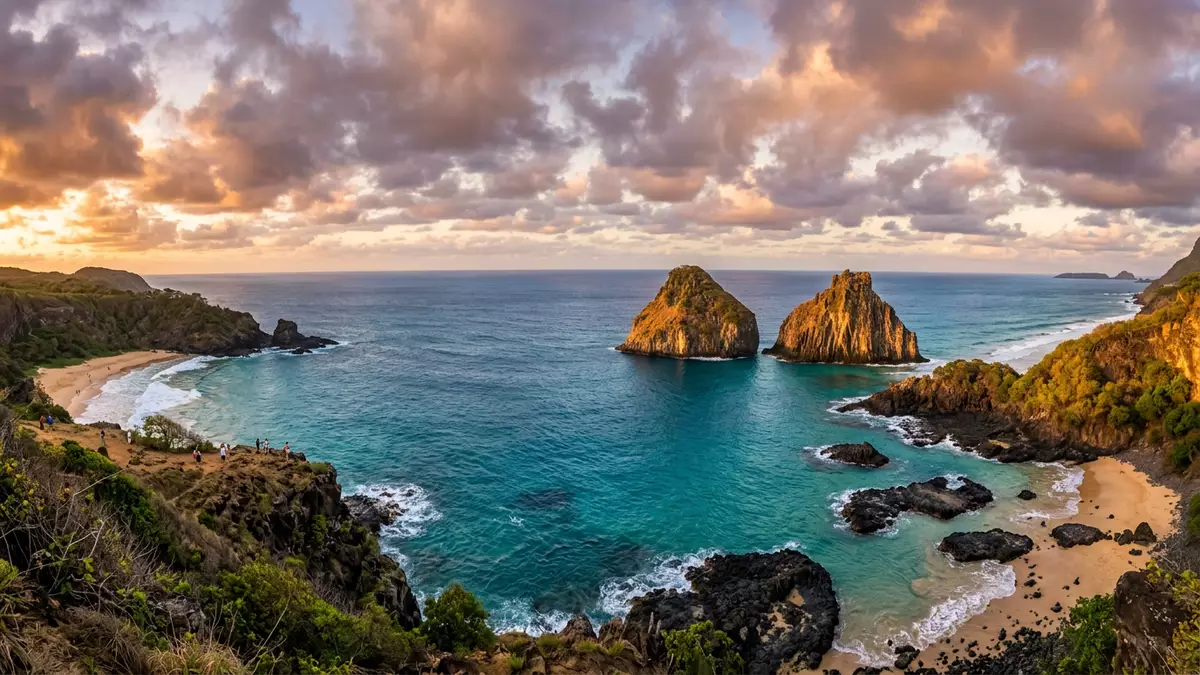
Noronha Verde advanced into its final implementation phase in Fernando de Noronha on 14 October 2026, linking a current energy project with the archipelago's future visitor setting. Neoenergia's plan combines solar generation with battery storage and is due to alter how electricity is produced on the Brazilian islands.
The project concerns the whole inhabited archipelago rather than one attraction, but its environmental measures connect directly with the protected landscape that draws visitors. The planned change also gives the current news a practical consequence for travel in Brazil: the power system is scheduled to move away from routine diesel generation while keeping a thermal reserve.
Noronha Verde reaches its final phase in October 2026
A report published on 14 October 2026 said the second stage of Noronha Verde was due to be completed in December 2026. The scheme includes more than 30,000 photovoltaic panels and a battery system with storage capacity of 49 megawatt-hours. The project is being developed by Neoenergia Pernambuco, with an investment of R$350 million reported for the initiative.
The first stage had already installed 4,800 panels. The planned solar expansion adds 22 megawatts of generation capacity to the 10 megawatts available at the Tubarão thermal plant, taking the stated installed capacity of the island's electricity system to 32 megawatts. The report on the October project update said the thermal plant was planned to become a reserve from January 2027.
Solar infrastructure meets Fernando de Noronha's protected coast
The battery system is intended to hold electricity generated during periods of sunlight for use when solar production is insufficient. The thermal plant is still planned to operate during prolonged rainy periods or maintenance, so the announced change is a shift in the energy mix rather than an immediate removal of every diesel generator.
The project also includes environmental measures reported alongside the solar work. These include planting 20,000 native seedlings, recovering and desilting the Açude da Ema reservoir, and improvements to a road section connecting the airport with Vila da Aeronáutica and access towards Atalaia Beach.
The landscape is protected in part by the Marine National Park of Fernando de Noronha, whose official record gives its creation date as 14 September 1988 and its area as 10,929.47 hectares. The ICMBio park record lists the unit as a coastal marine biome and identifies its address in Boldro.
That relationship is significant for visitors because the energy project and the protected area occupy the same island system. The solar transition is therefore not a separate mainland utility story: it is a planned infrastructure change within the setting of beaches, marine habitats and conservation administration.
Visiting Fernando de Noronha: what travellers from Western Europe should know
- The relevant news date is 14 October 2026, when the final phase of Noronha Verde was reported for Fernando de Noronha. Completion of the solar and battery installation was planned for December 2026.
- The announcement does not describe a closure of beaches, trails or the Marine National Park. It concerns electricity generation, with the Tubarão plant planned to remain available as a reserve from January 2027.
- Fernando de Noronha is an archipelago in Brazil. The Marine National Park record places its administrative address in Boldro and lists the protected area at 10,929.47 hectares.
- The protected landscape includes coastal marine habitats and named conservation areas, so visits involve an island environment managed through national conservation authorities.
- Entry requirements depend on your nationality; UK travellers can check the FCDO travel advice at gov.uk/foreign-travel-advice, Irish travellers the Department of Foreign Affairs at ireland.ie.
Searching for Fernando de Noronha on social platforms
These links open searches for Fernando de Noronha on each platform.
Frequently asked questions about Fernando de Noronha
What changed at Fernando de Noronha on 14 October 2026?
Noronha Verde was reported to have reached its final implementation phase, with completion planned for December 2026. The project combines solar panels with battery storage.
What is Noronha Verde at Fernando de Noronha?
It is a Neoenergia project designed to expand photovoltaic generation and storage across the archipelago. From January 2027, the Tubarão thermal plant was planned to serve mainly as a reserve.
Where is Fernando de Noronha and how do you get there?
Fernando de Noronha is an archipelago in Brazil. The Marine National Park's official address is in Boldro on the island, and the park record identifies the area as a coastal marine biome.


