
Niasvizhski zamak, Neswisch: a fortified Radziwi?? residence in parkland
Published on 08/31/2026 at 08:02 | Editorial responsibility: Rafael Müller, Editor-in-Chief AD HOC NEWS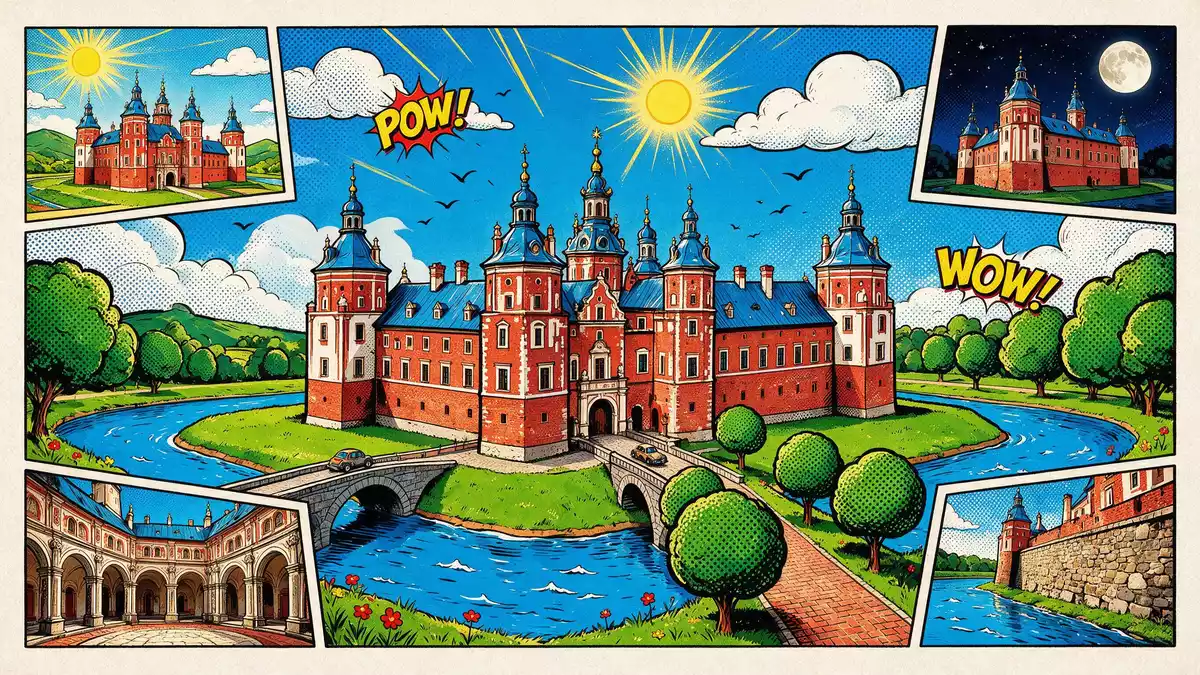
Niasvizhski zamak, known in English as Nesvizh Castle, is a former residence of the magnate Radziwi?? family on the edge of Neswisch in central Belarus. Dating to the late sixteenth century, this castle complex developed from a fortified stronghold into an aristocratic palace wrapped in landscaped parks and water features, forming the core of a cultural ensemble that is recognised on the UNESCO World Heritage List.
A Radziwi?? stronghold turned aristocratic residence
Niasvizhski zamak took shape in the late sixteenth century as a masonry fortress associated with the powerful Radziwi?? family of the Grand Duchy of Lithuania, whose influence extended across the Polish–Lithuanian Commonwealth.late sixteenth century The residence in Neswisch is closely linked with Miko?aj Krzysztof Radziwi?? “Sierotka”, a member of the family whose name appears in accounts of the castle’s development.Miko?aj Krzysztof Radziwi?? Over the following centuries the ensemble was expanded and remodelled, reflecting successive architectural tastes between the sixteenth and eighteenth centuries.
The castle stands in the north-eastern part of Neswisch in the Minsk Region of Belarus, on a platform surrounded by earthworks and ponds that underline its origins as a defended residence.north-eastern part of Neswisch Within the perimeter, bastions and curtain walls frame courtyards and palace ranges, so that defensive features sit alongside residential wings. The ensemble is described as a palace-and-castle complex, a term that captures its dual role as fortress and noble home.palace and castle complex
A UNESCO-listed cultural ensemble in central Belarus
Niasvizhski zamak forms the core of the Architectural, Residential and Cultural Complex of the Radziwill Family at Nesvizh, a World Heritage Site recognised by UNESCO.Architectural, Residential and Cultural Complex Inscribed in 2005, this ensemble brings together the castle-residence, parklands and the Corpus Christi Church, which serves as the Radziwi?? mausoleum.Corpus Christi Church The complex is cited as an example of architecture that influenced Central and Eastern Europe, with the combination of fortified forms and baroque church design illustrating a significant historical period.
Beyond the castle buildings themselves, Niasvizhski zamak is set within extensive parks and water features that form part of a wider landscape composition. Ponds and canals surround the platform, while avenues and planted slopes connect the residence to its grounds.parks and ponds In Belarus the ensemble is classified as a national historical and cultural museum-reserve, underscoring its role as both heritage site and museum space.museum-reserve status
Layout, interiors and the surrounding town
Approaching Niasvizhski zamak, travellers encounter a composition of bastions, moats and palace fronts that have been shaped by several building phases between the sixteenth and eighteenth centuries.sixteenth–eighteenth centuries Within the complex, courtyards are enclosed by multi-storey wings, while towers rise above the surrounding earthworks. The interiors house exhibition spaces and restored rooms that recall the castle’s function as a Radziwi?? residence, although specific collections and displays follow museum programming rather than a fixed historical arrangement.
Neswisch itself is a town in the Minsk Region of central Belarus, with Niasvizhski zamak occupying a position on its edge among ponds and parkland.town in Minsk Region Road links connect the town with Minsk, the national capital, which lies to the north-east.westward from Minsk Within view of the castle are the church, service buildings and parts of the historic town, together presenting a compact picture of aristocratic, religious and urban life in this part of Belarus.
Visiting Niasvizhski zamak: what travellers from Western Europe should know
- Niasvizhski zamak stands in Neswisch (often written as Nesvizh) in the Minsk Region of central Belarus, south-west of Minsk, and is reached by road links from the capital.
- The castle complex occupies an island-like platform among ponds and earthworks, with approaches that cross causeways and include gates and courtyards, so visits involve walking across outdoor surfaces and through multi-level interiors.
- The ensemble forms part of a national historical and cultural museum-reserve, and signage and information on site reflect Belarusian as the official language; the national currency is the Belarusian rouble.
- Neswisch is outside the UK, Ireland and the EU. Entry requirements depend on your nationality; UK travellers can check the FCDO travel advice at gov.uk/foreign-travel-advice, Irish travellers the Department of Foreign Affairs at ireland.ie.
Searching for Niasvizhski zamak on social platforms
These links open searches for Niasvizhski zamak on each platform.
Frequently asked questions about Niasvizhski zamak
Where is Niasvizhski zamak?
Niasvizhski zamak is in Neswisch (Nesvizh), a town in the Minsk Region of central Belarus, on the north-eastern side of the town among ponds and parkland.
What can visitors expect on a visit to Niasvizhski zamak?
Visitors encounter a former Radziwi?? family residence combining bastions, moats, palace wings, courtyards and landscaped parks that together form a museum-reserve and World Heritage ensemble.
What makes Niasvizhski zamak distinctive?
The castle’s combination of fortified origins, aristocratic palace architecture and its role within the Architectural, Residential and Cultural Complex of the Radziwill Family at Nesvizh gives it a distinctive place in Belarusian and Central European heritage.


