
Niasvizhski zamak and the Radziwi?? estate at Neswisch
Published on 08/29/2026 at 06:57 | Editorial responsibility: Rafael Müller, Editor-in-Chief AD HOC NEWS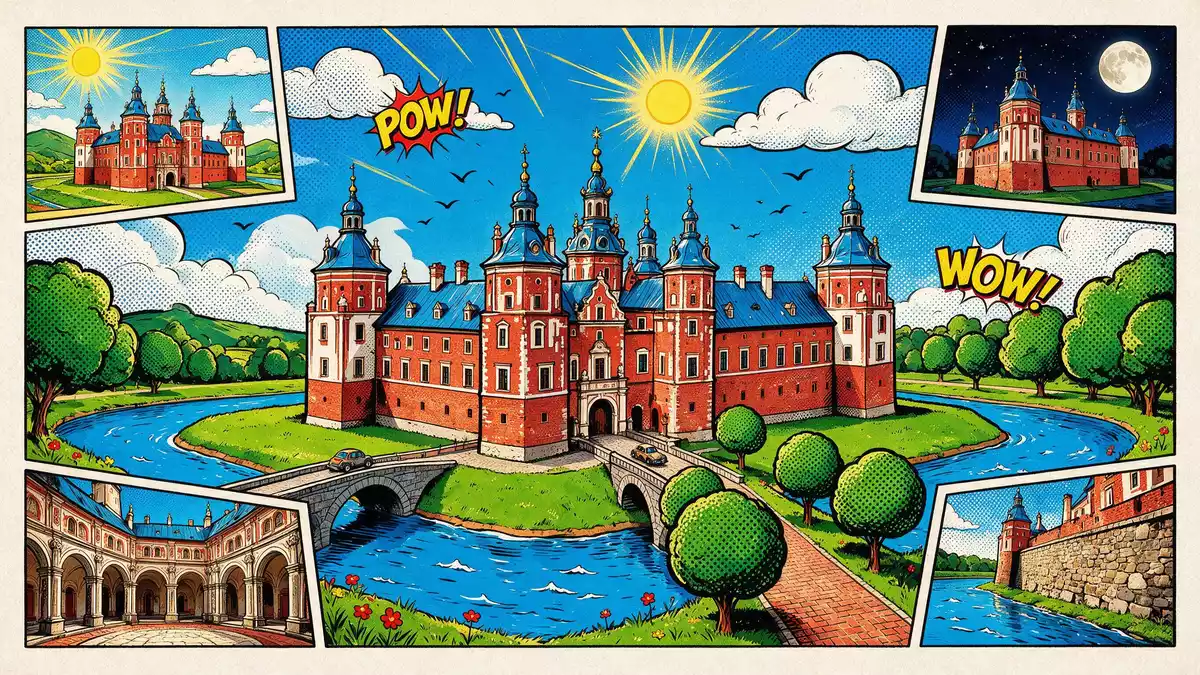
Niasvizhski zamak, the castle estate at Neswisch in central Belarus, brings together fortified bastions, aristocratic palaces and landscaped parks in a single historic ensemble dating from the late sixteenth century.Architectural, Residential and Cultural Complex of the Radziwill Family at Nesvizh is the formal name of this ensemble on the UNESCO World Heritage List.
Radziwi?? residence and late Renaissance foundations
Niasvizhski zamak is a residential castle associated with the magnate Radziwi?? family, who held wide influence in the former Polish–Lithuanian Commonwealth.Nesvizh Castle describes it as their main residence in Nyasvizh, the historic name of Neswisch. The decision to replace an earlier wooden stronghold with a stone castle in Neswisch is linked to Miko?aj Krzysztof Radziwi??, known by the epithet “Sierotka” or “the Orphan”, whose activity in the 1580s initiated major works.The construction of the stone castle in Niasvizh notes that work began around 1582–1583 and that the main phase was largely complete by 1600. The ensemble that visitors see is therefore largely rooted in the late sixteenth century, with later additions and remodellings over subsequent centuries.
The architecture of Niasvizhski zamak reflects changing tastes across periods rather than a single frozen style. Descriptions of the palace and park complex emphasise the way medieval defensive forms coexist with late Renaissance, Baroque and Classicist elements in the same estate.The palace and castle ensemble characterises the complex as combining techniques from those movements with the work of local craftsmen over roughly three centuries. Within the stone perimeter, ten interconnected buildings are arranged around a courtyard whose outline is described in UNESCO material as hexagonal, underlining that this is not a single block but a linked set of wings and halls.The castle has ten interconnected buildings summarises this plan.
Fortifications, courtyards and parks on a water-bound estate
The castle complex at Neswisch was conceived with defence in mind as much as residence. Accounts of the site describe a system of bastion fortifications with high earth ramparts reinforced with stone and corner towers marking the main angles.Four defensive towers were erected notes ramparts reaching substantial heights and bastions with towers at their corners, enclosing the palace and service buildings within a protected perimeter. The entire ensemble is surrounded by water; descriptions refer to moats and ponds that turn the castle and park into a kind of island landscape on the edge of the town.surrounded by a water moat captures this layout.
Within the fortifications, the plan opens into courtyards and parkland. The central courtyard, framed by interconnected buildings, leads out towards landscaped grounds with alleys, statues and bodies of water, a setting particularly described in accounts from the nineteenth century when the estate gained extensive parks with ponds and ornamental features.beautiful parks and alleys lists formal planting, sculptures and blue ponds as characteristic features. The combination of fortified approaches, inner courts and expansive parks means a visit moves through distinct spatial zones: from earthworks and water, through stone gateways, into palace interiors and out again into tree-lined walks.
UNESCO inscription and the castle as museum-reserve
Niasvizhski zamak forms the core of a larger heritage designation that includes the Corpus Christi church-mausoleum and the surrounding estate. In July 2005 the “Architectural, Residential and Cultural Complex of the Radziwill Family at Nesvizh” was placed on the UNESCO World Heritage List as an example of an architectural ensemble illustrating a significant historical period.On 15 July 2005 gives the date, while the UNESCO site itself outlines how the castle and church influenced developments in architecture across parts of Central and Eastern Europe.The Architectural, Residential and Cultural Complex describes the ensemble’s wider impact.
The castle complex functions as a museum-reserve that presents interiors, collections and the history of the Radziwi?? family. Material on the site refers to large historical holdings in earlier centuries, including extensive libraries and picture galleries inside the palace, which contributed to its reputation as a centre of culture and scholarship in the region.By early 1770 the castle library notes tens of thousands of volumes and hundreds of paintings once housed in the complex. After restoration campaigns in the late twentieth and early twenty-first centuries, the castle’s rooms and exhibition spaces were opened again within the framework of the National History and Culture Museum-Reserve at Neswisch.the exposition of the museum and reserve Niasvizh was opened refers to that reopening.
Visiting Niasvizhski zamak: what travellers from Western Europe should know
- Niasvizhski zamak stands on the edge of Neswisch (often written as Nesvizh) in central Belarus, south-west of Minsk, and is reached by road links from the capital.
- The estate is enclosed by earth ramparts and moats, and visiting the inner courtyard and park involves crossing bridges and walking along paths that rise and fall over former bastions.
- The official language is Belarusian alongside Russian, and the currency is the Belarusian rouble.
- Entry requirements depend on your nationality; UK travellers can check the FCDO travel advice at gov.uk/foreign-travel-advice, Irish travellers the Department of Foreign Affairs at ireland.ie.
Searching for Niasvizhski zamak on social platforms
These links open searches for Niasvizhski zamak on each platform.Frequently asked questions about Niasvizhski zamak
Where is Niasvizhski zamak located?
Niasvizhski zamak is in Neswisch (Nesvizh), a town in the Minsk Region of central Belarus, south-west of the capital city Minsk.
What can visitors expect when exploring the estate?
Visitors encounter bastion earthworks, stone gateways, an inner courtyard framed by castle buildings and extensive parkland with ponds, statues and tree-lined paths.
What makes Niasvizhski zamak distinctive among Belarusian castles?
Its role as a Radziwi?? residence, its mixture of Renaissance, Baroque and Classicist architecture, and its UNESCO-listed ensemble of castle, church and landscaped parks set it apart.


