
Niasvizhski zamak: a Radziwi?? castle estate in Neswisch
Published on 09/19/2026 at 16:48 | Editorial responsibility: Rafael Müller, Editor-in-Chief AD HOC NEWS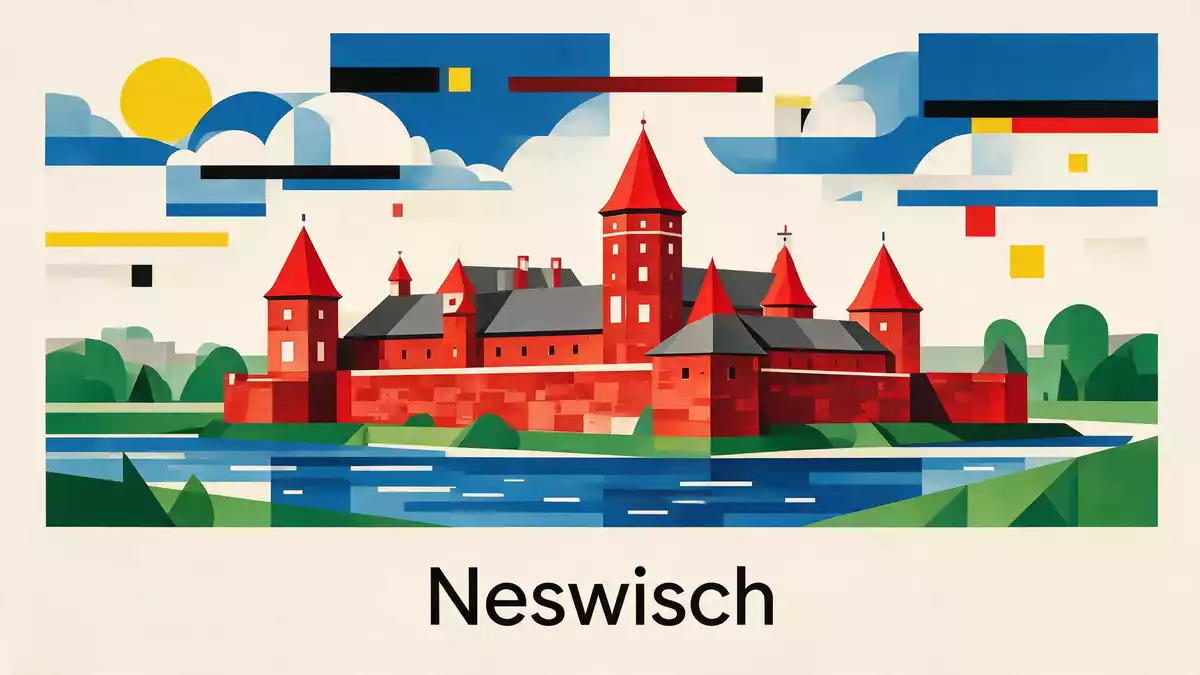
Niasvizhski zamak in Neswisch, central Belarus, is a former Radziwi?? residence where a castle, earthworks and landscaped parks form a single historic estate dating from the late sixteenth century. Set beside ponds on the edge of the town, this palace-and-fortress ensemble is known internationally as Nesvizh Castle and is inscribed as an Architectural, Residential and Cultural Complex of the Radziwill Family at Nesvizh on the UNESCO World Heritage List.
A Radziwi?? stronghold turned palace estate
The story of Niasvizhski zamak begins in the second half of the sixteenth century, when the magnate Miko?aj Krzysztof Radziwi?? “Sierotka” established a masonry fortress on the outskirts of Neswisch. Construction of the stone castle began in 1583, replacing an earlier wooden stronghold from the same century and marking the town as a principal seat of the Radziwi?? princes.construction of the stone castle began in 1583 The Italian architect Giovanni Maria Bernardoni was involved in these formative phases, bringing late Renaissance ideas in plan and detail to what remained a fortified residence with bastioned earthworks and defensive walls.Giovanni Maria Bernardoni
Across the sixteenth to eighteenth centuries the complex was reshaped from a bastioned stronghold into a residence that combined fortification with aristocratic display.sixteenth to eighteenth centuries Wings were added around an inner courtyard, façades took on Baroque articulation, and the approach across bridges and ramparts began to read as both defensive route and ceremonial entry. Over these centuries Niasvizhski zamak served as a primary residence of successive generations of the Radziwi?? family, embedding the estate in the political and cultural life of the Grand Duchy of Lithuania and later regional states.National Historical and Cultural Museum-Reserve Nesvizh
Courtyards, bastions and water in one ensemble
The lead impression of Niasvizhski zamak is the way fortifications, palace architecture and water landscapes run together into a single ensemble. The castle stands on an island-like platform edged by ponds and surrounded by earthworks, giving the approach a layered sequence of ramparts, bridges and gateways before the visitor reaches the paved courtyard inside.earthworks, ponds and parkland Around this courtyard stand residential and representative wings with façades shaped by late Renaissance and Baroque forms, including projecting risalits, cornices and window rhythms that signal a palace rather than a purely military structure.
Beyond the castle buildings, landscaped parks extend through the estate, linking formal avenues, tree-lined embankments and open lawns with views back towards bastions and towers. The water surfaces of the surrounding ponds reflect the walls and roofs of the castle, tying the architecture visually to the wider grounds. Within the UNESCO inscription, this ensemble of fortified residence, parkland and nearby religious buildings is recorded under the formal title Architectural, Residential and Cultural Complex of the Radziwill Family at Nesvizh.Architectural, Residential and Cultural Complex of the Radziwill Family at Nesvizh Together these elements show how a sixteenth-century stronghold became an aristocratic estate composed of courtyards, bastions and planned landscapes.
World Heritage status and present-day role
Niasvizhski zamak and its surrounding ensemble are recognised internationally through their inscription on the UNESCO World Heritage List, a status granted in 2005 under the name Architectural, Residential and Cultural Complex of the Radziwill Family at Nesvizh.inscription on the UNESCO World Heritage List This recognition reflects the way the complex illustrates important phases in Central and Eastern European architecture, from bastioned fortresses influenced by Italian military design to later Baroque palaces and landscaped parks connected with aristocratic life. It also acknowledges the role of the Radziwi?? family as one of the major dynasties of the region, whose residence at Neswisch concentrated political, cultural and religious patronage.
The wider estate around Niasvizhski zamak forms part of the National Historical and Cultural Museum-Reserve Nesvizh, a protected status that covers the castle, its parks and selected structures within the town.National Historical and Cultural Museum-Reserve Within this framework, the castle functions as a museum and cultural site where the historic rooms, fortifications and grounds can be explored as parts of one estate. The artistic and architectural value of the complex lies in the combination of styles and layers rather than a single period, with sixteenth-century foundations, eighteenth-century façades and landscaped parkland forming a coherent whole in the landscape of central Belarus.
Visiting Niasvizhski zamak: what travellers from Western Europe should know
- Niasvizhski zamak stands on the edge of Neswisch (often written as Nesvizh) in the Minsk Region of central Belarus, south-west of the capital city Minsk. It is reached over access roads from Minsk and lies within the built-up area of the town.
- The estate includes earthworks, bridges and courtyards, so a visit involves walking over uneven surfaces and up flights of steps inside the castle and on the ramparts.
- The official language is Belarusian and Russian is also widely used; the national currency is the Belarusian rouble.
- Entry requirements depend on your nationality; UK travellers can check the FCDO travel advice at gov.uk/foreign-travel-advice, Irish travellers the Department of Foreign Affairs at ireland.ie.
Searching for Niasvizhski zamak on social platforms
These links open searches for Niasvizhski zamak on each platform.
Frequently asked questions about Niasvizhski zamak
Where is Niasvizhski zamak located?
Niasvizhski zamak is in Neswisch (Nesvizh), a town in the Minsk Region of central Belarus, south-west of Minsk, on an estate edged by ponds and earthworks.
What can visitors expect when exploring the castle?
Visitors encounter a fortified palace with courtyards, bastions and residential wings, together with landscaped parks and water features that form part of a protected museum-reserve estate.
What makes Niasvizhski zamak distinctive among European castle complexes?
The combination of sixteenth-century fortifications, Baroque palace wings, water landscapes and its 2005 UNESCO inscription as the Architectural, Residential and Cultural Complex of the Radziwill Family at Nesvizh gives Niasvizhski zamak a distinctive profile.


