
Ngorongoro Crater and the scale of a volcanic bowl
Published on 08/30/2026 at 12:33 | Editorial responsibility: Rafael Müller, Editor-in-Chief AD HOC NEWS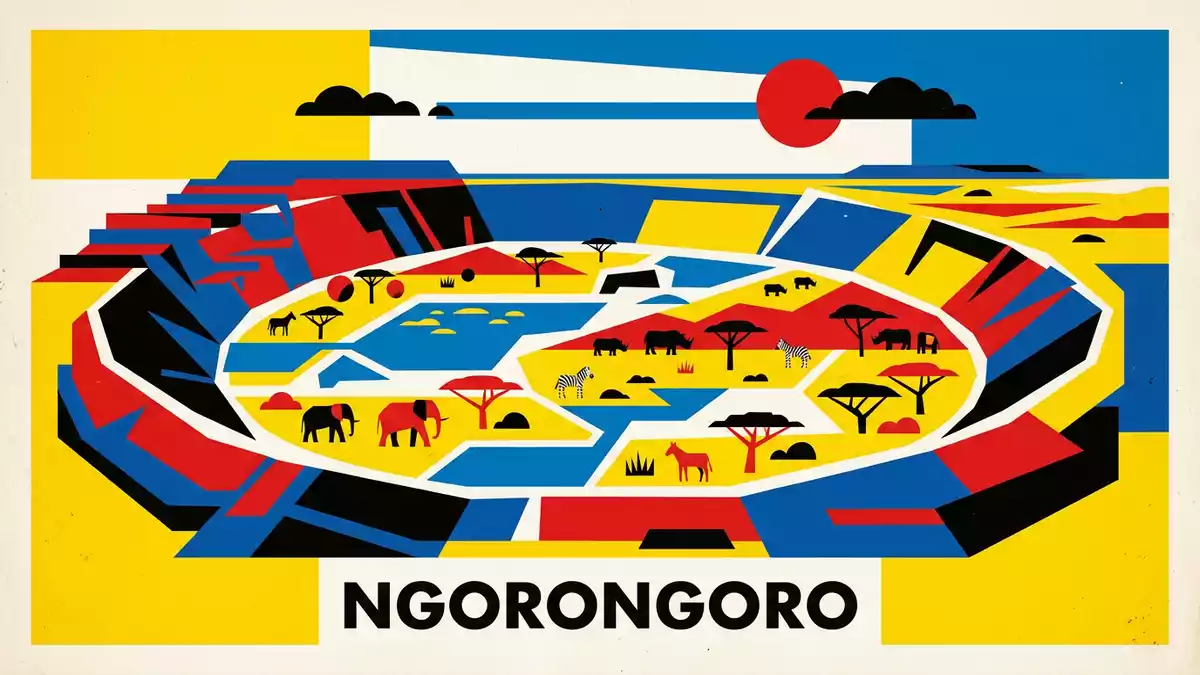
Ngorongoro Crater is the collapsed bowl at the centre of the Ngorongoro Conservation Area in northern Tanzania. It is the world’s largest caldera, and its wide rim frames a floor of grassland, marsh and shallow lakes.
A great caldera in the Crater Highlands
The crater sits within the Crater Highlands, a volcanic landscape in the Arusha Region. The broader conservation area was established in 1959 as a multiple land-use area, and the crater forms its most recognisable landform.
Geologically, the basin is the scar of a massive volcanic collapse. The rim rises above the floor, and the interior is enclosed by steep walls of volcanic rock, open grass and wetter ground in the lower parts.
World Heritage status and landscape context
The Ngorongoro Conservation Area entered the World Heritage List in 1979. It is recognised for both natural and cultural values, and the crater sits alongside Olduvai Gorge within the same protected landscape.
Ngorongoro Crater lies in northern Tanzania at the centre of the Ngorongoro Volcanic Highlands. The crater is part of a wider chain of volcanic hills and rift-related landforms that define this corner of East Africa.
Stone rim, broad floor, enclosed plain
The floor of the crater is broad enough to read like a self-contained plain. Grassland dominates, with wetter patches, acacia stands and seasonal water in the low-lying areas.
The enclosing rim gives the place its strongest visual line. From above, the basin reads as a near-complete circle of rock and vegetation, with the open floor set below it.
Visiting Ngorongoro Crater: what travellers from Western Europe should know
- Ngorongoro Crater lies in the Ngorongoro Conservation Area in northern Tanzania, west of Arusha. Entry requirements depend on your nationality; UK travellers can check the FCDO travel advice at gov.uk/foreign-travel-advice, Irish travellers the Department of Foreign Affairs at ireland.ie.
- The crater sits high above sea level, and the rim road descends to the floor through a long mountain approach. The terrain combines steep walls, open basin floor and rough volcanic ground.
- The official language is Swahili and the currency is the Tanzanian shilling.
- The crater is part of a protected landscape that also includes Maasai pastoral land and Olduvai Gorge. That mix of grazing, wildlife and geology is central to its character.
Searching for Ngorongoro Crater on social platforms
These links open searches for Ngorongoro Crater on each platform.
Frequently asked questions about Ngorongoro Crater
Where is Ngorongoro Crater?
It lies in northern Tanzania, inside the Ngorongoro Conservation Area and west of Arusha. The crater forms part of the Crater Highlands.
What does a visit involve?
The place is an enclosed volcanic basin with a rim above a broad floor. Travellers encounter steep slopes, open grassland and wetter ground within the bowl.
What makes Ngorongoro Crater distinctive?
Its scale and enclosed form define it, along with its protected setting and World Heritage status. The combination of geology, grazing land and wildlife habitat shapes the whole landscape.


