
Ngorongoro Crater, a vast volcanic amphitheatre in northern Tanzania
Published on 09/05/2026 at 21:21 | Editorial responsibility: Rafael Müller, Editor-in-Chief AD HOC NEWS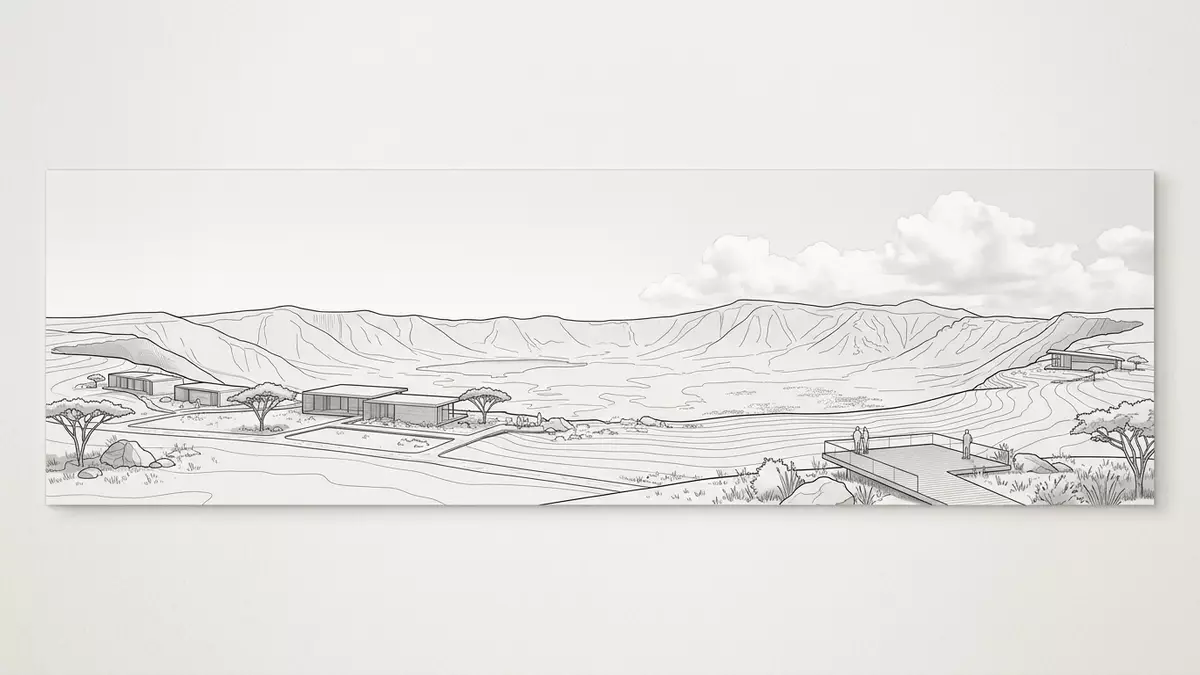
Ngorongoro Crater in northern Tanzania is a vast volcanic amphitheatre where a steep rim encloses a broad, wildlife-rich floor within the Ngorongoro Conservation Area.
A colossal volcanic caldera in the East African Rift
The main feature of the Ngorongoro Conservation Area is Ngorongoro Crater, a large inactive volcanic caldera set in the highlands north-west of Lake Manyara in northern Tanzania.Ngorongoro Conservation Area The crater belongs to the Ngorongoro volcanic group, part of the geological story of the Gregory Rift within the East African Rift system.Ngorongoro volcanic group
Ngorongoro Crater formed when a large volcano erupted and collapsed on itself during the Pliocene, leaving a deep, steep-walled basin rather than an elevated peak.formed approximately 2.5 million years ago The caldera measures roughly 16 to 19 km (10 to 12 miles) across, with a floor area of about 260 km² (100 square miles), making it one of the largest intact, unflooded volcanic calderas on Earth.caldera measures between 16 and 19 km Its rim rises several hundred metres above the floor, creating a pronounced topographic bowl that visitors see as they descend from the surrounding highland plateau.rim rising 400–610 m above the floor
A protected landscape of grasslands, swamps and alkaline water
The floor of Ngorongoro Crater is a patchwork of grassland, seasonal and permanent swamps, and an alkaline lake known as Lake Makat, creating varied habitats within the enclosed basin.small saline lake, Lake Makat, and the Gorigor swamp Short grass plains cover much of the central floor, while wetlands and wooded pockets lie closer to the slopes, giving the crater a distinct mosaic when viewed from the rim.
Ngorongoro Crater sits within the wider Ngorongoro Conservation Area, which extends over more than 8,000 km² of northern Tanzania and is contiguous with Serengeti National Park and other protected areas.contiguous to Serengeti National Park The conservation area is inscribed on the World Heritage List for its combined natural and cultural values, reflecting both the volcanic landscape and the long human presence in the region.World Heritage inscription Within this protected setting, the crater’s enclosed grasslands and water sources support dense wildlife, which visitors observe against the dramatic backdrop of the inner walls.
People, conservation and the wider Ngorongoro highlands
Ngorongoro Crater lies in a landscape where Maasai pastoralists have lived for generations, herding livestock across the highland plains and volcanic slopes that surround the basin.Maasai of the Ngorongoro Conservation Area During the twentieth century the area was formalised as a wildlife reserve and later as the Ngorongoro Conservation Area, managing both wildlife and pastoral land within one administrative framework.declared a national park in 1940
The conservation area’s status reflects its role as a reservoir of large mammal biodiversity and as part of a wider geological and cultural landscape that includes the Serengeti plains and nearby archaeological sites.Ngorongoro World Heritage Site Travellers encounter Ngorongoro Crater as one element within this broader highland region, with views from the rim stretching towards other volcanic peaks and escarpments and, in clear conditions, across to the plains that lead towards Serengeti.
Visiting Ngorongoro Crater: what travellers from Western Europe should know
- Ngorongoro Crater lies in northern Tanzania, within the Ngorongoro Conservation Area, reached overland from the town of Karatu and regional centres such as Arusha.
- The rim road descends to the crater floor on steep, winding tracks, and game-viewing routes on the floor follow unpaved surfaces across open grassland and past wetlands.
- The crater rim stands at high altitude in the Ngorongoro highlands, so temperatures on the edge can be markedly cooler than on the surrounding lowland plains.
- The official language is Swahili and the currency is the Tanzanian shilling.
- Entry requirements depend on your nationality; UK travellers can check the FCDO travel advice at gov.uk/foreign-travel-advice, Irish travellers the Department of Foreign Affairs at ireland.ie.
Searching for Ngorongoro Crater on social platforms
These links open searches for Ngorongoro Crater on each platform.
Frequently asked questions about Ngorongoro Crater
Where is Ngorongoro Crater?
Ngorongoro Crater is in northern Tanzania within the Ngorongoro Conservation Area, north-west of Lake Manyara and close to the Serengeti ecosystem.
What should visitors expect on a visit to Ngorongoro Crater?
Visitors travel from the highland rim down into a wide volcanic basin, following tracks across grassland and wetlands with views framed by steep inner slopes.
What makes Ngorongoro Crater distinctive?
Ngorongoro Crater is distinctive as a large, intact volcanic caldera whose steep rim encircles an extensive floor of protected habitats within a single enclosed landscape.


