
Ngorongoro Crater: a vast caldera above the Rift Valley
Published on 09/24/2026 at 05:12 | Editorial responsibility: Rafael Müller, Editor-in-Chief AD HOC NEWS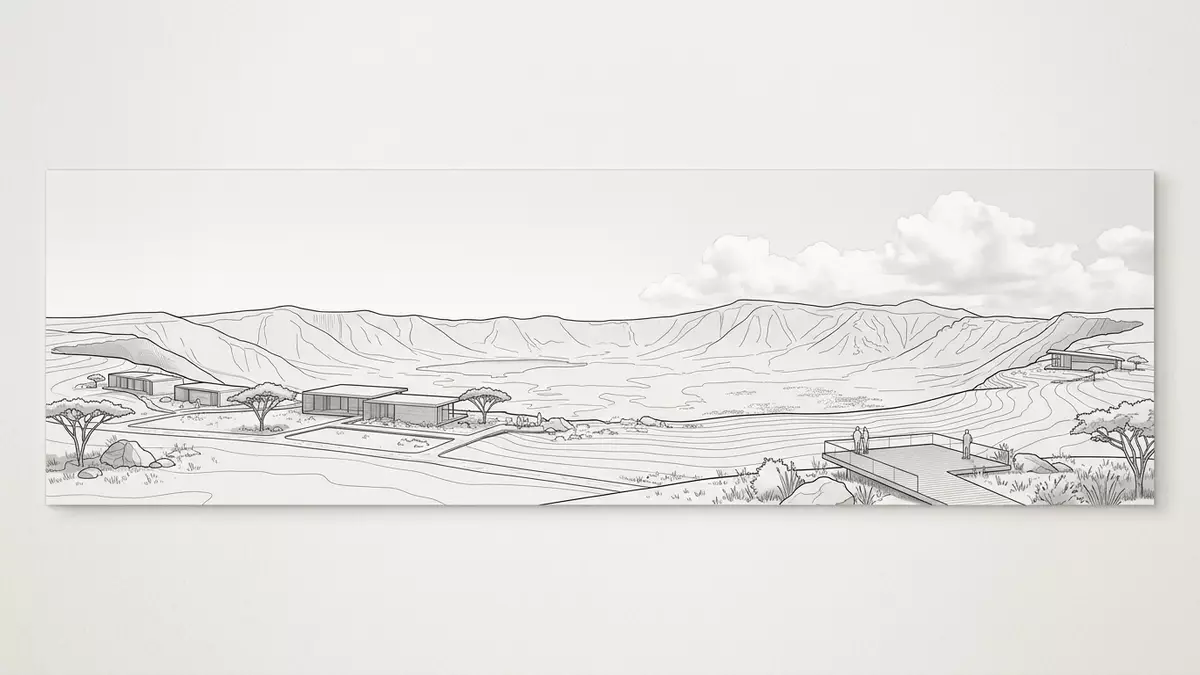
Ngorongoro Crater is a vast volcanic caldera in northern Tanzania, set within the highlands of the Eastern Great Rift Valley. Its open grassland floor lies beneath a forested rim, turning an ancient geological collapse into a landscape of wildlife, water and human history.
Ngorongoro Crater and the shape of an ancient volcano
Ngorongoro Crater formed about 2.5 million years ago, when a large volcano collapsed inward after a major eruption. The result is a caldera measuring roughly 16 to 19 km (10 to 12 miles) across, with a floor covering about 264 sq km.
The rim rises to around 2,286 m (7,500 ft), while the basin lies about 610 m (2,000 ft) below it. The term crater is familiar, but the geological form is a volcanic caldera: a broad collapse basin with an unbroken rim. the caldera’s dimensions show the scale of the former volcano.
Grassland, lake and wildlife inside the caldera
The basin contains open grassland, woodland, wetlands and Lake Magadi, a shallow soda lake. These habitats support elephants, buffalo, zebras, wildebeest, warthogs, gazelles, lions, leopards, hyenas and black rhinoceroses.
Ngorongoro is part of the wider Serengeti ecosystem, whose migrating herds move across northern Tanzania. The crater itself has a resident wildlife population, including threatened species and a large concentration of predators. Flamingos gather around the soda lake, while the surrounding slopes carry forest and open highland vegetation.
The wider Ngorongoro Conservation Area covers highland plains, savanna, woodland and forest. It was established in 1959 as a multiple land-use area, with wildlife conservation alongside semi-nomadic Maasai pastoralism. the multiple-use landscape extends beyond the caldera floor.
A protected landscape with deep human history
The Ngorongoro Conservation Area became a UNESCO World Heritage Site in 1979. Its recognised values include geology, biodiversity, wildlife migration and archaeological evidence connected with human evolution.
Olduvai Gorge lies within the conservation area, while Laetoli preserves fossilised hominin footprints dating back about 3.6 million years. Archaeological research across the region has produced evidence spanning almost four million years, including changing stone technology and human interaction with the environment.
Maasai pastoralists live within the wider conservation area and graze livestock under its multiple-use system. This cultural dimension distinguishes the protected landscape from a reserve concerned only with wildlife. the conservation area’s history connects the crater with both natural and cultural heritage.
Visiting Ngorongoro Crater: what travellers from Western Europe should know
- Ngorongoro Crater lies west of Arusha in northern Tanzania. Road approaches pass through Mto wa Mbu, Karatu and the Loduare entrance, while Kilimanjaro International Airport is the nearest international airport.
- Access to the crater floor uses safari vehicles. The descent leaves the high rim and reaches grassland, wetlands and the Lake Magadi area within the enclosed caldera.
- The official languages of Tanzania are Swahili and English, and the currency is the Tanzanian shilling.
- Entry requirements depend on your nationality; UK travellers can check the FCDO travel advice at gov.uk/foreign-travel-advice, Irish travellers the Department of Foreign Affairs at ireland.ie.
Searching for Ngorongoro Crater on social platforms
These links open searches for Ngorongoro Crater on each platform.Frequently asked questions about Ngorongoro Crater
Where is Ngorongoro Crater?
Ngorongoro Crater is in the Ngorongoro Conservation Area of northern Tanzania, west of Arusha and near the Serengeti ecosystem.
What can visitors expect inside the caldera?
The crater floor contains grassland, wetlands and a soda lake, with wildlife including lions, elephants, buffalo, zebras, wildebeest and black rhinoceroses.
What makes Ngorongoro Crater distinctive?
It is an immense volcanic caldera formed about 2.5 million years ago, with a forested rim, a broad basin and UNESCO-listed natural and cultural heritage.


