
Nemrut Dagi and the stone heads above Adiyaman
Published on 09/23/2026 at 07:54 | Editorial responsibility: Rafael Müller, Editor-in-Chief AD HOC NEWS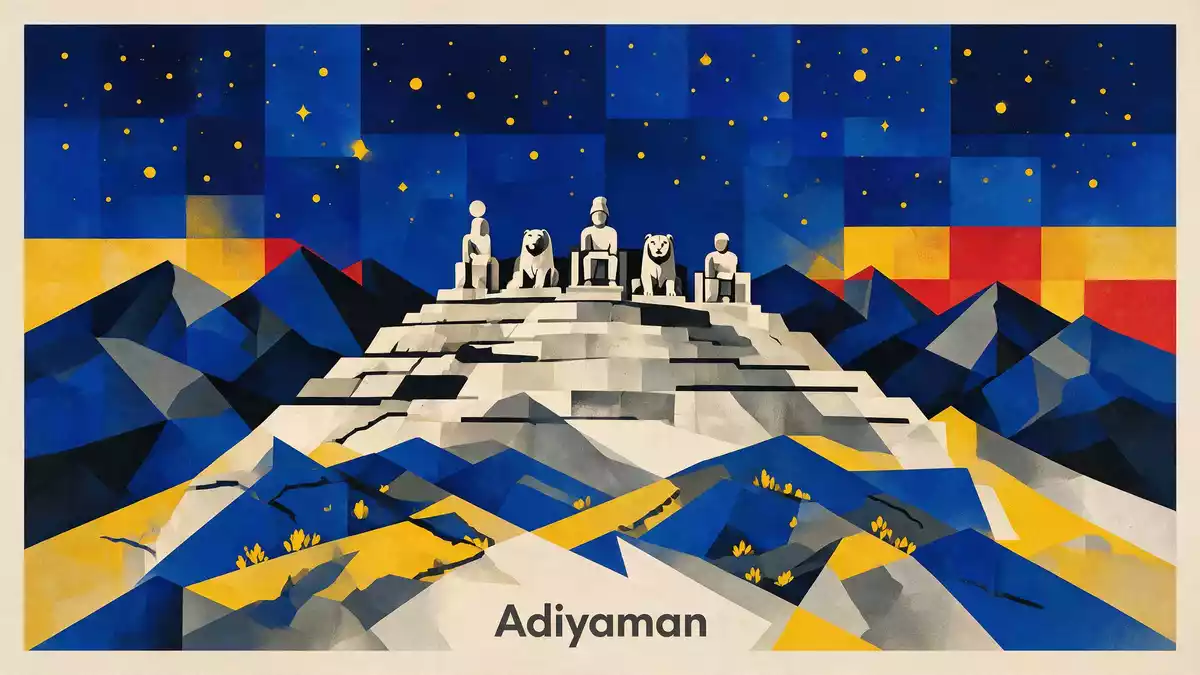
Nemrut Dagi is a mountaintop sanctuary where colossal stone figures surround the funerary monument of Antiochus I of Commagene. Above Adiyaman, the summit combines a high Taurus landscape with an archaeological ensemble of terraces, inscriptions and weathered limestone heads.
Nemrut Dagi: a sanctuary on the Taurus summit
The site rises to about 2,150 metres (7,054 ft) in south-eastern Türkiye. Its central feature is a great tumulus, a mound of crushed stone associated with the burial monument of Antiochus I, who ruled Commagene from 69 to 34 BC.
Nemrut Dagi belongs to the first century BC, when Commagene occupied territory north of Syria and the Euphrates. Its monuments combine Greek, Persian and Anatolian traditions in a single royal sanctuary. The kingdom’s name survives through this high mountain complex and related sites around Adiyaman.
The summit was inscribed as a UNESCO World Heritage site in 1987, placing Nemrut Dagi among the formally protected cultural monuments of Türkiye. The designation covers the funerary monument, sculpture terraces and associated remains. Nemrut Dagi World Heritage site records the sanctuary as a major Hellenistic construction.
Antiochus I and the seated stone gods
The eastern and western terraces hold the best-known sculptural remains. Seated figures once formed a monumental group with Antiochus I and deities drawn from several religious traditions. Earthquakes and the passage of centuries left the heads separated from many of the bodies.
The heads remain arranged near the terraces, with faces carved in pale stone and features marked by erosion. Antiochus appears beside figures identified with gods such as Zeus-Oromasdes, Apollo-Mithras-Helios-Hermes and Heracles-Artagnes-Ares. Lions and eagles also belong to the sculptural programme.
The statues reached roughly 8 to 10 metres (26 to 33 ft) in height, giving the terraces a human scale that is difficult to grasp from photographs. Long inscriptions accompany the sculpture groups and connect the sanctuary with Antiochus, his ancestors and the divine figures of Commagene.
The monument’s cultural language is deliberately mixed in its surviving forms. Greek names and artistic conventions stand beside Iranian and Anatolian elements, reflecting Commagene’s position between major cultural regions. the colossal summit statues remain the defining feature of the mountain.
East terrace, west terrace and the stone mound
The terraces occupy the summit around the tumulus. The east terrace contains the seated figures, pedestals and architectural remains against the open mountain horizon. The west terrace presents another group of statues and a broad field of fallen stone fragments.
A stone approach leads upwards from the access area towards the sanctuary. The final section crosses uneven ground, steps and loose fragments around the mound. The altitude and exposed summit setting make the walk a physical part of the visit.
Across the monument, the distinction between intact sculpture and displaced fragments is visible. Some bodies remain on their platforms, while the giant heads stand separately nearby. This arrangement gives the site its distinctive visual character without requiring an intact temple building.
Nemrut Dagi also belongs to a wider Commagene landscape. Arsameia, the former ceremonial centre associated with Mithridates I Callinicus, lies near the route through Kahta. The Roman Cendere Bridge, built around 200 CE, is another named monument in the surrounding region.
Visiting Nemrut Dagi: what travellers from Western Europe should know
- Nemrut Dagi lies in Adiyaman Province, near Kahta in south-eastern Türkiye. The park is reached by road from Adiyaman or Kahta, with the mountain route climbing into the Taurus uplands.
- Vehicles reach an access area below the summit. The final approach continues on foot over uneven ground, steps and loose stone towards the eastern and western terraces.
- The summit stands at about 2,150 metres (7,054 ft). Snow and ice affect the mountain road during winter, while the high terraces remain exposed to mountain weather.
- Arsameia and the Cendere Bridge lie in the wider Kahta area. Both sites belong to the historical landscape associated with Commagene and the ancient routes around the Euphrates.
- The official language is Turkish and the currency is the Turkish lira.
- Entry requirements depend on your nationality; UK travellers can check the FCDO travel advice at gov.uk/foreign-travel-advice, Irish travellers the Department of Foreign Affairs at ireland.ie.
- Conditions on the mountain change with the seasons; the local cable-car operators and alpine clubs provide information.
Searching for Nemrut Dagi on social platforms
These links open searches for Nemrut Dagi on each platform.
Frequently asked questions about Nemrut Dagi
Where is Nemrut Dagi?
Nemrut Dagi is in Adiyaman Province, near Kahta in south-eastern Türkiye. The sanctuary occupies a summit in the Taurus mountain range.
What can visitors see there?
The summit contains an immense stone tumulus, eastern and western terraces, inscriptions and separated heads from colossal statues. The approach includes uneven ground, steps and loose stone.
What makes Nemrut Dagi distinctive?
Antiochus I of Commagene placed a royal funerary monument among monumental figures combining Greek, Persian and Anatolian traditions. The sculpture terraces and high mountain setting remain central to the site.


