
Navagio on Zakynthos: a shipwreck framed by cliffs
Published on 09/07/2026 at 07:15 | Editorial responsibility: Rafael Müller, Editor-in-Chief AD HOC NEWS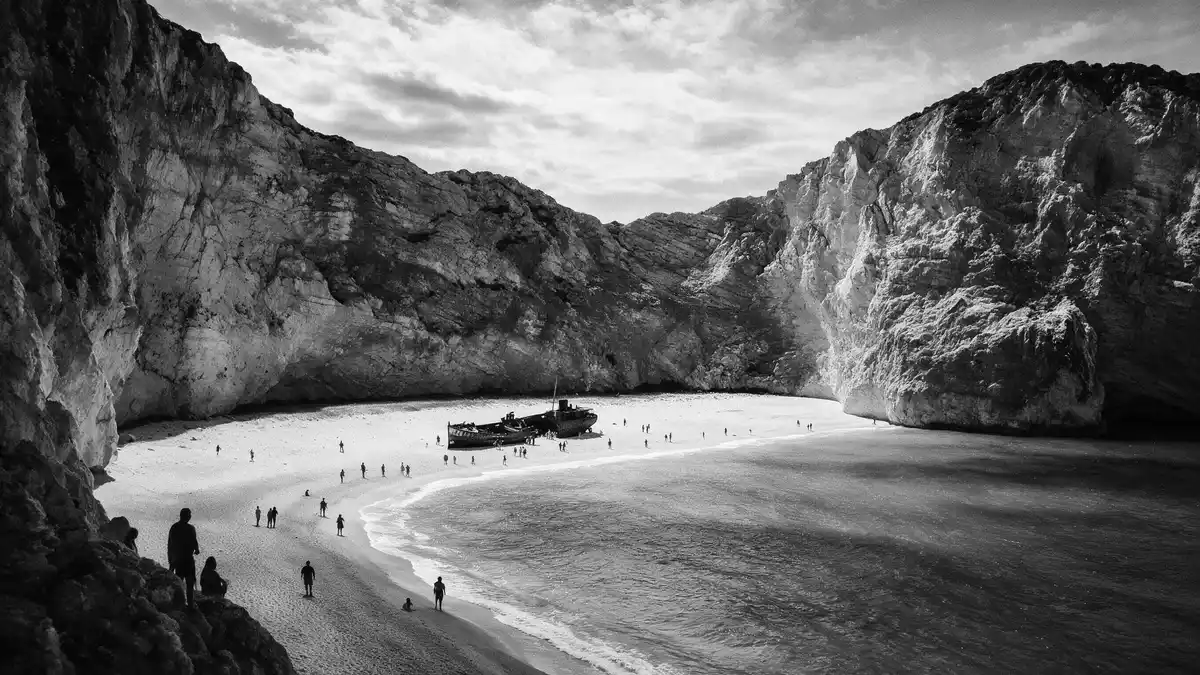
On the northwest coast of Zakynthos in Greece, Navagio is a small, enclosed cove where a rusting cargo ship lies stranded on pale pebbles beneath steep limestone cliffs. The setting, with sea, stone and steel compressed into a tight amphitheatre, has become one of the most recognisable images of the island.
A cove carved into limestone above deep blue water
Navagio sits on the outer shore of Zakynthos, facing the Ionian Sea and cut off from the island’s road network by high cliffs that rise sharply behind the beach.Navagio Beach on Zakynthos The cove forms a narrow opening to the sea which widens into a small arc of pale pebbles, enclosed on three sides by near-vertical limestone walls. Seen from above, the contrast between the white rock and the deep blue water is abrupt, with the beach appearing as a bright strip pressed between sea and cliff.limestone cliffs and turquoise water
The surrounding rock belongs to the limestone formations that shape much of Zakynthos’ rugged northwest coast, and the light colour of the cliffs amplifies the brightness of the cove. Out in the bay, the sea takes on a strong turquoise tone over deeper water, while nearer the shore it lightens as it crosses the pale pebbles. From the clifftop platform, the beach appears small in relation to the surrounding rock, emphasising how tightly the cove is enclosed by the landscape.panoramic view from the clifftop platform
The MV Panagiotis and the renaming of the bay
In the centre of Navagio’s pebbled shore lies the hull of the MV Panagiotis, a small cargo ship stranded there in early October 1980.the 1980 stranding of MV Panagiotis Before the ship ran aground, the cove was known as Agios Georgios, a name that reflected its earlier, quieter identity. The Greek word “navagio” itself means “shipwreck”, and over the years this term became the common name for the beach as the stranded vessel turned the site into a distinct landmark.the story of the ship and the name Navagio
The Panagiotis has a longer history than its final resting place suggests. Built in Scotland in 1937 under the name Saint Bedan, it served as a coaster carrying general cargo before changing ownership and being renamed.Saint Bedan, built in 1937 in Scotland Its last grounding on the shore of Zakynthos followed a storm and mechanical difficulties in 1980, after which the crew abandoned the vessel and left it to settle on the pebbles of Agios Georgios. Over the following decades, the steel hull gradually corroded under sun and salt spray, creating the rusted silhouette that now anchors the view of Navagio.
Access by boat and viewpoints from the clifftop
Navagio’s cove has no direct road access, and visitors reach the beach area by boat from harbours along Zakynthos’ coast.boat excursions from Porto Vromi and Agios Nikolaos Excursion boats navigate into the narrow opening of the bay, allowing passengers to see the cliffs and the stranded ship from sea level. The enclosed nature of the cove, with its high walls, means the water within remains visually distinct from the open Ionian Sea beyond the entrance.
Visiting Navagio: what travellers from Western Europe should know
- Navagio is located on the northwest coast of Zakynthos in Greece, facing the open Ionian Sea and reached either by boat excursions from harbours such as Porto Vromi or by road to the viewpoint near Anafonitria.
- The terrain at the beach consists of pale pebbles enclosed by steep limestone cliffs, and the clifftop viewpoint sits above a drop that makes the edge feel exposed, with fencing laid out to keep visitors back from the brink.
- The nearby village of Anafonitria lies inland of the cliffs and serves as a reference point for reaching the viewpoint by road, while coastal departures such as Porto Vromi and Agios Nikolaos connect the cove to the rest of Zakynthos by boat.
- The official language is Greek and the currency is the euro.
Searching for Navagio on social platforms
These links open searches for Navagio on each platform.Frequently asked questions about Navagio
Where is Navagio located?
Navagio lies on the northwest coast of Zakynthos, an island in the Ionian Sea off the western mainland of Greece, facing the open sea.
What can visitors expect when they see Navagio?
Visitors encounter a small cove enclosed by high limestone cliffs, with pale pebbles on the shore and the rusting hull of the MV Panagiotis lying in the centre of the beach.
What makes Navagio distinctive compared with other Zakynthos beaches?
The combination of an enclosed limestone cove, the stranded cargo ship from 1980 and the strong contrast between bright rock and deep blue water gives Navagio a character different from the island’s more open sandy bays.


