
National Museum of Cambodia and its terracotta Khmer courtyards
Published on 09/18/2026 at 08:22 | Editorial responsibility: Rafael Müller, Editor-in-Chief AD HOC NEWS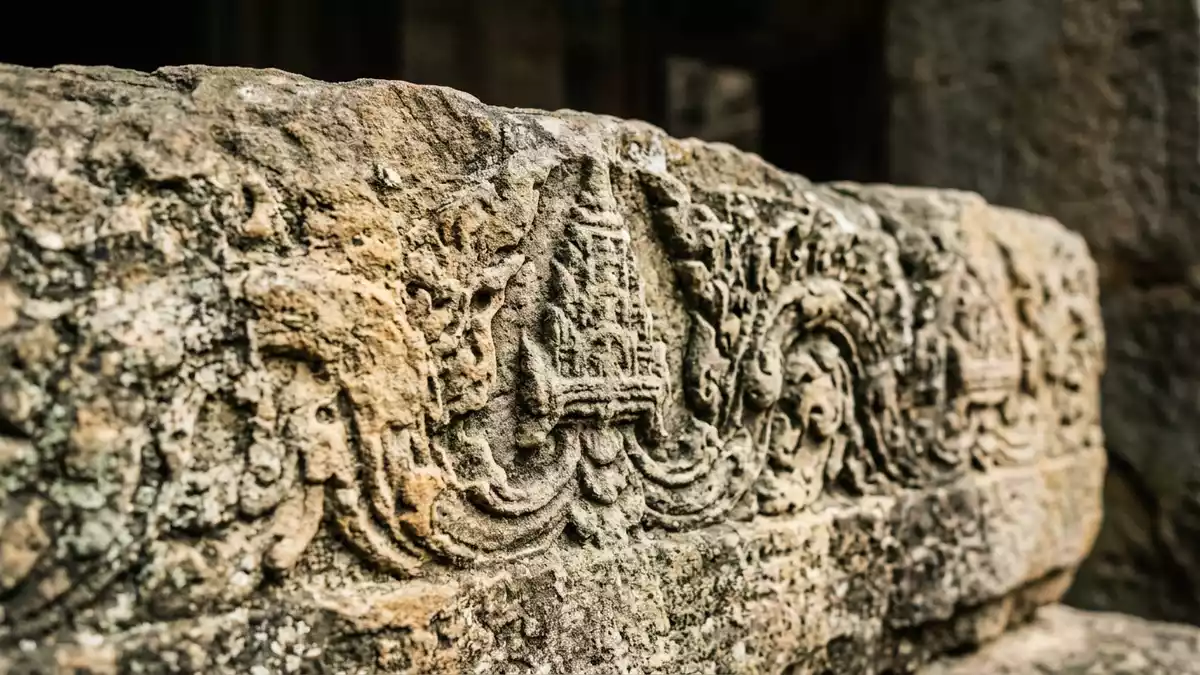
The National Museum of Cambodia in Phnom Penh brings Khmer art, history and architecture together inside a terracotta-red complex inspired by temple forms, with galleries set around planted courtyards. Built between 1917 and the early 1920s and inaugurated in 1920 during the reign of King Sisowath, it was designed as a purpose-built museum for Cambodia’s royal capital.
Khmer-inspired architecture in the heart of Phnom Penh
The museum stands on Street 13 in central Phnom Penh, close to the Royal Palace, in a complex that adapts motifs from classical Khmer temple architecture to a civic building. The foundation stone was laid on 15 August 1917, and the ensemble was completed in stages up to 1924, giving the complex time to grow into its present form.
George Groslier, a historian and curator born in Phnom Penh in 1887, designed the museum, drawing on Khmer decorative language while working within the French colonial context of the early twentieth century. He became the driving force behind the building’s creation and its early collections. The building’s tiered roofs, prominent spires, sculpted pediments and red brick and plaster surfaces echo Angkor-period temple silhouettes at a city scale, while the colonnaded façades form a regular street front.
Courtyards, roofs and the layout of the museum
The museum’s plan surrounds an inner courtyard with lotus ponds and planting, reached from the galleries through open passages that give the visit a rhythm between interior and exterior spaces. Four main galleries frame this central garden, and further wings extend the complex along the eastern side, making the building a substantial presence in the historic core of Phnom Penh.
The roofs rise in tiers above the courtyard and street, with finials and ornamental elements drawn from traditional Khmer design, including representations of nagas along the roof lines. Doors, windows, eaves and pediments carry carved details that connect the museum visually to temple complexes across Cambodia, even though it functions as a modern institution. The interplay of terracotta surfaces, dark timber, pools and planting gives the courtyards a distinct character within the dense city grid.
Khmer sculpture and collections across the centuries
The National Museum of Cambodia houses one of the most substantial collections of Khmer cultural material, ranging from prehistoric artefacts to sculpture from the Angkor period and later works. Its holdings cover prehistoric, pre-Angkorian, Angkorian and post-Angkorian periods, giving visitors a chronological view of Cambodian artistic traditions. Stone and bronze works from temples such as Angkor Wat and Angkor Thom stand alongside ceramics and wood carvings from across the country.
The collection includes sandstone sculptures of Hindu deities and Buddhist figures, temple lintels and bas-reliefs, as well as bronzes and ceramics from the Funan and Chenla periods between the fourth and ninth centuries. In total the museum holds over 14,000 objects, of which a selection is displayed in the galleries at any one time. Portraits such as the seated statue of King Jayavarman VII from Angkor Thom show the refinement of late twelfth-century Khmer sculpture and form focal points in the displays.
Visiting National Museum of Cambodia: what travellers from Western Europe should know
- The museum stands on Street 13 in central Phnom Penh, in the Daun Penh district, close to the Royal Palace and other historic landmarks, and is reached on foot or by road vehicle from the riverside area.
- Inside the complex, movement between the galleries and the inner courtyard involves a series of steps and covered walkways, with stone paving and changes of level that call for sure footing, especially during the wet season.
- The surrounding area has a dense urban fabric, with the Tonle Sap riverfront, Wat Ounalom and the Royal Palace compound forming a cluster of major sites within a short reach of the museum.
- The official language is Khmer and the currency is the Cambodian riel; US dollars are also in circulation for some transactions in Phnom Penh.
- Entry requirements depend on your nationality; UK travellers can check the FCDO travel advice at gov.uk/foreign-travel-advice, Irish travellers the Department of Foreign Affairs at ireland.ie.
Searching for National Museum of Cambodia on social platforms
These links open searches for National Museum of Cambodia on each platform.Frequently asked questions about National Museum of Cambodia
Where is the National Museum of Cambodia located in Phnom Penh?
The museum stands on Street 13 in the Daun Penh district of central Phnom Penh, close to the Royal Palace and the Tonle Sap riverfront.
What can visitors expect inside the museum?
Visitors encounter stone, bronze, ceramic and wood objects from prehistoric times through the Angkor period and later centuries, arranged across galleries around a planted inner courtyard.
What makes the National Museum of Cambodia distinctive among museums?
Its combination of Khmer-inspired terracotta architecture, courtyard layout and extensive holdings of Khmer sculpture and artefacts across many centuries gives it a distinctive role in presenting Cambodia’s cultural history.


