
National Museum of Cambodia and its terracotta courtyards
Published on 09/17/2026 at 07:40 | Editorial responsibility: Rafael Müller, Editor-in-Chief AD HOC NEWS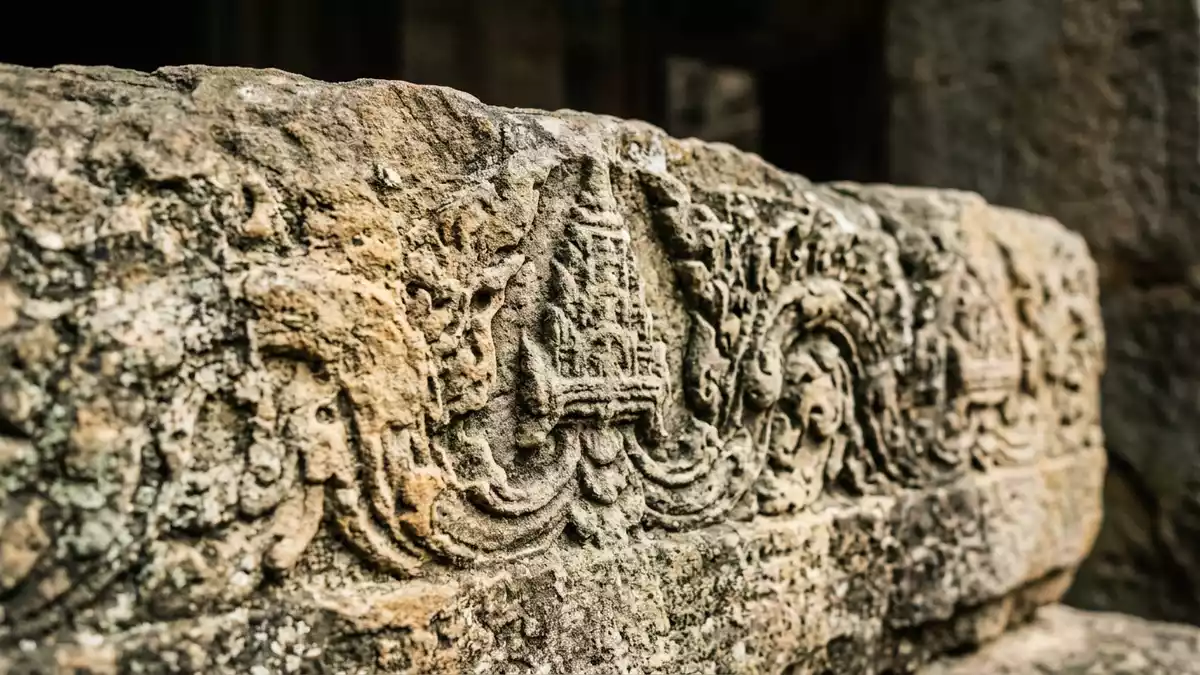
The National Museum of Cambodia in Phnom Penh brings Khmer sculpture, ceramics and bronzes together inside a terracotta complex inspired by temple architecture, laid out around calm interior courtyards. The museum building was constructed during the French colonial period between 1917 and the early 1920s and was inaugurated in 1920, giving it a century of continuous use as Cambodia’s principal museum of cultural history. George Groslier, a French-born historian and curator based in Phnom Penh, designed the building in a classical Khmer style, and Cambodian architect Vann Molyvann later supervised a renovation in 1968.
Terracotta architecture shaped by Khmer temple forms
The museum’s most striking feature is its architecture: a purpose-built museum that adopts forms associated with Khmer temples, translated into a civic building in terracotta. Tiered roofs rise above the galleries, crowned with ornamental elements associated with Khmer monumental architecture, and the structure presents a regular, axial plan focused on an interior courtyard garden.Tiered roofs and spires The building occupies a block on Street 13 immediately north of the Royal Palace compound in central Phnom Penh, forming part of a cluster of royal and cultural institutions in the Daun Penh area.Street 13 location
The construction history is well documented: a foundation stone was laid in August 1917, the museum opened partially in 1918 and was formally inaugurated in April 1920 under the name Musée Albert Sarraut, before later becoming the National Museum of Cambodia.Museum foundation and inauguration Extensions were added to the eastern façade in 1924, giving the building projecting wings and a more imposing street presence, and in 1968 the central section of the east façade underwent renovation under Vann Molyvann’s supervision.Renovation of the east façade Together these stages produced the quadrangular form and sequence of roofs visited today.
A collection spanning Angkor and earlier kingdoms
Inside the National Museum of Cambodia, galleries open off the courtyard and hold an extensive collection of Khmer cultural material, including stone and bronze sculpture, ceramics, wood carvings and ethnographic objects from prehistoric, pre-Angkorian, Angkorian and post-Angkorian periods.Khmer cultural material The collection has grown into a holding of more than 14,000 objects, making it the country’s largest museum of cultural history and a central reference point for Khmer art.Largest museum of cultural history
Visitors move through galleries organised broadly by period, from artefacts associated with early kingdoms such as Funan and Chenla through to the Angkor Empire and its successor states. Sandstone and schist sculptures illustrate changes in Khmer sculptural practice, with early works supported by carved struts and later Angkorian pieces standing more freely, alongside temple lintels, bas-reliefs and devotional images of Hindu deities and the Buddha.Sandstone and schist sculpture Among the Angkorian holdings are works from Angkor Wat, Angkor Thom and other temple sites, including celebrated pieces such as a reclining Vishnu from the Western Mebon and a seated statue of King Jayavarman VII from the late twelfth century, his head slightly bowed.Jayavarman VII statue and Angkor pieces
Courtyards, layout and the museum’s Phnom Penh setting
The museum compound occupies a rectilinear plot bounded by Street 13 and cross streets 178 and 184, with the visitor entrance located near the corner of Streets 13 and 178.Visitor entrance on Street 13 Within the perimeter, galleries frame planted courtyards, and circulation routes follow covered walkways, creating a sequence in which built and open spaces alternate. The terracotta surfaces, carved decorative elements and planted areas form a consistent visual language of Khmer-inspired design adapted to a museum plan.Traditional Khmer architectural details
In the wider city, the National Museum of Cambodia sits close to Phnom Penh’s Royal Palace and a short walk from the riverside area, making it easy to combine with visits to other central institutions. Its classical Khmer-style monumentality, with tiered roofs and ornamental spires, contrasts with the neighbouring royal buildings and later urban fabric, and it marks the transition between palace grounds and the gridded streets of Daun Penh. Over more than a century of operation since its inauguration in 1920, the museum building and its collections have become a key reference point for understanding Cambodia’s artistic heritage in a single, accessible location.
Visiting National Museum of Cambodia: what travellers from Western Europe should know
- The National Museum of Cambodia stands in central Phnom Penh on Street 13 in Sangkat Chey Chumneas, Daun Penh district, immediately north of the Royal Palace, and is reached on foot, by taxi or by local transport within the city.
- The museum compound is arranged around courtyards with covered walkways and interior galleries; visiting involves walking on level surfaces with occasional steps between gallery spaces.
- The official language of Cambodia is Khmer and the currency is the Cambodian riel.
- Entry requirements depend on your nationality; UK travellers can check the FCDO travel advice at gov.uk/foreign-travel-advice, Irish travellers the Department of Foreign Affairs at ireland.ie.
Searching for National Museum of Cambodia on social platforms
These links open searches for National Museum of Cambodia on each platform.
Frequently asked questions about National Museum of Cambodia
Where is the National Museum of Cambodia located in Phnom Penh?
The National Museum of Cambodia stands on Street 13 in Sangkat Chey Chumneas, Daun Penh district, immediately north of the Royal Palace in central Phnom Penh.
What can visitors expect to see inside the museum?
Visitors encounter Khmer sculpture, ceramics, bronzes and other cultural material from prehistoric societies through pre-Angkorian, Angkorian and post-Angkorian periods, arranged in galleries around planted courtyards.
What makes the National Museum of Cambodia distinctive among Phnom Penh’s institutions?
The museum combines a classical Khmer-style terracotta building, designed between 1917 and 1924, with Cambodia’s largest collection of Khmer art and artefacts, all housed on a single, coherent site.


