
Naritasan Shinshoji and its thousand?year temple landscape in Narita
Published on 08/28/2026 at 06:04 | Editorial responsibility: Rafael Müller, Editor-in-Chief AD HOC NEWS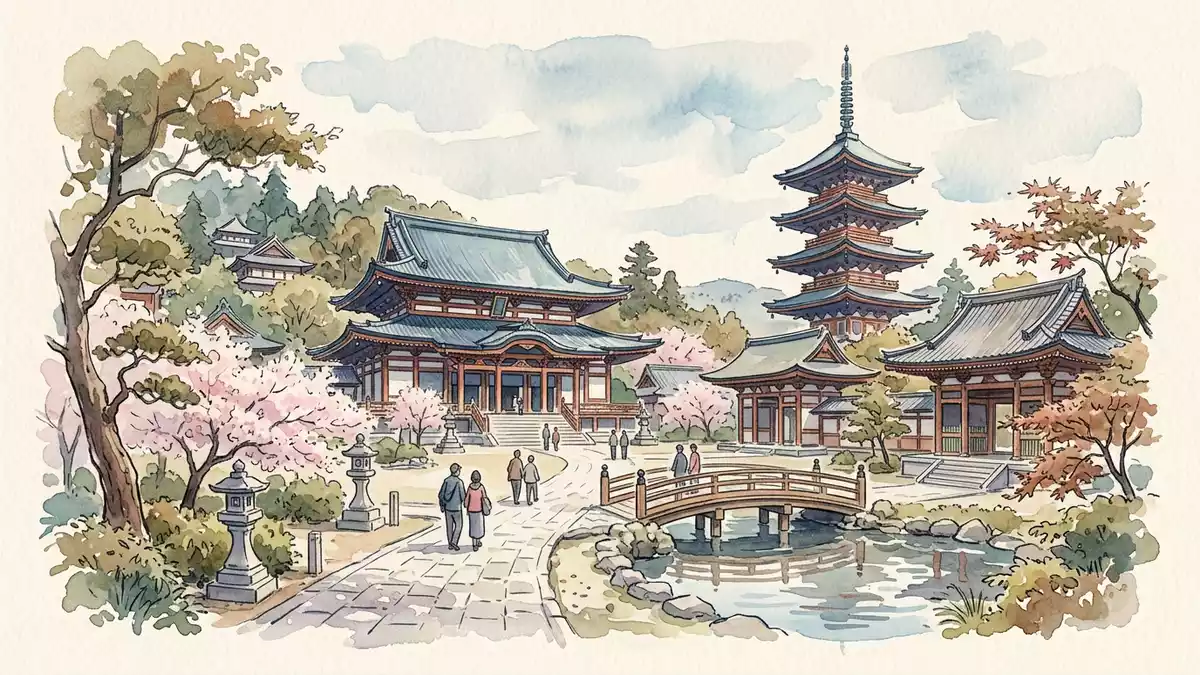
Naritasan Shinshoji in Narita, east of Tokyo, is a long?established Shingon Buddhist temple complex where formal worship halls open onto a wide temple park of ponds and wooded slopes. Founded in 940 during the Heian period, it has grown over the centuries into a layered landscape of architecture and gardens centred on the image of the Buddhist deity Fud? My??.
A Heian?period foundation shaped around Fud? My??
Naritasan Shinshoji is the head temple of the Chizan school of Shingon Buddhism, a branch of esoteric Buddhism that took shape in Japan under the influence of the monk K?kai in the early ninth century.head temple of the Chizan school The temple stands in Narita in Chiba Prefecture and is dedicated to Fud? My??, the “Immovable Wisdom King”, who holds a central place in Shingon iconography.dedicated to the fire god Fud? My?? The founding of Naritasan Shinshoji is dated to the third year of the Tengy? era, 940 AD, which places its origins firmly in the Heian period.founded in 940 AD during the Heian period
Accounts of the temple’s beginnings describe the high?ranking monk Kanch? Dais?j?, a disciple of K?kai, travelling with a statue or image of Fud? My?? during a campaign against the rebel samurai Taira no Masakado in the Kant? region.built in 940 by Kancho, a disciple of Kukai He performed a series of goma fire rituals invoking this deity and, after Masakado’s defeat, declared the image too heavy to remove, leading to the establishment of Shinsh??ji, the “New Victory Temple”, in Narita.a small temple was built on the spot to enshrine it From this origin as a provincial site, the complex developed over many generations into one of the major centres of Shingon worship in eastern Japan.
Halls, pagodas and gates: the built heart of Naritasan Shinshoji
The built core of Naritasan Shinshoji is a sequence of temple structures that mark the progress from the outer approaches into the main areas of worship. The complex includes a Main Hall, often referred to as the Great Main Hall, where the principal image of Fud? My?? is enshrined.Naritasan Shinsho-ji Temple Nearby stands a Great Peace Pagoda, a multi?storey tower that rises above the surrounding buildings and signals the temple from a distance.Great Peace Pagoda The complex also has further halls used for rituals and lectures, and a succession of temple gates that separate the everyday town from the inner precincts.
Architecturally, these halls and pagodas reflect styles that span the Heian, Edo and later periods. Timber construction, tiled roofs and richly coloured decorative elements are visible across the site, with some buildings reconstructed or expanded under patrons such as the Kabuki actor Ichikawa Danj?r? I during the Edo period.influence of Ichikawa Danjuro 1er The presence of a bell tower, subsidiary shrines and covered stairways gives the built centre of Naritasan Shinshoji the character of a small temple town, with religious buildings clustered on the slope above Narita’s Omotesand? street.
From worship space to temple park
One of the striking aspects of Naritasan Shinshoji is the way the formal temple precinct opens into a landscaped park that extends behind the main halls. Paths lead from the built area down into gardens that include ponds, streams, stone lanterns and stands of trees, creating a second, more natural layer to the site.temple grounds and gardens This park occupies a broad valley behind the temple, giving visitors space to wander among water features and planted slopes after leaving the busier terraces in front of the Main Hall.
Within this park are smaller buildings and memorials, including structures associated with the Great Peace Pagoda and places for quiet reflection. Seasonal changes in foliage are part of the experience here, with spring blossoms and autumn colours providing different aspects through the year. Seen from within the gardens, the higher roofs and pagodas of Naritasan Shinshoji rise above the tree canopy, tying the natural setting back to the temple’s religious architecture and making the complex feel like a continuous landscape rather than a single set of buildings.
Visiting Naritasan Shinshoji: what travellers from Western Europe should know
- Naritasan Shinshoji stands in Narita City in Chiba Prefecture, east of Tokyo. It is reached on foot from JR Narita Station and Keisei Narita Station along the Narita Omotesand? street.
- The temple complex is built on a gentle hillside. Approaching the main halls involves walking along sloping paths and climbing stairways, and the park behind the buildings includes further paths around ponds and wooded ground.
- Naritasan Shinshoji lies a short rail journey from Narita International Airport. Trains on the JR and Keisei lines link the airport terminals with Narita Station and Keisei Narita Station.
- Japanese is the official language and the currency is the yen.
- Entry requirements depend on your nationality; UK travellers can check the FCDO travel advice at gov.uk/foreign-travel-advice, Irish travellers the Department of Foreign Affairs at ireland.ie.
Searching for Naritasan Shinshoji on social platforms
These links open searches for Naritasan Shinshoji on each platform.
Frequently asked questions about Naritasan Shinshoji
Where is Naritasan Shinshoji located?
Naritasan Shinshoji is in Narita City in Chiba Prefecture, east of Tokyo, within walking distance of JR Narita Station and Keisei Narita Station.
What can visitors expect during a visit?
Visitors encounter a sequence of temple halls, pagodas and gates devoted to Shingon Buddhist worship, followed by a landscaped park of ponds, trees and paths behind the main buildings.
What makes Naritasan Shinshoji distinctive among Japanese temples?
The combination of its Heian?period foundation, dedication to Fud? My?? and the transition from dense temple architecture into an extensive park landscape gives Naritasan Shinshoji a distinctive double character.


