
Nara Koen and the sacred deer landscape of Nara
Published on 09/10/2026 at 18:47 | Editorial responsibility: Rafael Müller, Editor-in-Chief AD HOC NEWS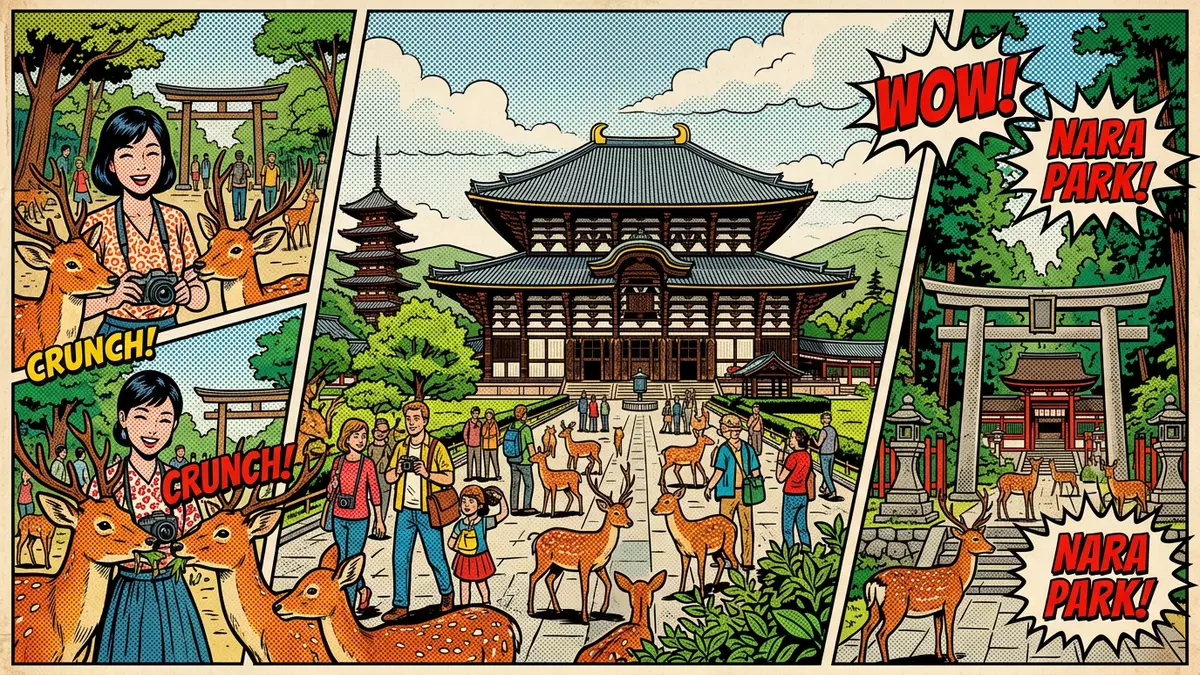
Nara Koen in Nara, Japan is a broad historic parkland where herds of sika deer wander between lawns, lantern-lined paths and temple precincts, tying everyday city space to the ancient capital’s religious core. The park took shape in the late nineteenth century and has since gathered shrines, temples and museum buildings into one continuous landscape on the eastern side of central Nara.
A park shaped by deer and devotion
Nara Koen is known for its free-roaming sika deer, which move across lawns, around ponds and along the approaches to temples and shrines without barriers. The deer in Nara Park are designated a National Natural Monument, recognised as “Nara no Shika”, and protected under Japanese law as part of the country’s cultural and natural heritage.National Natural Monument status Their association with Kasuga Taisha Shrine reaches back more than a millennium, with local belief casting them as sacred messengers of the kami, the Shinto deities linked to that shrine.deer linked to Kasuga Taisha
The designation of the deer as a protected treasure sits alongside the park’s role in Japan’s wider heritage. Nara Koen forms part of the ensemble known as the Historic Monuments of Ancient Nara, inscribed on the UNESCO World Heritage List in 1998.Historic Monuments of Ancient Nara Within and around the park lie religious buildings, museum collections and forested slopes that together express Nara’s status as an early imperial capital and a cradle of Japanese Buddhism.
Temples, shrines and museum within Nara Koen
The fabric of Nara Koen is defined as much by its buildings as by its lawns. On its northern side stands Todai-ji, a major Buddhist temple founded in the eighth century, whose Daibutsuden hall houses a giant bronze statue of the Buddha known as Daibutsu.Todai-ji and Daibutsu Todai-ji was established under Emperor Shomu in 741 as a central temple for provincial monasteries, and its great wooden structures and gates form one of the most recognisable silhouettes within the park.
Elsewhere within Nara Koen, Kofuku-ji temple contributes its pagoda and halls, while Kasuga Taisha Shrine sits towards the forest edge with long paths lined by stone lanterns.Kasuga Taisha and Todaiji The Nara National Museum stands amid the greenery, presenting Buddhist art and archaeological finds linked to the surrounding temple precincts.Nara National Museum in the park These religious and cultural institutions lie within walking distance of one another, connected by paths that pass beneath pines and cherry trees, across open grass and past groups of deer.
A landscape of lawns, forested slopes and ponds
The physical extent of Nara Koen is substantial; the park area itself covers around 660 hectares, while associated temple grounds and forests expand the wider landscape still further.660-hectare park area Much of this area lies on gentle slopes rising eastwards from the city, with Mount Wakakusa and the Kasugayama Primeval Forest forming wooded backdrops to the lawns and paths below.Kasugayama Primeval Forest
Within the park, ponds and small lakes punctuate the greenery. Sarusawa-ike, near Kofuku-ji, reflects temple roofs and trees on calm days and provides a focus for evening light and seasonal colour.Sarusawa-ike pond Paths wind between these water features, museum buildings and shrines, often edged by low stone kerbs or lanterns. The mix of formal religious precincts, planted lawns and more natural woodland makes Nara Koen feel less like a single enclosed park and more like a shared landscape between city and foothills.
Visiting Nara Koen: what travellers from Western Europe should know
- Nara Koen lies on the eastern side of central Nara, and is reached on foot from JR Nara Station or Kintetsu Nara Station along streets that gradually give way to parkland.
- The terrain shifts from level lawns near the city streets to gentle slopes and forest paths towards Mount Wakakusa and Kasugayama, with some longer walks leading up into the wooded areas.
- Within the park, many of the approaches to temples and shrines are paved but can include stairways and sections of compacted earth, so footwear suited to mixed surfaces is useful.
- The official language is Japanese and the currency is the yen.
Searching for Nara Koen on social platforms
These links open searches for Nara Koen on each platform.
Frequently asked questions about Nara Koen
Where is Nara Koen located?
Nara Koen is a large park area on the eastern side of Nara city in Japan, stretching from central streets towards the lower slopes of Mount Wakakusa.
What should visitors expect on a visit to Nara Koen?
Visitors encounter free-roaming sika deer among lawns, ponds and paths, as well as temple and shrine precincts such as Todai-ji, Kofuku-ji and Kasuga Taisha within walking distance.
What makes Nara Koen distinctive among historic sites in Japan?
Nara Koen combines a protected population of sacred deer with UNESCO-listed religious monuments and museum collections in one continuous landscape that reflects Nara’s role as an early imperial capital.


