
Namib Desert at Sossusvlei and its towering red dunes
Published on 09/16/2026 at 18:08 | Editorial responsibility: Rafael Müller, Editor-in-Chief AD HOC NEWS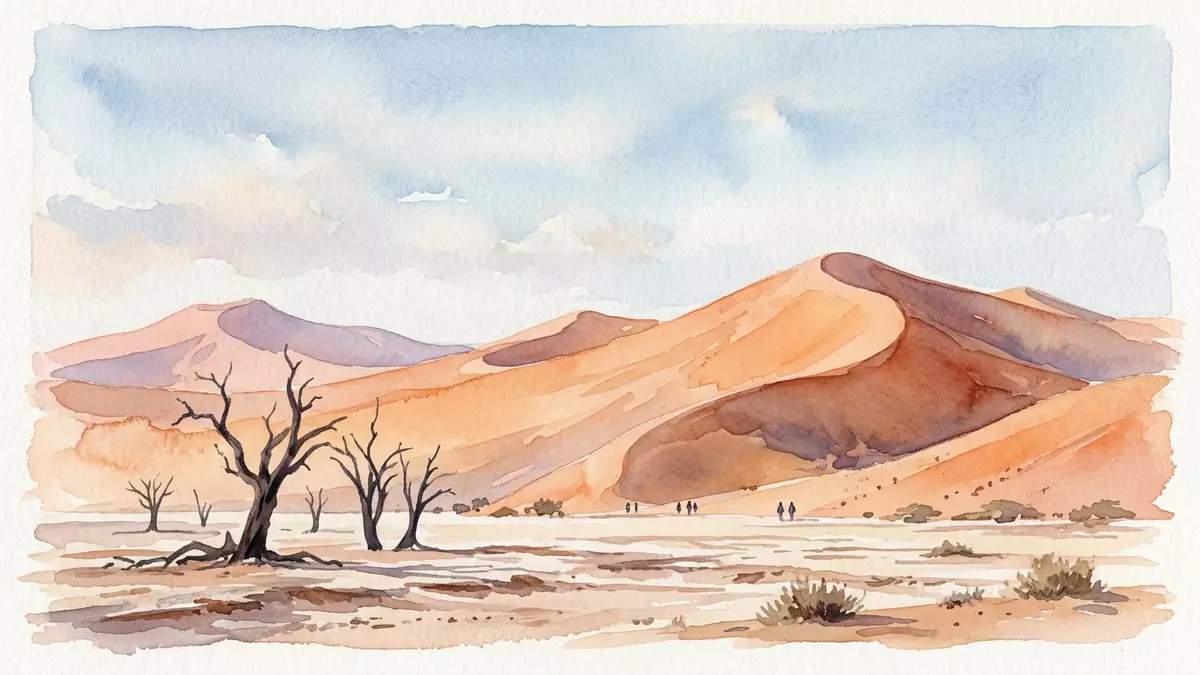
At Sossusvlei in the Namib Desert, sand, clay and sky meet in a stark geometry of colour and form that defines Namibia’s most recognisable desert landscape. Set within the Namib Sand Sea inside Namib-Naukluft National Park and part of a UNESCO World Heritage Site inscribed in 2013, this salt and clay pan is encircled by towering red dunes that have developed over millions of years from sand carried by river and ocean currents.Namib Sand Sea World Heritage
Red dunes, white clay and the shape of Sossusvlei
Sossusvlei is a salt and clay pan ringed by sand dunes in the southern part of the Namib Desert, in the Namib-Naukluft National Park of Namibia.salt and clay pan The pan itself is generally pale, often cracked into polygonal plates, and sits at the end of the Tsauchab River’s course, where dunes converge and block the river’s further flow.end of the Tsauchab River The word “Sossusvlei” combines Nama and Afrikaans and literally translates to “dead-end marsh”, a name that reflects this blocked drainage basin.
Around the pan, dunes rise hundreds of metres above the clay floor, their surfaces coloured in shades of orange and deep red by iron oxide coatings on individual grains.iron oxide gives the dunes their colour Some of the sand in these dunes has been dated to around five million years, and the dune shapes here are predominantly “star dunes”, built up by winds that blow from several directions and give each dune multiple ridges radiating from a central summit.star dunes and sand age On the pan’s edge, named dunes such as Big Daddy stand above features like Deadvlei, where dead camelthorn trees rise from a clay floor surrounded by red sand.
An ancient desert and the journey of its sand
The Namib Desert is widely described as one of the world’s oldest deserts, with evidence for desert conditions extending back tens of millions of years in formations such as the Tsondab Sandstone.desert conditions from the Eocene Within this broader desert, the Namib Sand Sea covers tens of thousands of square kilometres of dune fields lying inland from the Atlantic coast between Walvis Bay and Lüderitz.extent of the Namib Sand Sea Sossusvlei sits within this sand sea, representing one of its most accessible and photographed dune basins.
The sand that makes up the Sossusvlei dunes has travelled an extended route. It was carried by the Orange River into the Atlantic Ocean, moved northwards along the coast by the Benguela Current, then brought back onto land by waves and wind before being blown inland into Namibia’s desert interior.sand transported by river and current Over millions of years this process has created thick deposits of red sand that the desert’s south-westerly winds continually reshape into high star dunes, whose leeward slopes are markedly steeper than their windward faces.south-wester shaping star dunes The dunes at Sossusvlei, including Big Daddy and Dune 45 along the access road, reach heights of more than 300 m (around 980 ft), placing them among the higher sand dunes measured worldwide.Big Daddy dune height
Patterns of water, clay and desert life
Although Sossusvlei lies in a hot desert climate with very low annual rainfall, its salt and clay pan and the Tsauchab River create a distinctive pattern of intermittent surface water.hot desert climate The Tsauchab River is an ephemeral river, meaning it flows only in response to rainfall in its catchment, and for extended periods the pan remains dry, with clay surfaces cracked and tree trunks standing over bare ground.endorheic basin of the Tsauchab River When heavy rain occurs in the interior and the river brings water as far as Sossusvlei, the pan can fill to form a shallow lake whose bright surface contrasts strongly with the surrounding red dunes.pan filling with water
Within the wider Namib Desert biome, plants and animals have adapted to extreme aridity, intense sunshine and frequent fogs along the coastal margin.Namib Desert biome At Sossusvlei and its neighbouring pans such as Deadvlei and Hiddenvlei, vegetation is sparse, centred on hardy species such as camelthorn trees that can persist on deep-rooted moisture despite the dryness at the surface.Deadvlei and Hiddenvlei within Sossusvlei area The Namib Sand Sea’s designation as a World Heritage Site reflects both its visual character and its scientific value for understanding long-term desert processes, dune dynamics and life adapted to fog and minimal rainfall.World Heritage inscription in 2013
Visiting Namib Desert: what travellers from Western Europe should know
- Namib Desert’s Sossusvlei pan lies in south-western Namibia, within Namib-Naukluft National Park; access is usually by road from towns such as Sesriem, with tracks leading towards the dune basins.
- The terrain at Sossusvlei is sandy and demanding underfoot, with dune ascents involving steep slopes of loose sand and clay pans that can be uneven or cracked.
- Nearby features include Deadvlei and Hiddenvlei, both clay pans surrounded by dunes, and named dunes such as Dune 45 and Big Daddy rising above the surrounding desert.
- Namibia’s official language is English and the currency is the Namibian dollar.
Searching for Namib Desert on social platforms
These links open searches for Namib Desert on each platform.Frequently asked questions about Namib Desert
Where is Sossusvlei in the Namib Desert?
Sossusvlei lies in the southern Namib Desert within Namibia’s Namib-Naukluft National Park, inside the dune fields of the Namib Sand Sea near the Tsauchab River’s end point.location within Namib-Naukluft
What should visitors expect when they reach Sossusvlei?
Visitors encounter a pale salt and clay pan bordered by high red dunes such as Big Daddy and Dune 45, with sparse desert vegetation and distant views over the Namib Sand Sea.contrast between pan and dunes
What makes Sossusvlei distinctive within the Namib Desert?
Sossusvlei stands out through its combination of giant red star dunes, an endorheic salt and clay pan, and its position inside the Namib Sand Sea UNESCO World Heritage Site, illustrating ancient desert processes in a compact landscape.endorheic basin and star dunes


