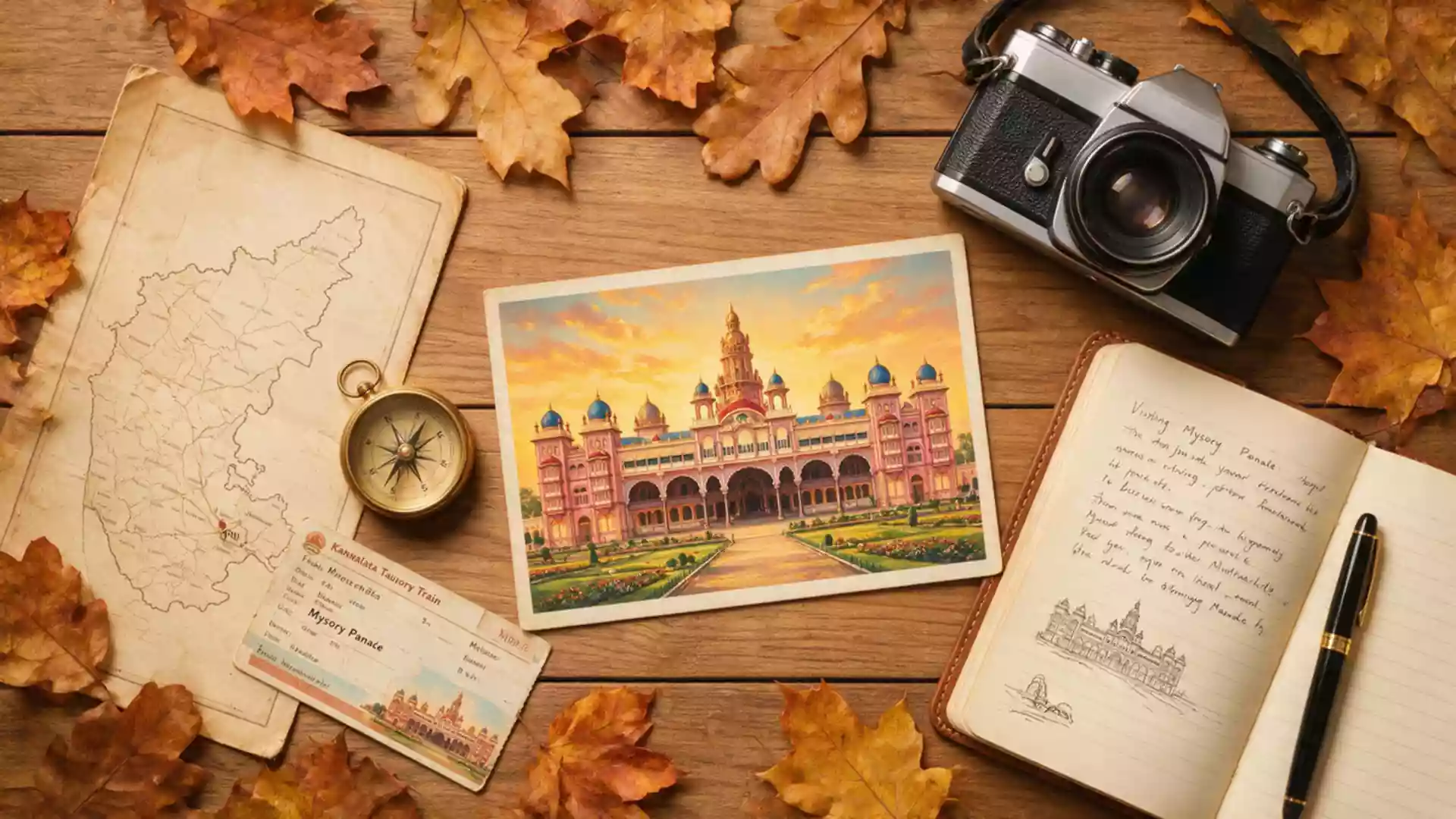
Mysore Palace in Mysuru and its Indo-Saracenic grandeur
Published on 09/14/2026 at 16:23 | Editorial responsibility: Rafael Müller, Editor-in-Chief AD HOC NEWS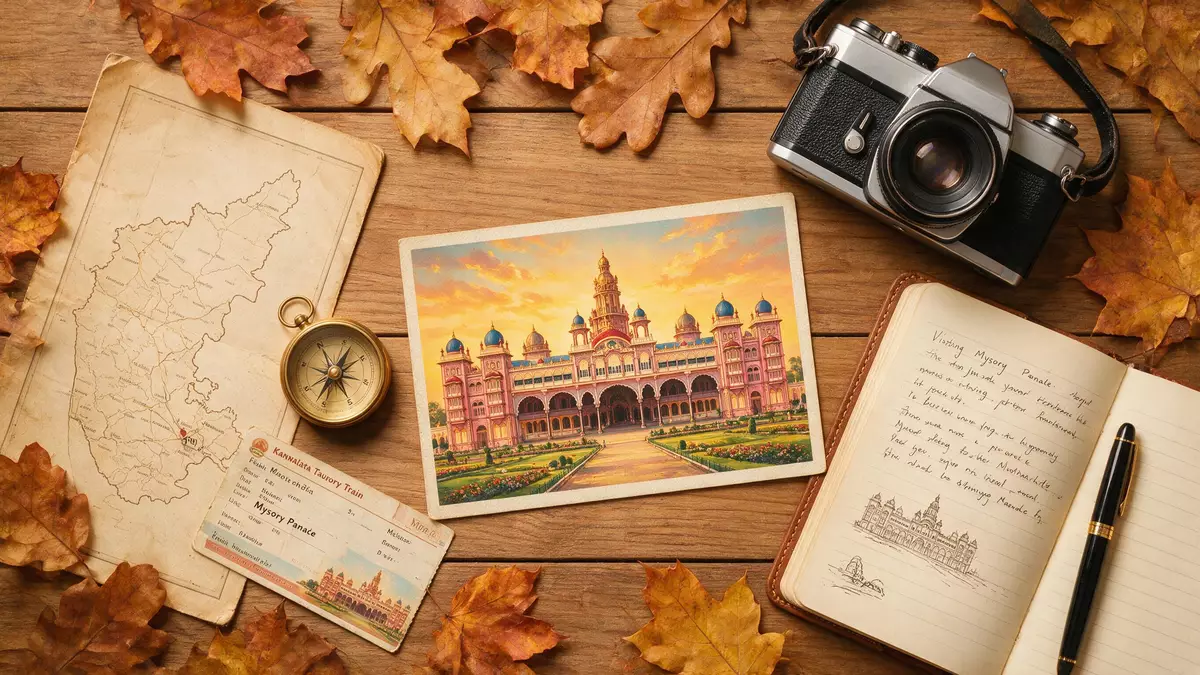
Mysore Palace in Mysuru, also known as Amba Vilas Palace, is a vast royal residence whose Indo-Saracenic silhouettes still define the ceremonial centre of this southern Indian city. Built between 1897 and 1912 for Maharaja Krishnaraja Wodeyar IV, it replaced an earlier wooden palace that had been lost to fire and gave the Wadiyar dynasty a new seat at the heart of the Kingdom of Mysore.
A royal palace rebuilt at the turn of the twentieth century
The story of Mysore Palace is inseparable from the Wadiyar, or Wodeyar, dynasty, which ruled the Kingdom of Mysore for centuries and kept its principal residence on this site in Mysuru. The present palace stands inside the old fort area, where earlier royal structures were repeatedly damaged and reconstructed, including a wooden palace that burned during wedding festivities in 1897.wooden palace that burned
In response to that disaster, Maharani Vani Vilas Sannidhana, acting as regent, commissioned British-Indian architect Henry Irwin to design a new palace that would reflect the power and modernity of the Mysore court at the end of the nineteenth century.commissioned British-Indian architect Henry Irwin Construction began in the late 1890s and reached completion in 1912, giving Mysuru a three-storey stone palace faced in grey granite and capped by a central tower with a gilded dome.completed in 1912
Indo-Saracenic architecture in stone, domes and arches
Mysore Palace is a prominent example of Indo-Saracenic architecture, a style that blended Indian and Islamic forms with European influences at the height of the British Raj.prominent example of Indo-Saracenic architecture Henry Irwin’s design arranges the palace as a broad, three-storey stone building with projecting pavilions and towers, crowned by deep-coloured domes that accent the skyline of Mysuru.three storied structure in the Indo-Saracenic style
The architecture incorporates arches, colonnades and ornamental details that draw on Hindu, Mughal, Rajput and Gothic traditions, producing a palace façade where cusped openings, decorative parapets and layered towers sit together in one composition.borrowing elements from Hindu, Mughal, Rajput, and Gothic The central tower rises above the rest of the structure, culminating in a gilded dome that gives the palace a distinctive profile against the sky while signalling the former status of the Mysore maharajas as rulers within a wider imperial framework.gilded dome in the southern Indian city
From royal residence to ceremonial and museum complex
For generations Mysore Palace served as the official residence of the Wadiyar dynasty and the seat of the Kingdom of Mysore, housing the private apartments and durbar halls where rulers received guests and conducted state business.official residence of the Wadiyar dynasty After Indian independence in 1947, the palace passed into state ownership while parts of the complex continued to be used by the descendants of the former maharajas, preserving a link between the building and the family that had shaped its history.passed into state ownership
Visitors encounter Mysore Palace as both a museum and a living ceremonial setting, with formal halls, corridors and courtyards arranged around the main block and its towers. The palace sits close to other historic structures in central Mysuru and faces towards Chamundi Hills in the east, connecting the royal complex visually to the wider landscape of Karnataka.situated in the central part of Mysuru Within its grounds, elements such as gateways, subsidiary buildings and decorative features trace the evolution of Mysore’s royal architecture from fort and wooden palace to the stone and granite ensemble seen in its present form.
Visiting Mysore Palace: what travellers from Western Europe should know
- Mysore Palace stands in central Mysuru in the Indian state of Karnataka, within the historic palace complex reached from the city’s main streets and close to Chamundi Hills.
- The grounds and interiors involve walking across large paved areas and climbing steps within palace halls and gateways, so visits demand steady footing on stone surfaces.
- The official language is Kannada and the currency is the Indian rupee.
- Entry requirements depend on your nationality; UK travellers can check the FCDO travel advice at gov.uk/foreign-travel-advice, Irish travellers the Department of Foreign Affairs at ireland.ie.
Searching for Mysore Palace on social platforms
These links open searches for Mysore Palace on each platform.
Frequently asked questions about Mysore Palace
Where is Mysore Palace and what is its historical role?
Mysore Palace stands in central Mysuru in Karnataka, India, and served as the official residence of the Wadiyar rulers and the seat of the Kingdom of Mysore.
What can visitors expect when exploring Mysore Palace?
Visitors encounter a large Indo-Saracenic stone palace with domes, arches and ceremonial halls, set within a historic fort precinct that includes courtyards and gateways.
What makes Mysore Palace distinctive among royal residences?
The palace is distinctive for its Indo-Saracenic blend of Hindu, Islamic, Rajput and Gothic elements, its three-storey granite massing, and its central tower crowned by a gilded dome.