
Mysore Palace in Mysuru and its Indo-Saracenic grandeur
Published on 08/31/2026 at 17:22 | Editorial responsibility: Rafael Müller, Editor-in-Chief AD HOC NEWS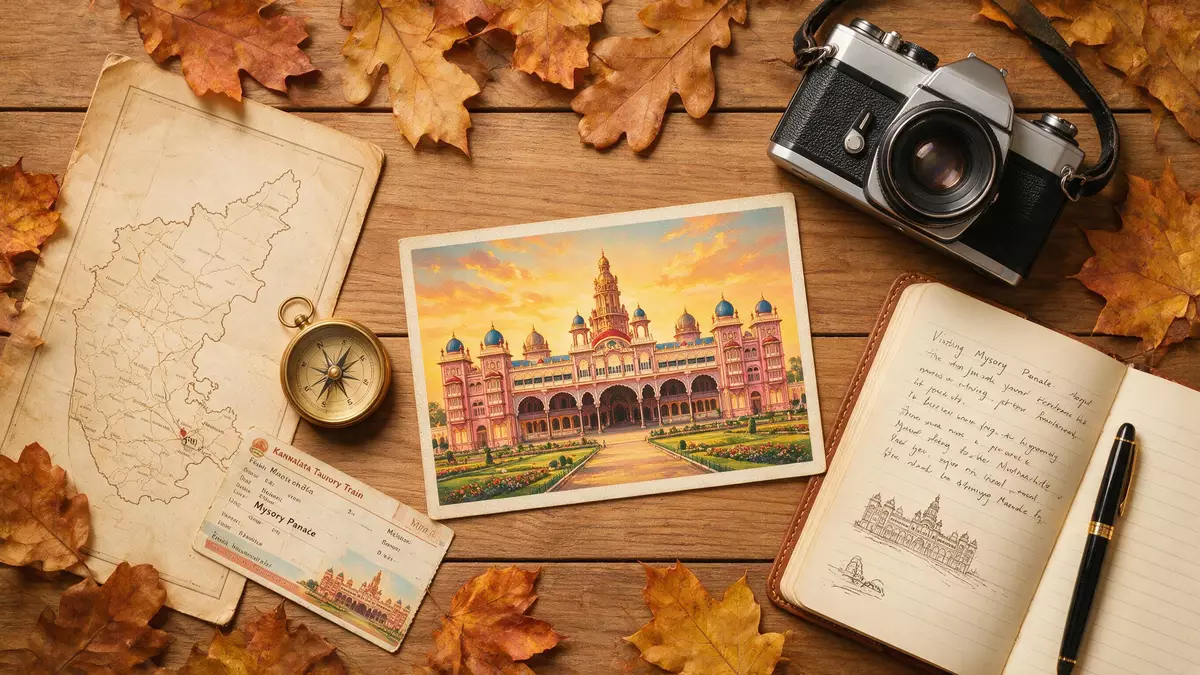
Mysore Palace in Mysuru, southern India, is a broad, stone-built royal residence whose Indo-Saracenic architecture and gilded central dome dominate the old city’s skyline. Completed in 1912 for the Wodeyar dynasty, it stands on Sayyaji Rao Road as the formal seat of the former rulers of the Kingdom of Mysore.
Granite, domes and an Indo-Saracenic silhouette
Mysore Palace, also known as Amba Vilas Palace, is a three-storey granite complex laid out around internal courtyards and ceremonial halls. Its most distinctive feature is a taller central tower capped with a gilded dome, rising above lower rooflines and a rhythm of corner domes and turrets that give the building its stepped profile.three-storey granite complex The overall style is Indo-Saracenic, a late nineteenth- and early twentieth-century architectural language that combines arches, domes and colonnades drawn from Hindu, Islamic, Rajput and European traditions.Indo-Saracenic style
The present palace was commissioned after a fire destroyed an earlier, largely wooden residence in the late nineteenth century, and construction began in 1897 under the direction of the British architect Henry Irwin. It reached completion in 1912, giving Mysuru a new royal seat built in stone and marble rather than timber.construction began in 1897 and concluded in 1912 The building fronts a broad palace forecourt and is enclosed by fort-like walls with gates aligned to the main axes of the complex.
Royal residence and ceremonial heart of the Wodeyar kingdom
For centuries Mysore Palace has been the official residence of the Wodeyar dynasty, whose rule over the Kingdom of Mysore gives the site its political and ceremonial weight.official residence of the Wodeyar dynasty The older palaces that preceded the current structure were incorporated into Mysore’s fort, but the 1912 building defines the present layout, with formal processional routes leading to its main entrance and halls used for durbars and receptions. The complex is associated with Maharaja Krishnaraja Wadiyar IV, under whose reign the stone palace project was completed.
Inside, Mysore Palace contains a sequence of halls designed for different degrees of ceremony, from audience chambers with rows of columns to private apartments reserved for the royal household. The most striking spaces use vividly painted ceilings, polished stone floors and colonnades to frame processional routes between the gates and the central hall. Today parts of the palace function as a museum open to visitors, while sections remain reserved for ceremonial use linked to the Wodeyar family.museum and royal residence
Mysore Palace within the fabric of Mysuru
Mysuru developed around the palace and its fort, so Mysore Palace is closely integrated into the street grid and markets that surround it. The complex occupies a large plot along Sayyaji Rao Road, in the Chamrajpura area of the city, with urban streets running along its perimeter walls.Sayyaji Rao Road location Within those walls the transition from the bustle of Mysuru to the ordered courtyards and lawns of the palace grounds is marked by formal gateways and guard structures.
The palace’s Indo-Saracenic domes and towers rise above the lower commercial buildings around it, making them visible from many streets in the historic centre. Viewed from the open space in front of the main façade, the grey granite walls and pinkish domes frame a wide, symmetrical elevation with arches, balconies and ornamental railings. The complex is part of a wider ensemble of palaces and public buildings in Mysuru, but its scale and central position give it a defining presence in the city’s architectural landscape.palace within Mysuru
Visiting Mysore Palace: what travellers from Western Europe should know
- Mysore Palace stands on Sayyaji Rao Road in central Mysuru, Karnataka, and is reached by city streets from Mysuru Junction railway station and the main bus stands.
- The grounds include large paved areas and internal courtyards, and visiting the interior involves walking through halls and up staircases, some of them relatively long.
- The official language is Kannada and the currency is the Indian rupee.
- Entry requirements depend on your nationality; UK travellers can check the FCDO travel advice at gov.uk/foreign-travel-advice, Irish travellers the Department of Foreign Affairs at ireland.ie.
Searching for Mysore Palace on social platforms
These links open searches for Mysore Palace on each platform.
Frequently asked questions about Mysore Palace
Where is Mysore Palace and what is its role in Mysuru?
Mysore Palace is in Mysuru, Karnataka, on Sayyaji Rao Road, and serves as both a museum complex and the official residence of the Wodeyar dynasty.
What should visitors expect inside Mysore Palace?
Visitors encounter large ceremonial halls, painted ceilings, colonnades and royal apartments arranged around courtyards, with parts of the complex accessible as a museum.
What makes Mysore Palace distinctive among Indian palaces?
Mysore Palace is distinctive for its Indo-Saracenic architecture, granite construction, gilded central dome and long association with the Wodeyar rulers of the Kingdom of Mysore.


