
Museo Nacional de Antropologia and its monumental courtyard in Mexiko-Stadt
Published on 09/16/2026 at 18:56 | Editorial responsibility: Rafael Müller, Editor-in-Chief AD HOC NEWS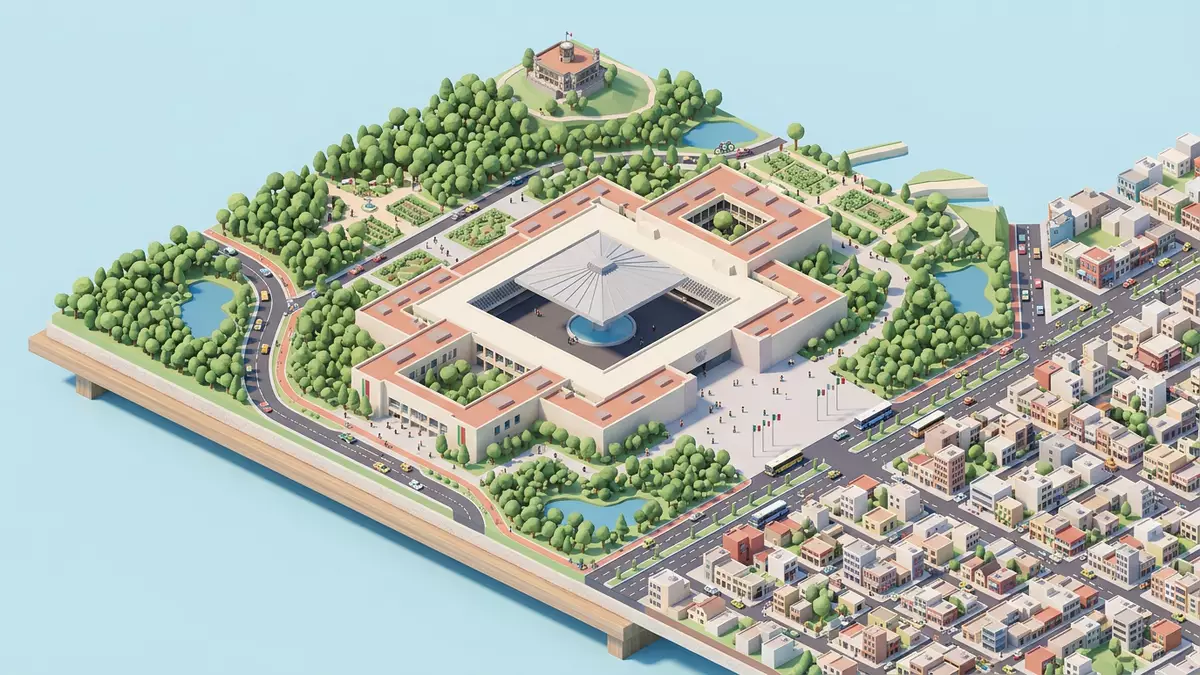
Museo Nacional de Antropologia in Mexiko-Stadt is Mexico’s principal museum of archaeology and ethnography, housed in a vast modernist complex inaugurated in 1964 within Chapultepec Park. The building and its collections focus on the civilisations that shaped Mesoamerica and the many Indigenous cultures of the country, bringing them together in one carefully planned museum ensemble.
A modern landmark dedicated to Mexico’s ancient cultures
The current home of Museo Nacional de Antropologia was inaugurated on 17 September 1964, marking a new phase for the country’s national collections of archaeology and anthropology.The inauguration in 1964 followed earlier incarnations of the national museum, which had developed during the nineteenth and twentieth centuries under the care of Mexico’s cultural authorities.Earlier national museum history
The museum stands between Paseo de la Reforma and Calzada Gandhi within the Chapultepec Polanco neighbourhood of the Miguel Hidalgo district, set at the edge of the wooded expanse of Chapultepec Park.Its location between Paseo de la Reforma and Calzada Gandhi From the start, the institution has been the responsibility of the Instituto Nacional de Antropologia e Historia, which oversees the country’s archaeological sites and museums.INAH’s role in the museum
Architecture framed around a monumental central courtyard
The building was designed in the early 1960s by architect Pedro Ramirez Vazquez, working with Jorge Campuzano and Rafael Mijares, and has become a reference point in modern Mexican architecture.The architects of the museum Their design combines abstract geometrical forms with allusions to pre-Hispanic architecture and a strong sense of monumentality, creating a distinct presence along Paseo de la Reforma.
At the heart of the complex lies a broad courtyard defined by surrounding galleries and dominated by a single massive concrete pillar holding up a wide roof slab, from which water descends in a controlled sheet. This feature has become one of the museum’s most recognisable elements, contrasting the heavy material of the pillar with the moving water and the open space of the courtyard around it. The galleries are organised on two levels around this central space, with covered circulation routes linking the exhibition halls that face inward towards the courtyard and outward towards the park.
Collections that trace Mexico from Olmec heads to contemporary communities
Museo Nacional de Antropologia holds extensive archaeological and ethnographic collections that survey the many cultures of Mexico, from ancient civilisations to present-day Indigenous communities. The museum’s galleries bring together monumental stone sculptures, ceramics, carved reliefs, jewellery, codices and everyday artefacts, presenting them in sections devoted to regions and cultural groups.
The building contains eleven archaeological halls and five ethnographic halls, with a total constructed area of around 45,000 square metres, making it the largest museum in Mexico by floor space.Its eleven archaeological and five ethnographic halls Among the most noted objects is the monumental Aztec Sun Stone, displayed in a dedicated gallery which also contains other large-scale sculptures from the Mexica capital. Other rooms focus on cultures such as the Maya, the Gulf Coast civilisations and the peoples of Oaxaca, while the ethnographic sections present clothing, ritual objects and domestic items from Indigenous communities across the country.
Visiting Museo Nacional de Antropologia: what travellers from Western Europe should know
- Museo Nacional de Antropologia stands between Paseo de la Reforma and Calzada Gandhi in the Chapultepec Polanco neighbourhood of Mexiko-Stadt, on the north side of Chapultepec Park.
- The museum complex is extensive, and visiting the permanent galleries involves substantial walking along long internal corridors and through exhibition halls on more than one level.
- Public transport connections include Metro Auditorio on Line 7 and Metro Chapultepec on Line 1, with the museum reached on foot from these stations through the Chapultepec area.
- The official language in Mexiko-Stadt is Spanish and the currency is the Mexican peso.
- Entry requirements depend on your nationality; UK travellers can check the FCDO travel advice at gov.uk/foreign-travel-advice, Irish travellers the Department of Foreign Affairs at ireland.ie.
Searching for Museo Nacional de Antropologia on social platforms
These links open searches for Museo Nacional de Antropologia on each platform.
Frequently asked questions about Museo Nacional de Antropologia
Where is Museo Nacional de Antropologia located in Mexiko-Stadt?
The museum is in the Chapultepec Polanco neighbourhood of the Miguel Hidalgo district, between Paseo de la Reforma and Calzada Gandhi beside Chapultepec Park.
What can visitors expect on a visit to Museo Nacional de Antropologia?
Visitors encounter extensive archaeological and ethnographic galleries arranged around a large courtyard, with monumental sculptures, artefacts and displays on cultures from across Mexico.
What makes Museo Nacional de Antropologia distinctive among Mexican museums?
Its combination of modernist architecture by Pedro Ramirez Vazquez and collaborators, the central courtyard with its massive pillar and water feature, and its large-scale collections focused on Mexico’s civilisations make it distinctive.


