Museo Egizio in Turin and its journey through ancient Egypt
Published on 09/11/2026 at 10:35 | Editorial responsibility: Rafael Müller, Editor-in-Chief AD HOC NEWS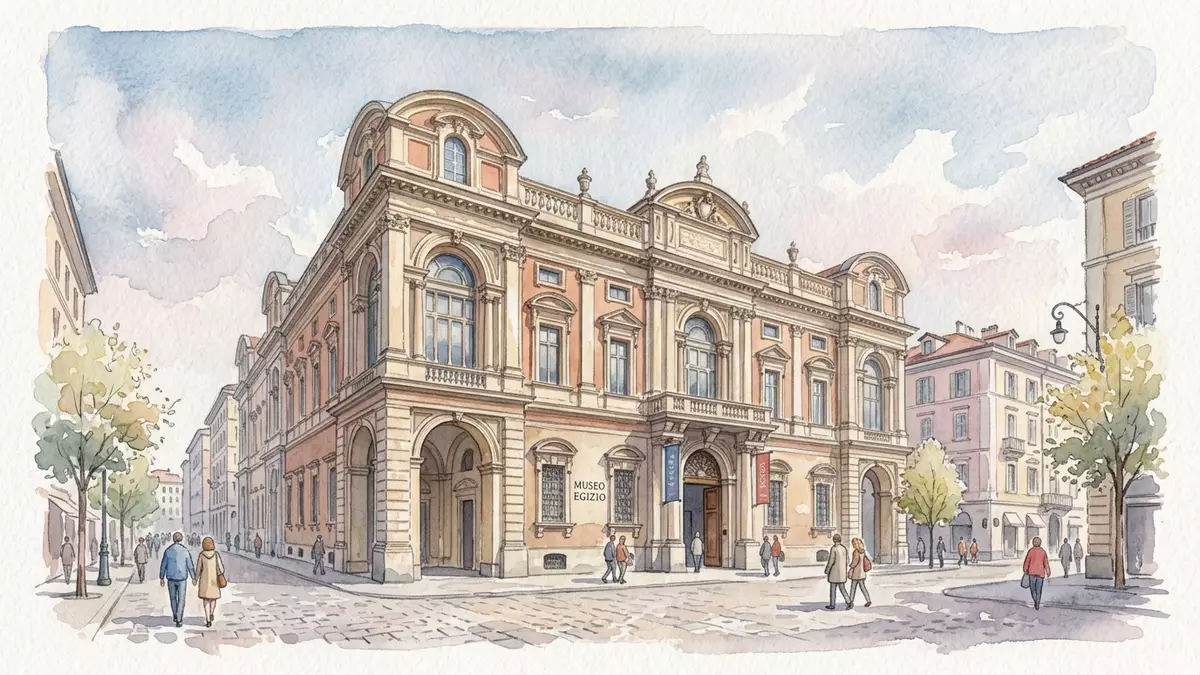
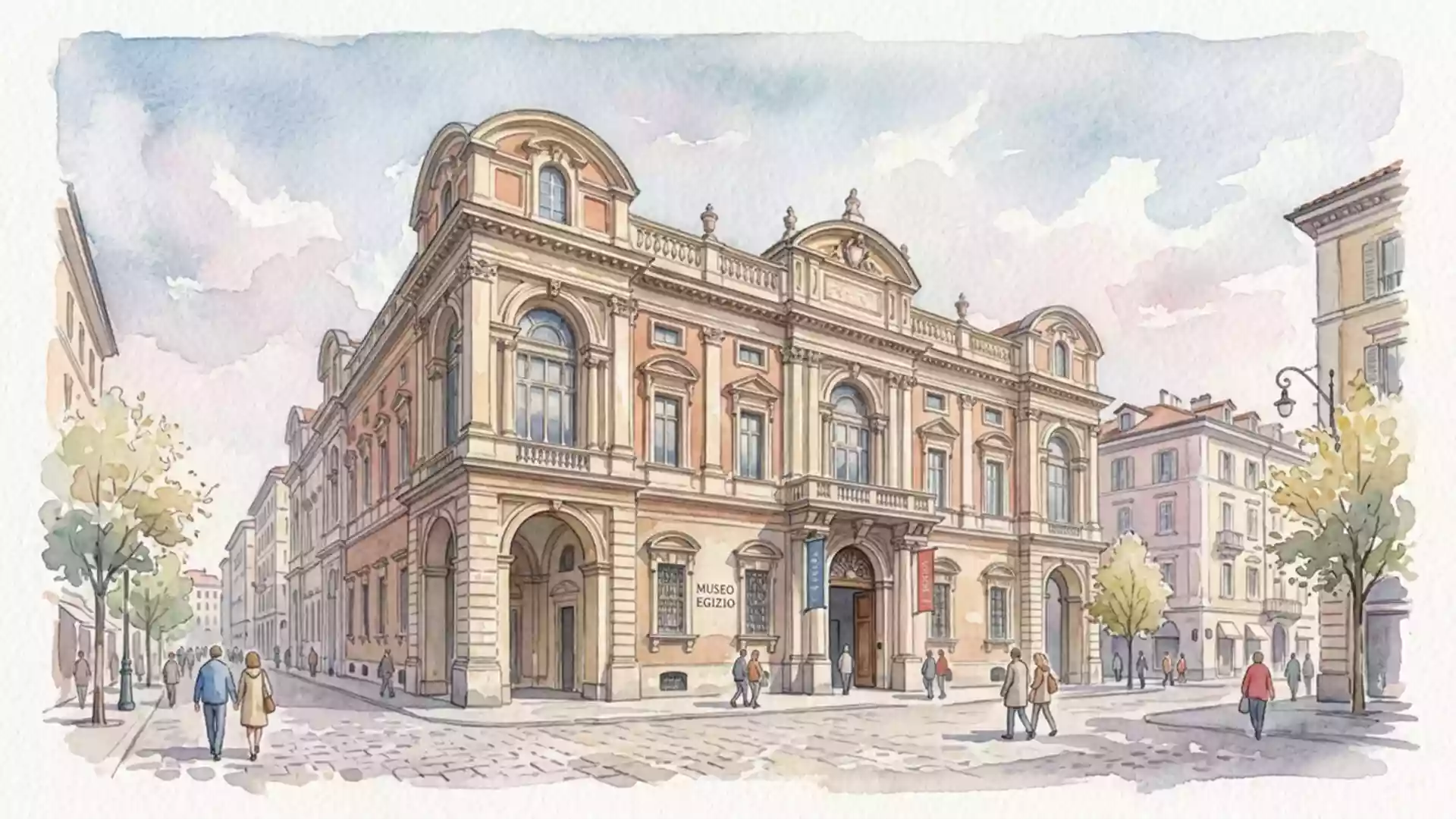
Museo Egizio in Turin gathers ancient Egypt into a single Baroque palace, turning a city block into an extended walk through dynasties, tombs and everyday life along the Nile. Founded in 1824 as a museum devoted entirely to Egyptian antiquities, it has grown into a major Egyptological collection that makes Turin a reference point for the study of ancient Egyptian culture.
A Baroque palace filled with Egypt
Museo Egizio occupies the Palazzo dell’Accademia delle Scienze, a seventeenth-century building in the historic centre of Turin whose austere façades shelter rooms lined with statues, sarcophagi and cases of small artefacts.an elegant Baroque palace Inside, galleries step through ancient Egyptian history from pre-dynastic times to the Coptic era, using objects rather than timelines to show how royal, religious and domestic life changed over millennia.pre-dynastic artefacts to Coptic-era pieces
The building holds a large collection of Egyptian antiquities, with tens of thousands of catalogue entries and several thousand objects on display in the museum rooms.a collection of about 40,000 exhibits Statues stand in wide halls, while papyri, amulets and tools occupy lower cases that bring visitors close to fine details carved or painted centuries before the common era. The palace setting keeps the route compact, stacking galleries across several levels so that major works, study collections and temporary exhibitions share the same address in central Turin.
From early collections to a dedicated Egyptian museum
The roots of Museo Egizio go back well before its formal founding, to pieces of Egyptian style that reached Turin in the seventeenth and eighteenth centuries. These holdings expanded decisively when Bernardino Drovetti assembled a large private collection of statues, papyri, mummies and other items during his time in Egypt, which King Charles Felix acquired in 1824 and used to establish a museum of Egyptian antiquities in the city.the museum was founded in 1824 by King Carlo Felice acquiring the Drovetti collection With that purchase, Turin gained a museum dedicated to Egyptian civilisation that has since been recognised as the oldest institution in the world devoted entirely to ancient Egyptian culture.founded in 1824 as the oldest museum devoted to Egyptian civilisation
Further growth came through archaeological excavations in Egypt between 1903 and 1937, led first by Ernesto Schiaparelli and then by Giulio Farina, which brought tens of thousands of artefacts back to Turin.excavations between 1903 and 1937 by Ernesto Schiaparelli and Giulio Farina These finds, combined with earlier acquisitions by figures such as Vitaliano Donati and Giuseppe Sossio, turned the museum into a comprehensive Egyptological resource with material ranging from monumental stone statuary to fragile papyri and everyday objects recovered from temple sites and tombs.
Highlights from statues to tombs
The collection at Museo Egizio spans grand sculpture and intimate pieces of domestic life. Major works include statues associated with pharaohs such as Ramesses II, which stand among the museum’s most significant pieces of Egyptian art.a statue of Ramesses II among the highlights Nearby, cases hold papyri and funerary equipment from tombs such as that of the royal architect Kha and his wife Merit, whose grave goods and documents date to the fifteenth century BC and trace the life of a high-ranking household in Thebes.tombs such as those of Kha and Merit
Elsewhere in the museum, visitors encounter sarcophagi, mummies, jewellery and amulets laid out to show how beliefs about the afterlife shaped burial practices over more than three thousand years.numerous statues, sarcophagi and grave goods Galleries of material culture present everyday objects such as tools, vessels and textiles, linking royal imagery to the routine work that sustained ancient Egyptian society.Material Culture Galleries The breadth of the holdings has made Museo Egizio a central institution for Egyptology in Europe, supporting research alongside public display.
Visiting Museo Egizio: what travellers from Western Europe should know
- Museo Egizio stands on Via Accademia delle Scienze in central Turin, within walking distance of key squares and reachable by city public transport.
- The museum occupies a multi-storey Baroque palace, with staircases and level changes between galleries, so a visit involves covering several floors on foot.
- Major railway services link Turin with other Italian cities, and the museum can be combined with walks through the surrounding historic streets and nearby cultural institutions.
- Italian is the official language and the currency is the euro, with major international cards accepted widely in the city.
- Entry requirements depend on your nationality; UK travellers can check the FCDO travel advice at gov.uk/foreign-travel-advice, Irish travellers the Department of Foreign Affairs at ireland.ie.
Searching for Museo Egizio on social platforms
These links open searches for Museo Egizio on each platform.
Frequently asked questions about Museo Egizio
Where is Museo Egizio located?
Museo Egizio is in central Turin, housed in the Palazzo dell’Accademia delle Scienze on Via Accademia delle Scienze.
What can visitors expect during a visit?
Visitors walk through multi-level galleries displaying statues, sarcophagi, mummies, papyri and everyday objects that trace ancient Egyptian history over thousands of years.
What makes Museo Egizio distinctive among museums?
It was founded in 1824 as a museum dedicated to Egyptian civilisation and has since developed a broad Egyptological collection supported by early acquisitions and twentieth-century excavations.