
Musei Vaticani and the long arc of papal rooms
Published on 09/04/2026 at 18:15 | Editorial responsibility: Rafael Müller, Editor-in-Chief AD HOC NEWS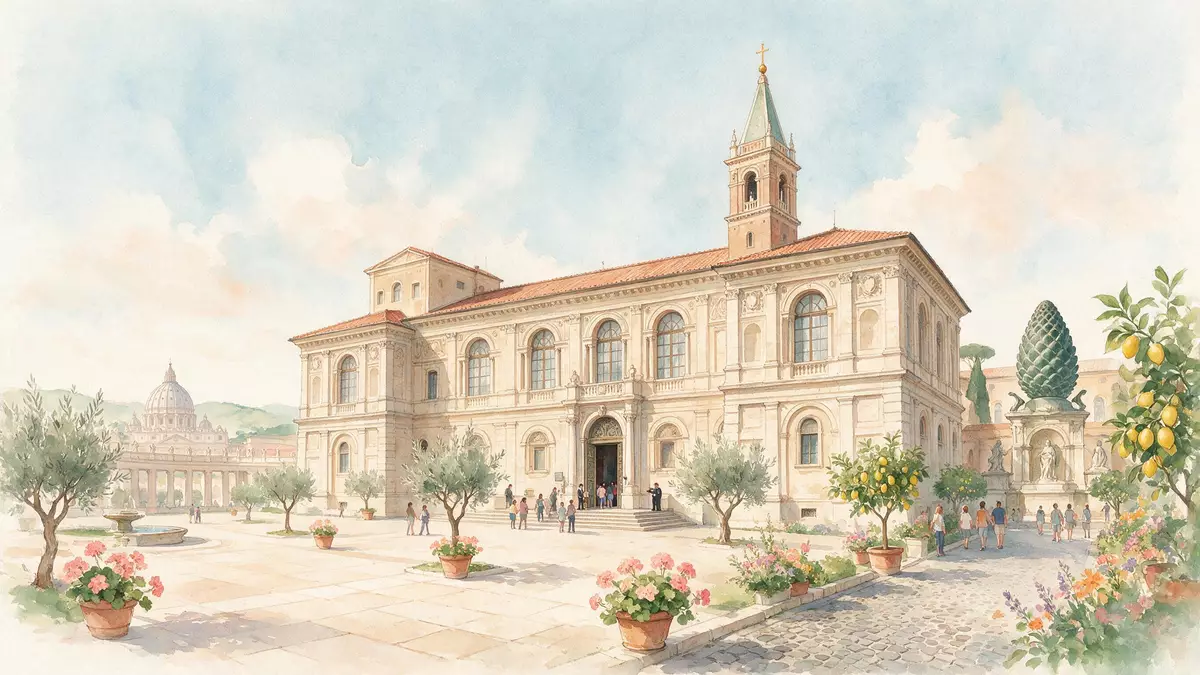
Musei Vaticani in Vatikanstadt brings together papal rooms, galleries and chapels inside the Vatican Palace complex. Its identity rests on the official site, the history of the museums and the name of Julius II. The museums trace their public origin to 1506, when papal collecting took on a new institutional form.
Julius II and the papal collection
The story is tied to Julius II and the early sixteenth century, when the papal collection began to take on a museum character. The Vatican Museums page on history places their development within the wider growth of the papal palaces and the artistic ambitions of the period.
That same setting also explains the close link between the museums and named spaces such as the Sistine Chapel and the Room of Heliodorus. These are not separate museum boxes dropped into a building; they are parts of a palace world shaped by papal use over centuries.
Rooms, corridors and chapels
The museums are less a single hall than a sequence of interiors. Galleries, apartments and chapels sit beside one another, and their names still reflect former uses, collecting interests and papal patronage.
The range includes the Pio Clementino Museum, the Gallery of the Geographical Maps, the Raphael Rooms and the Sistine Chapel. The effect is architectural as much as curatorial: one room leads into another, and the building reads like a layered record of papal taste.
Bramante, courtyards and palace fabric
Another secure anchor is Donato Bramante, whose name is linked with major papal building work in the Vatican complex. The museums’ history page places this work within the early sixteenth-century transformation of the palaces, when the display of art gained a more deliberate setting.
The result is a place where courtyards, corridors and chambers remain part of the experience of the collection. Musei Vaticani does not present art in a neutral shell; it presents art inside a palace structure that retains its own historical character.
Visiting Musei Vaticani: what travellers from Western Europe should know
- The museums are in Vatikanstadt, with access from the Vatican side of Rome. Metro and bus links serve the area, and the official museum pages list route options.
- The visit involves a long sequence of rooms, corridors and staircases. The building fabric is extensive, and the route passes through tightly connected interior spaces.
- Many spaces carry named historical identities, including the Sistine Chapel and the Raphael Rooms. The collection is inseparable from the palace rooms that hold it.
- Entry requirements depend on your nationality; UK travellers can check the FCDO travel advice at gov.uk/foreign-travel-advice, Irish travellers the Department of Foreign Affairs at ireland.ie.
Searching for Musei Vaticani on social platforms
These links open searches for Musei Vaticani on each platform.
Frequently asked questions about Musei Vaticani
Where are Musei Vaticani?
They are in Vatikanstadt, inside the Vatican Palace complex. The museums sit within the institutional heart of the Holy See.
What does a visit involve?
A visit means moving through a sequence of galleries, chapels and corridors rather than a single exhibition room. The route connects spaces with very different histories and names.
What makes Musei Vaticani distinctive?
The distinctive feature is the combination of collection and palace fabric. Art, architecture and papal history remain physically intertwined throughout the complex.


