
Musei Vaticani and the great museum route through Vatikanstadt
Published on 09/16/2026 at 20:25 | Editorial responsibility: Rafael Müller, Editor-in-Chief AD HOC NEWS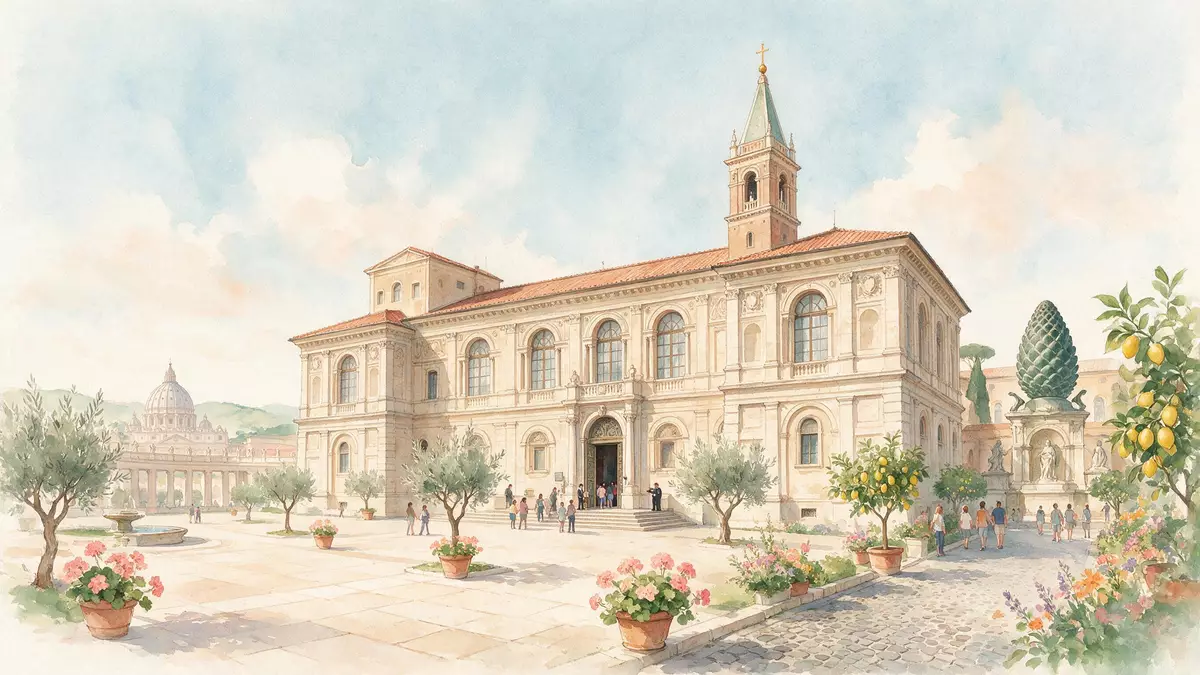
Musei Vaticani in Vatikanstadt, better known in English as the Vatican Museums, forms a continuous museum route through the papal palaces, linking sculpture courts, picture galleries and chapels into one vast walk.Vatican Museums Established in 1506 under Pope Julius II, it grew from a single celebrated marble group into one of the richest ensembles of classical and Renaissance art in Europe.History of the Vatican Museums
A museum grown from a single sculpture
The story of Musei Vaticani begins with the discovery of the ancient sculpture “Laocoön and His Sons” in a Roman vineyard in 1506, when Julius II ordered the work to be brought into the Vatican and shown in a dedicated space.Laocoön and His Sons The pope then commissioned architect Donato Bramante to remodel the papal residence, including the creation of the Belvedere Courtyard and adjoining courtyard of statues, turning parts of the palace into display spaces for antiquities.Belvedere Courtyard
Across the following centuries, successive pontiffs added specialised museums: the Pio Clementino Museum for classical sculpture, the Gregorian Egyptian and Gregorian Etruscan Museums for archaeological finds from the wider Mediterranean world, and galleries devoted to Christian art, coins and medals.Discover the Museums Twentieth-century additions brought a Missionary-Ethnological Museum and a Collection of Modern and Contemporary Art into the route, so that the walk now passes through rooms shaped in different eras but linked by the display of objects gathered by the papacy.
Galleries, apartments and the approach to the Sistine Chapel
Physically, Musei Vaticani occupies a series of wings and corridors wrapped around central courtyards on the north-west side of Vatican City, with the main entrance on Viale Vaticano in Rome.Official Vatican Museums website One widely used route leads from the entrance hall and the Pinecone Courtyard through sculpture galleries such as the Pio Clementino and the Gregorian Egyptian Museum, then along long corridors: the Gallery of Candelabra, the Gallery of Tapestries and the Gallery of Geographical Maps.Vatican Museums layout guide
Beyond these corridors lie the papal apartments decorated by Raphael and his workshop, where fresco cycles fill walls and ceilings in rooms used for official functions under Julius II and Leo X.Raphael's Rooms Visitors then descend towards the Sistine Chapel, the culminating space of the museum route, enclosed within the Apostolic Palace yet approached along the same museum walk that traverses sculpture courts, map galleries and painted chambers.Floor map of the Vatican Museums
Collections from antiquity to contemporary art
The collections of Musei Vaticani span artefacts from ancient Egypt and Etruria, classical Roman and Greek sculpture, early Christian art and medieval works, Renaissance paintings and tapestries, and modern and contemporary pieces acquired or commissioned by the papacy.Collections overview Among the named museum sections are the Chiaramonti Museum and Lapidary Gallery for inscriptions, the New Wing for imperial statues, the Pinacoteca for panel paintings, and the Carriage Pavilion for historic ceremonial vehicles used by popes.Online catalogue of collections
The Department of Historical Collections brings together portraits of pontiffs, armouries and furnishings from the Apostolic Palaces, while the Ethnological Museum “Anima Mundi” and the Missionary-Ethnological Museum hold objects from missionary territories on several continents.Department of Historical Collections Along the tour, display cases, sculptural niches and chapels sit within the same architectural shell, so that the visitor moves from marble figures to ethnographic artefacts and modern canvases without leaving the continuous museum environment shaped by centuries of papal collecting.
Visiting Musei Vaticani: what travellers from Western Europe should know
- Musei Vaticani stands within Vatikanstadt but is reached from the Rome side along Viale Vaticano, a street on the north-west flank of the Vatican walls.
- The standard museum walk involves a long indoor route with many staircases and corridors; some sections use enclosed stairs between floors rather than lifts.
- English and Italian are widely used within Musei Vaticani, and the currency is the euro, which also applies in the surrounding city of Rome.
Searching for Musei Vaticani on social platforms
These links open searches for Musei Vaticani on each platform.Frequently asked questions about Musei Vaticani
Where are Musei Vaticani located?
Musei Vaticani are in Vatikanstadt on the western edge of Rome, with visitor access from Viale Vaticano along the northern side of the Vatican walls.Location information
What should visitors expect on a museum visit?
A visit follows a one-way route through palace wings and galleries, passing sculpture museums, map and tapestry corridors, papal apartments and ending in the Sistine Chapel.Route description
What makes Musei Vaticani distinctive among European museums?
Musei Vaticani combines a historic papal palace setting with collections ranging from the Laocoön and classical sculpture to Raphael’s frescoed rooms and modern and contemporary art.Museum history and masterpieces


