
Musei Vaticani and the art-filled corridors of Vatikanstadt
Published on 09/17/2026 at 07:13 | Editorial responsibility: Rafael Müller, Editor-in-Chief AD HOC NEWS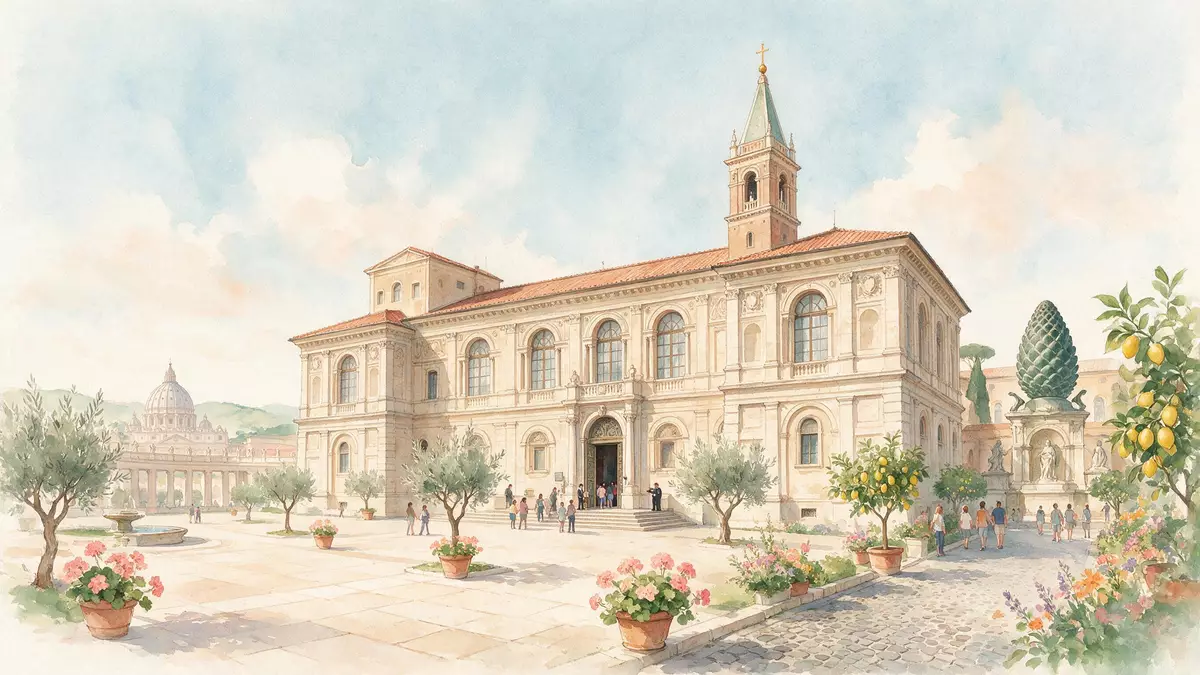
Musei Vaticani, the Vatican Museums in Vatikanstadt, form a vast museum complex built into the historic papal palaces and shaped over more than five centuries of collecting. The museums developed from a collection initiated under Pope Julius II in the early sixteenth century and now extend through galleries, chapels and courtyards that belong to the Vatican City’s official residence of the popes.Pope Julius II founded the museums
From papal palace to museum complex
The core of Musei Vaticani occupies the Vatican Palaces, a cluster of buildings that became the pontiff’s principal residence in the fifteenth century and grew through successive architectural campaigns. Important works of expansion in that period included the establishment of the Vatican Library and the construction of the Sistine Chapel, which later formed part of the museum routes through the palace.The history of the Vatican Museums
A decisive moment in the museum’s story came in 1506, when the ancient marble group “Laocoön and His Sons” was unearthed in a Roman vineyard and brought into the papal collection under Julius II.Laocoön and His Sons entered the collection in 1506 The pope commissioned architect Donato Bramante to reshape the palace complex, including the creation of the Belvedere Courtyard and adjoining courtyard of statues, which gave the growing assemblage of classical works a dedicated architectural setting.Donato Bramante’s Belvedere Courtyard
Collections that span millennia
Musei Vaticani bring together collections that range from ancient Egyptian artefacts and classical statuary to Renaissance frescoes and contemporary painting. Within the complex, visitors encounter named museums and galleries such as the Gregorian Egyptian Museum, the Gregorian Etruscan Museum, the Pio Clementino Museum, the Gallery of the Tapestries and the Gallery of the Geographical Maps, each with its own focus within the wider holdings.Discover the Museums
Alongside historical collections, Musei Vaticani also include a Collection of Modern and Contemporary Art, installed in rooms of the Borgia Apartment that once formed part of Pope Alexander VI’s residence and reorganised as exhibition spaces in the twentieth century.Collection of Contemporary Art in the Borgia Apartment The result is a museum route where ancient sculpture, medieval rooms, High Renaissance frescoes and modern works appear within a single extended sequence of galleries.
Raphael’s Rooms and the Sistine Chapel
Among the most recognisable spaces within Musei Vaticani are Raphael’s Rooms, a suite of four chambers on an upper floor of the papal palace decorated by Raphael and his workshop between 1508 and 1524.Raphael’s pictorial decoration These rooms formed part of the apartment chosen by Julius II della Rovere, pope from 1503 to 1513, for his residence, and their frescoes include the celebrated “School of Athens” in the Room of the Segnatura.
The museum itinerary continues towards the Sistine Chapel, a fifteenth-century chapel within the Apostolic Palace whose ceiling and altar wall carry frescoes by Michelangelo, including the monumental “Last Judgment”.Sistine Chapel among the collections Together, Raphael’s Rooms and the Sistine Chapel form a sequence in which High Renaissance painting and sculpture unfold within the historic fabric of the Vatican residence.
Visiting Musei Vaticani: what travellers from Western Europe should know
- Musei Vaticani stand within Vatican City along Viale Vaticano in the north-western area of Rome, reached on foot or by public transport from surrounding Roman districts.Location on Viale Vaticano
- The museum routes pass through long corridors, staircases and historic rooms, and a visit involves substantial walking across polished stone and stepped transitions between levels.
- Major highlights such as Raphael’s Rooms and the Sistine Chapel lie within the Apostolic Palace, so the approach includes passage through intermediate galleries before reaching these spaces.Four rooms in the Vatican frescoed by Raphael
- The official language of Vatikanstadt is Italian and the currency is the euro (EUR).
Searching for Musei Vaticani on social platforms
These links open searches for Musei Vaticani on each platform.Frequently asked questions about Musei Vaticani
Where are Musei Vaticani located?
Musei Vaticani are situated within Vatican City along Viale Vaticano, adjacent to the north-western part of central Rome and integrated into the papal palace complex.Vatican Museums location
What should visitors expect on a visit?
A visit to Musei Vaticani involves moving through extended museum routes that link specialist collections, historic rooms, Raphael’s frescoed chambers and the Sistine Chapel within the buildings of the Vatican.
What makes Musei Vaticani distinctive?
Musei Vaticani are distinctive for combining millennia-spanning collections with spaces such as Raphael’s Rooms and the Sistine Chapel inside the functioning papal residence of Vatikanstadt.


