
Musee du Bardo: Tunisia’s palace of mosaics in Tunis
Published on 09/21/2026 at 07:28 | Editorial responsibility: Rafael Müller, Editor-in-Chief AD HOC NEWS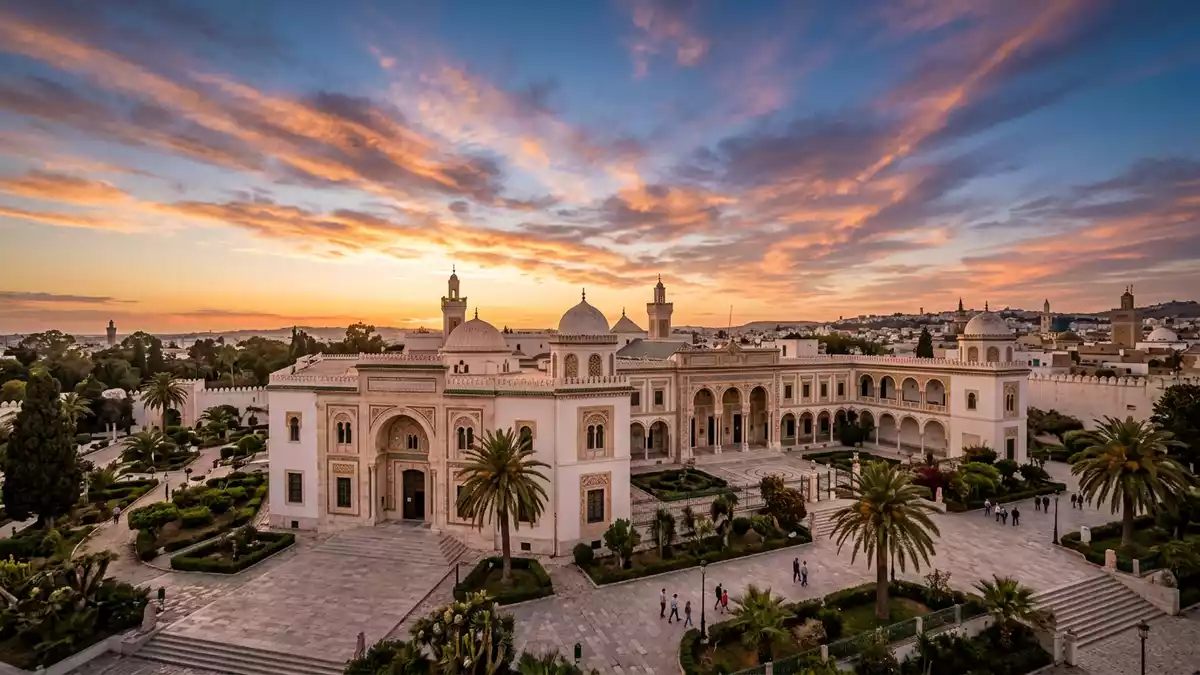
Musee du Bardo in Tunis brings together a nineteenth?century beylical palace and one of North Africa’s richest archaeological collections, with mosaics and artefacts spanning millennia of Tunisian history.
A palace turned national archaeological museum
Musee du Bardo occupies a former beylical residence in the Le Bardo suburb west of central Tunis, a palace built in the nineteenth century for the Husseinite rulers of Tunisia.a palace beylical of the nineteenth century The museum is Tunisia’s main national archaeological institution, housed within this palace and adapted over the decades for galleries, courtyards and exhibition halls.Tunisia’s national archaeological museum
The institution was founded in the late nineteenth century, with a formal foundation date of 7 May 1888, and has grown through successive excavations across the country.founded on 7 May 1888 Inside the palace, older ceremonial rooms sit alongside purpose?built galleries, giving visitors a sequence of spaces that move from ornate reception halls into long mosaic?lined corridors and multi?level displays.
From Carthage to the caliphates: collections across eras
The heart of Musee du Bardo is its Roman mosaic collection, assembled from major archaeological sites such as Carthage, Dougga, El Jem and Sousse and installed across many rooms.mosaics from Carthage, Dougga, Sousse and El Jem These mosaics include mythological scenes, hunting panels, geometric carpets and portraits, laid as large wall compositions or preserved in palace floors, and together they form one of the most significant groupings of Roman mosaics in the Mediterranean region.world’s greatest collection of Roman mosaics
Beyond the Roman material, the galleries trace Tunisian history from prehistoric finds through Punic Carthage into the Byzantine and Islamic periods.artefacts from throughout the country’s history Visitors encounter carved stelae, statuary, inscriptions, ceramics, jewellery and Qur’anic manuscripts, arranged in sections that highlight changes in religion, language and artistic style. Islamic art galleries present carved stucco, glazed tiles and calligraphic decoration from dynasties that ruled after the Arab conquest, while Punic and pre?Roman rooms preserve grave goods and votive objects from coastal and inland sites.
Architecture, layout and atmosphere
The palace architecture remains visible throughout Musee du Bardo, with high ceilings, painted wooden panels and decorative plasterwork framing display cases and mosaic panels.aménagé dans un palais beylical In some rooms, original reception halls have been kept largely intact, their walls lined with historical portraits and ornamental details, while other spaces have been stripped back for uninterrupted runs of mosaics.
The museum extends across multiple wings and levels, with staircases linking suites of rooms and glazed areas where natural light reaches large panels. Courtyards and transitional spaces break up the sequence of galleries, offering views of palace façades and giving a sense of the building’s original layout within the Le Bardo district.location in Le Bardo west of central Tunis Together, the combination of historic architecture and dense archaeological display makes the museum a physical cross?section of Tunisia’s past, set within the former seat of power of its nineteenth?century rulers.
Visiting Musee du Bardo: what travellers from Western Europe should know
- Musee du Bardo stands in the Le Bardo suburb north?west of the historic centre of Tunis, reached by road along Route Nationale 7 or by the Métro Léger line 4 to the Le Bardo stop.
- Inside, the visit involves moving through a series of palace rooms and galleries across several levels, with staircases and longer corridors between mosaic halls and archaeological sections.
- The official language is Arabic and the currency is the Tunisian dinar.
- Entry requirements depend on your nationality; UK travellers can check the FCDO travel advice at gov.uk/foreign-travel-advice, Irish travellers the Department of Foreign Affairs at ireland.ie.
Searching for Musee du Bardo on social platforms
These links open searches for Musee du Bardo on each platform.
Frequently asked questions about Musee du Bardo
Where is Musee du Bardo located within Tunis?
Musee du Bardo stands in the Le Bardo district, a suburb around 4 km west of central Tunis, along Route Nationale 7 and near the Métro Léger line 4 stop Le Bardo.
What can visitors expect inside Musee du Bardo?
Visitors encounter palace architecture combined with extensive archaeological galleries, including major Roman mosaic panels, Punic artefacts, Islamic art and objects from sites such as Carthage and Dougga.
What makes Musee du Bardo distinctive among museums in Tunisia?
It combines a nineteenth?century beylical palace setting with a national archaeological collection notable for its breadth and for the concentration of Roman mosaics gathered from Tunisia’s major excavation sites.


