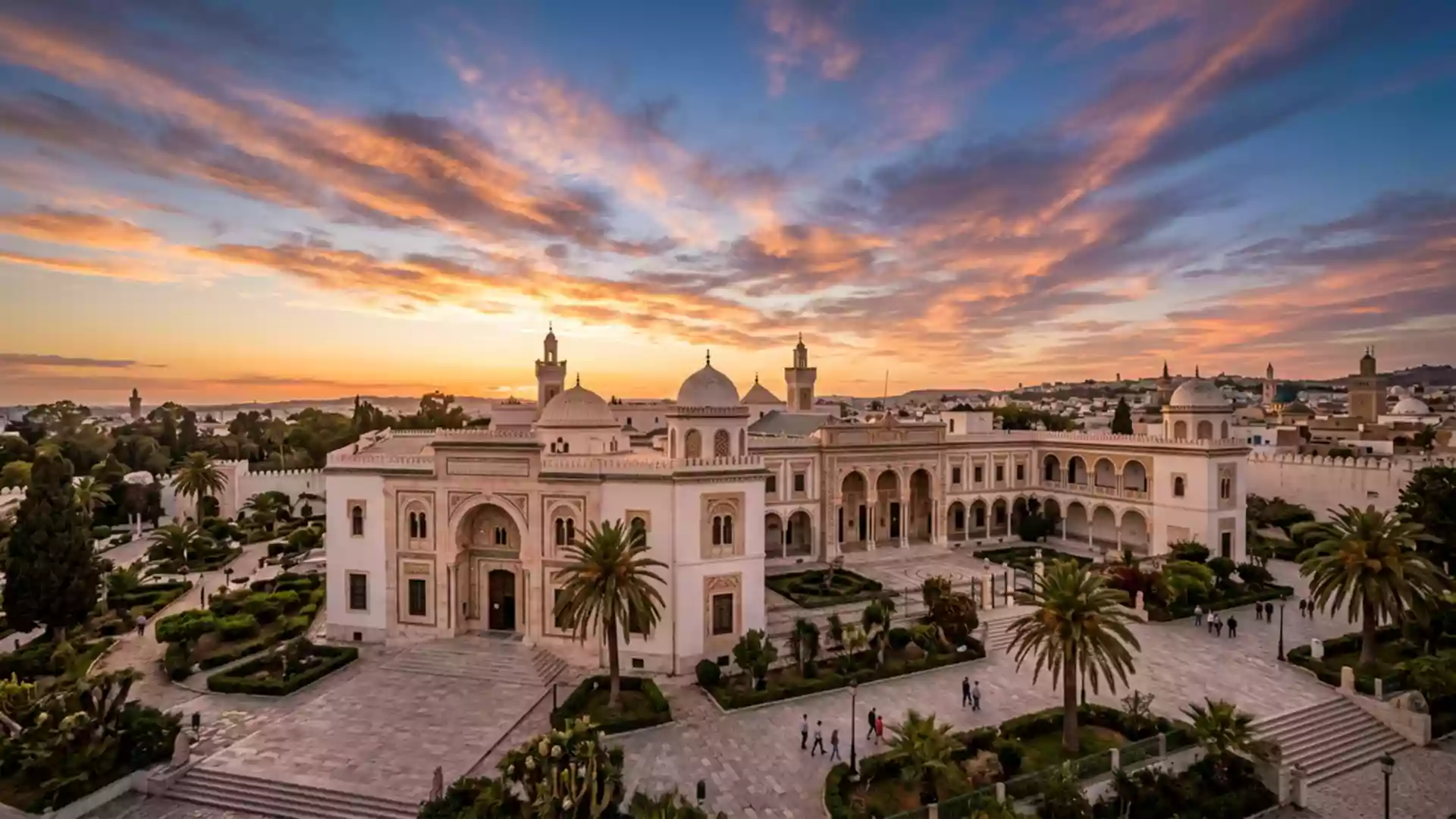
Musee du Bardo in Tunis and its palace of mosaics
Published on 08/28/2026 at 18:25 | Editorial responsibility: Rafael Müller, Editor-in-Chief AD HOC NEWS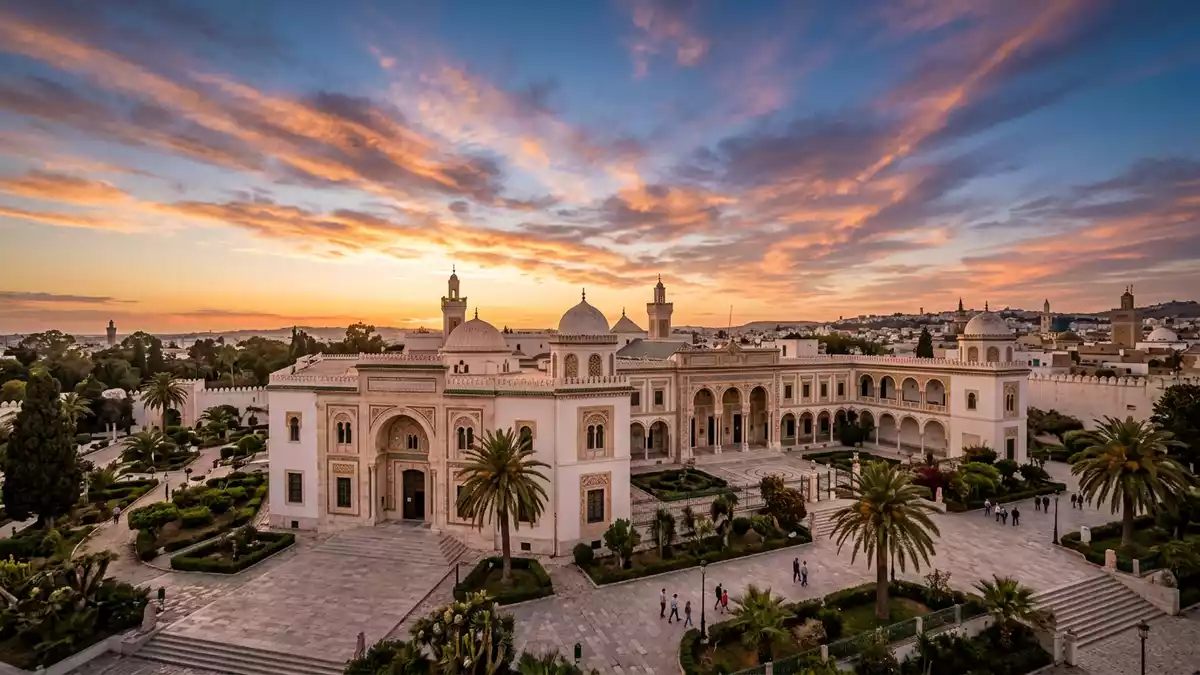
Musee du Bardo in Tunis is Tunisia’s major archaeological museum, housed in a former beylical palace whose nineteenth?century architecture frames one of the world’s richest collections of Roman mosaics.
A palace of the beys turned national museum
Musee du Bardo stands in Le Bardo, a western suburb of Tunis where the rulers of the Husainid dynasty once maintained their palace complex.Le Bardo suburb of Tunis The museum occupies part of this nineteenth?century beylical residence, its galleries unfolding through rooms that retain carved ceilings, painted wall panelling and ceramic decoration drawn from an aristocratic domestic setting.logé dans un ancien palais beylical du XIXème siècle
The institution took shape under French protectorate rule and was inaugurated as a museum in 1888, then known as the Alaoui Museum before later adopting the name Bardo National Museum after Tunisian independence.inauguré le 7 mai 1888 The move from palace to museum left the building’s layered courtyards and reception halls intact, giving the collections a setting that speaks to both royal power and the later national project of presenting Tunisia’s past.
Mosaics and antiquities from across Tunisia
The core of Musee du Bardo’s reputation lies in its mosaics. The museum holds an exceptionally extensive collection of Roman mosaic panels lifted from villas, bath houses and public buildings across Tunisia, forming one of the most important assemblies of mosaic art in the Mediterranean world.large collection of splendid Roman mosaics Floors that once lay underfoot in cities such as Carthage and Thysdrus are now displayed on walls and freestanding supports, their tesserae forming marine scenes, hunting parties, mythological narratives and geometric carpets.
The mosaics sit alongside other archaeological holdings that trace Tunisia’s history from prehistory through Punic, Roman, early Christian and Islamic periods.retraces à travers ses collections une grande partie de l’histoire de la Tunisie Among the highlights are Punic jewellery, sarcophagi carved for Roman elites, Christian baptisteries and artefacts recovered from a Roman shipwreck off Cap Africa, whose cargo of sculptures and everyday objects evokes the maritime routes that linked North Africa with the wider empire.
Architecture, layout and atmosphere
The building that houses Musee du Bardo combines historic palace wings with later additions, creating a sequence of galleries that shift between intimate former apartments and broader exhibition halls.palais Beylical Visitors move through courtyards, staircases and salons where arched arcades, marble columns and ornamental plasterwork frame the archaeological displays. In some rooms, mosaics line entire walls, while others present sculpture and small finds in cases, leaving architectural details visible above.
The museum’s layout reflects its dual identity as palace and national institution. Historic reception spaces house major thematic sections, while newer wings accommodate larger mosaic panels and archaeological material requiring controlled conditions. As a whole, Musee du Bardo functions as Tunisia’s national archaeological museum, bringing together finds from excavations carried out across the country and presenting them within a building that itself belongs to the country’s nineteenth?century history.national archaeological museum
Visiting Musee du Bardo: what travellers from Western Europe should know
- Musee du Bardo is in Le Bardo to the west of central Tunis and is reached by road or by the Métro Léger de Tunis tram system, including line 4 to the Bardo stop.
- The museum occupies a multi?storey palace complex; moving between the galleries involves stairs and passageways, and some sections require walking through long corridors of displays.
- The official language is Arabic and the currency is the Tunisian dinar.
- Entry requirements depend on your nationality; UK travellers can check the FCDO travel advice at gov.uk/foreign-travel-advice, Irish travellers the Department of Foreign Affairs at ireland.ie.
Searching for Musee du Bardo on social platforms
These links open searches for Musee du Bardo on each platform.
Frequently asked questions about Musee du Bardo
Where is Musee du Bardo located?
Musee du Bardo is in the Le Bardo district west of central Tunis, within a former beylical palace complex that once housed the Husainid rulers.
What can visitors expect during a visit?
A visit centres on extensive Roman mosaics and archaeological collections displayed through ornate palace rooms and modern galleries that together present Tunisia’s history from prehistory to the Islamic period.
What makes Musee du Bardo distinctive?
The combination of a nineteenth?century palace setting with a vast mosaic collection and artefacts drawn from excavations across Tunisia gives Musee du Bardo a character rooted in both royal architecture and archaeological depth.