Mosteiro dos Jeronimos and the stone lacework of Belém
Published on 09/02/2026 at 06:26 | Editorial responsibility: Rafael Müller, Editor-in-Chief AD HOC NEWS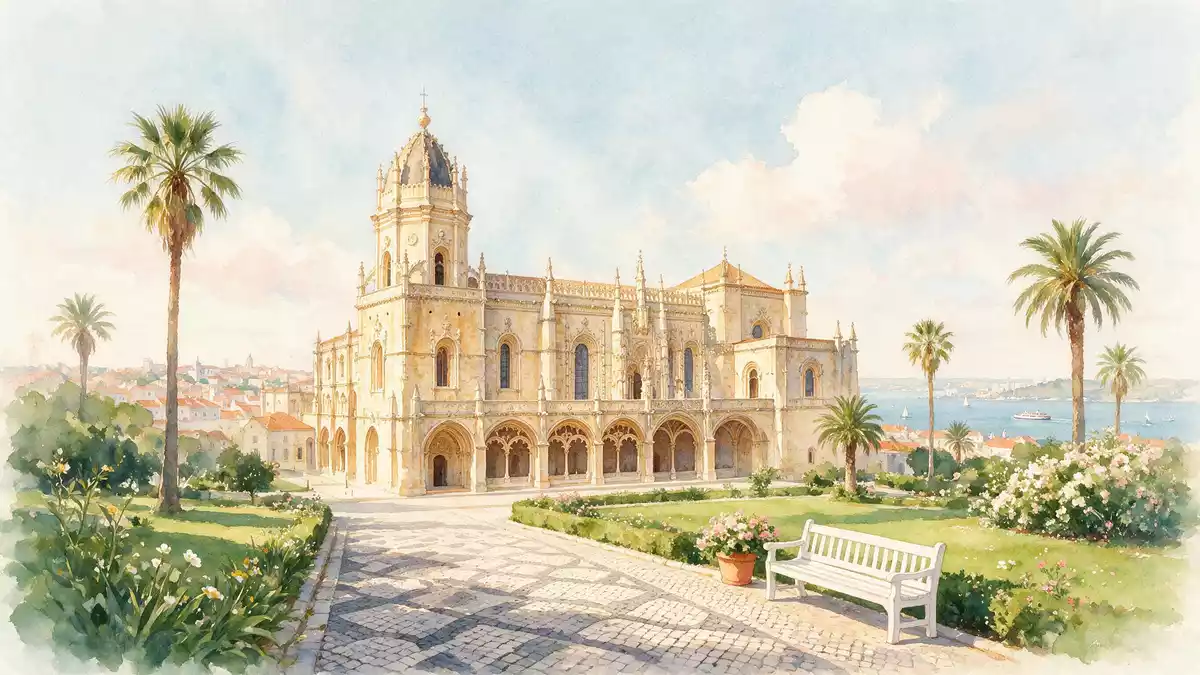
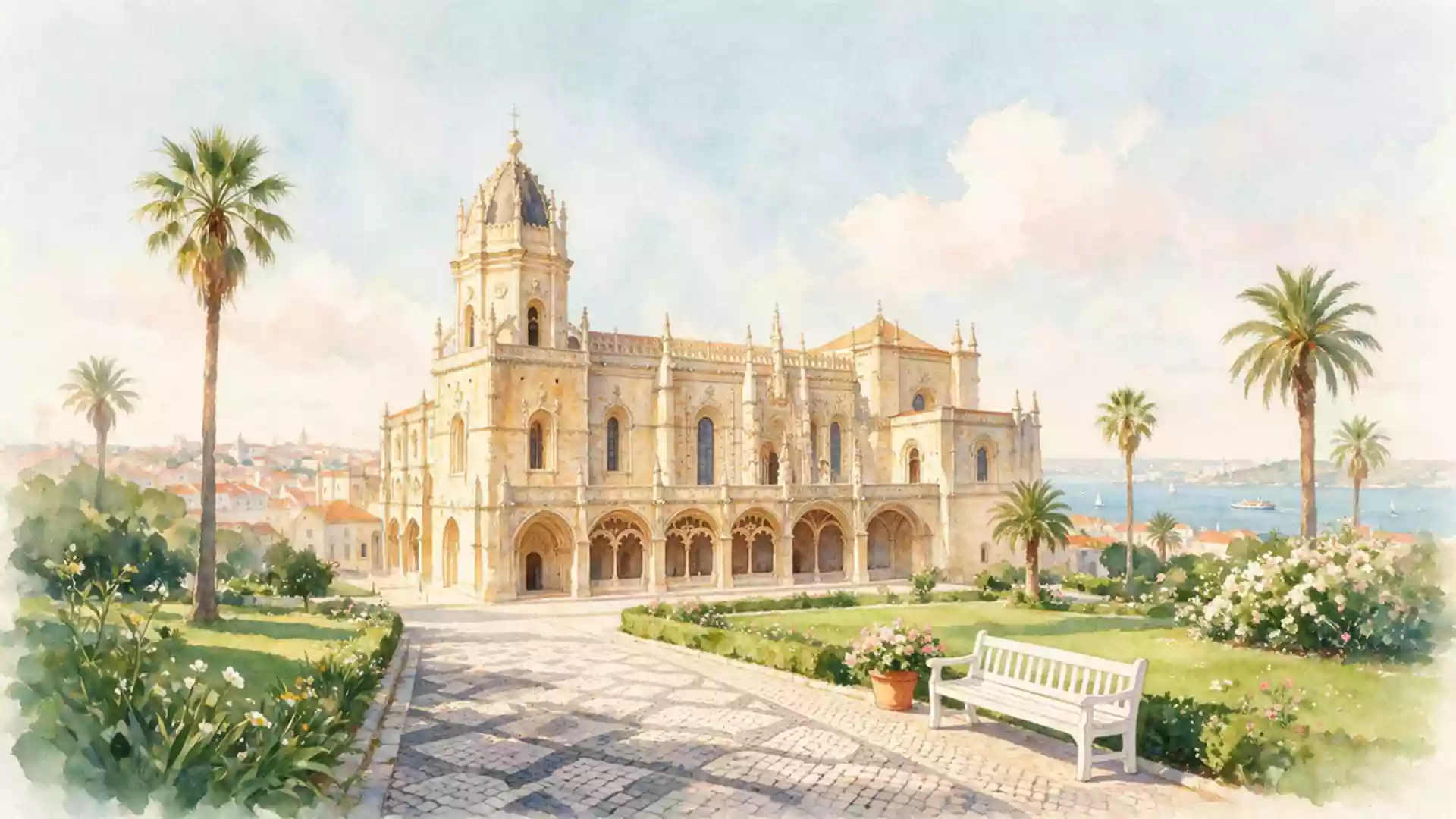
Mosteiro dos Jeronimos in Lissabon is a vast monastery where pale limestone walls are carved so densely that they resemble lace laid over stone. Built in the early sixteenth century in the Belém district beside the Tagus, it stands as one of the clearest expressions of Portugal’s Manueline style and grew from the ambitions of King Manuel I.
Manueline stone and a maritime age
The monastery’s formal name is the Royal Monastery of Santa Maria de Belém, but Mosteiro dos Jeronimos has become the common shorthand for this riverside complex in western Lisbon. Commissioned by King Manuel I towards the end of the fifteenth century and largely completed in the first decades of the sixteenth, it rose during the era when Portuguese ships traced sea routes to Africa, Asia and South America, and the site lies close to the stretch of river from which those voyages departed.King Manuel I The architecture belongs to the Manueline period, a late Gothic style rooted in Portugal that layers sculpted ornament over structural forms and draws on maritime imagery and religious symbolism.Manueline period
Construction of the monastery followed a papal authorisation granted in 1496, allowing the king to found a large house for the Order of Saint Jerome at the entrance to Lisbon. The order’s contemplative character shaped the building’s scale, with extensive cloisters and dormitory ranges arranged around courtyards, all set a short walk inland from the river. The complex later received the legal status of National Monument in 1907, and in 1983 it was inscribed on the UNESCO World Heritage List together with the nearby Torre de Belém, recognising its architectural importance and the historical setting of the Portuguese Discoveries.UNESCO inscription
Cloisters, church and carved façades
Approaching Mosteiro dos Jeronimos from Praça do Império, visitors first see the long river-facing elevation of the church of Santa Maria de Belém and the monastery wings behind it. The façades are built from light-coloured limestone and are dense with carved portals, niches and mouldings, many of them bearing motifs linked to seafaring and royal heraldry. Inside the church, a high nave is carried on slender supports that rise into ribbed vaults, while side chapels line the walls and contain altars and tombs associated with figures from Portuguese history.church of Santa Maria de Belém
Behind the church the cloister forms the heart of the monastic plan, arranged on two levels around a central courtyard. Each side of the cloister consists of arcaded walks with traceried openings and balustrades carved with foliage, knots, ropes and armillary spheres that echo navigational instruments. At ground level these walks connect to refectory spaces and former monastic rooms, while the upper level links to ranges that once housed the community of Hieronymite monks. The claustral layout and sculptural detail have made the cloister one of the most studied examples of Manueline architecture in Portugal.cloister layout
From royal foundation to national symbol
Mosteiro dos Jeronimos began as a royal foundation tied to the House of Aviz and the patronage of Manuel I, and over the centuries it acquired a role as a burial place for prominent figures in Portuguese history. The church holds tombs associated with members of the royal family and with navigator Vasco da Gama, whose sea route to India marked a turning point in European connections with Asia.royal burials Later political and religious changes led to the secularisation of parts of the monastery in the nineteenth century, with areas adapted for different uses while the church remained in religious service.
In the twentieth century, the building’s status as a Monumento Nacional and its place at the centre of a monumental riverside ensemble reinforced its role as a symbol of Portugal’s maritime past.Monumento Nacional The surrounding Belém district contains other structures from different periods, including modern museums and cultural centres, but the monastery’s Manueline cloisters and carved façades remain the visual anchor of the square beside the Tagus.
Visiting Mosteiro dos Jeronimos: what travellers from Western Europe should know
- The monastery stands in the Belém district of Lissabon, facing Praça do Império near the northern bank of the Tagus; urban buses and tram line 15E run to stops signed for “Mosteiro dos Jerónimos”.
- Inside the complex, the cloister levels and church are reached by paved routes and staircases, and the upper cloister is accessed by internal stairs that climb between the two floors.
- The surrounding area includes the riverside promenade beside the Tagus and the Torre de Belém further along the waterfront, making Belém a district where several major monuments lie within walking distance.
- Portuguese is the official language and the currency is the euro; information panels at the site generally give details in multiple languages, including English.
Searching for Mosteiro dos Jeronimos on social platforms
These links open searches for Mosteiro dos Jeronimos on each platform.Frequently asked questions about Mosteiro dos Jeronimos
Where is Mosteiro dos Jeronimos located?
Mosteiro dos Jeronimos stands in the Belém parish of Lissabon, in western Lisbon, close to the Tagus river and Praça do Império.
What can visitors expect inside the monastery?
Visitors encounter the church of Santa Maria de Belém with its high nave and chapels, and cloisters arranged on two levels with richly carved limestone arcades.
What makes Mosteiro dos Jeronimos distinctive among Lisbon’s monuments?
Its Manueline cloisters, dense sculptural façades, royal burials and riverside setting linked to the Portuguese Discoveries together give the monastery a character that is closely tied to Portugal’s maritime history.