
Mosteiro da Batalha and the rise of Portuguese Gothic
Published on 09/12/2026 at 18:16 | Editorial responsibility: Rafael Müller, Editor-in-Chief AD HOC NEWS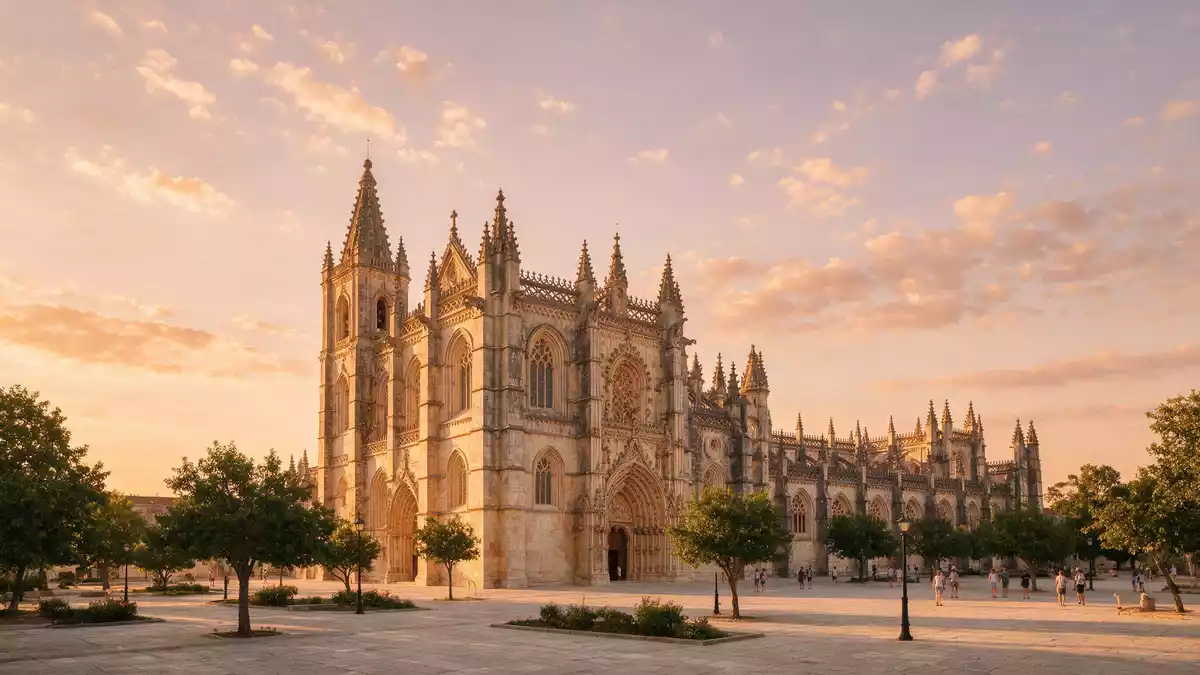
Mosteiro da Batalha in Batalha is a Dominican monastery that links royal memory with late Gothic architecture. It was begun under João I and later became a UNESCO World Heritage site in 1983.
Stonework, cloisters and royal memory
The monastery stands as a long, layered complex rather than a single uniform church. Its most striking parts belong to the Gothic tradition, with Manueline detail appearing in later sections such as the Royal Cloister.
The site is also tied to the battle of Aljubarrota in 1385 and to the burial traditions of the Portuguese monarchy. That historical role gives the building a ceremonial weight that remains visible in its chapels, cloisters and tombs.
From late medieval work to Manueline detail
Construction began in the late fourteenth century, under the patronage of João I, and continued across several phases into the sixteenth century. The result is a building where Gothic structure and Manueline ornament sit side by side without losing their individual character.
The monastery is one of the clearest places to see how Portuguese Gothic developed its own language. The Royal Cloister is especially important in that story, because its tracery and decorative surfaces show the transition in a visible form.
How the monastery fits Batalha
Mosteiro da Batalha stands in the centre of Batalha, in the Centro region of Portugal. Its setting is urban rather than remote, with the monastery forming the major historic landmark of the town.
The complex includes the church, cloisters, royal tombs and the unfinished chapels. That mix of spaces makes the visit feel varied, with the monument combining liturgical, funerary and architectural functions in one ensemble.
Visiting Mosteiro da Batalha: what travellers from Western Europe should know
- The monastery stands in the town of Batalha, in the district of Leiria. It is reached from the town streets rather than from a separate parkland approach.
- The complex includes cloisters, chapels and other large interior spaces. Visitors move through a sequence of stone rooms, arcades and decorated openings.
- The Royal Cloister and the Unfinished Chapels are the best-known named parts of the monument. They show the mix of Gothic structure and Manueline ornament that defines the site.
- The official language is Portuguese and the currency is the euro.
- Entry requirements depend on your nationality; UK travellers can check the FCDO travel advice at gov.uk/foreign-travel-advice, Irish travellers the Department of Foreign Affairs at ireland.ie.
Searching for Mosteiro da Batalha on social platforms
These links open searches for Mosteiro da Batalha on each platform.
Frequently asked questions about Mosteiro da Batalha
Where is Mosteiro da Batalha?
It stands in Batalha, in central Portugal, within the town centre. The monastery is part of the historic fabric of the place rather than a separate out-of-town site.
What does a visit involve?
The visit passes through church, cloisters and chapels, with stone interiors and carved detail throughout. The sequence of spaces is large enough to show different periods of the monument side by side.
What makes it distinctive?
Its distinction lies in the combination of Gothic structure, Manueline ornament and royal memorial function. The Royal Cloister and the battle memory anchored to 1385 give the monument its particular identity.


