
Mosteiro da Batalha and its stone tapestry of late Gothic Portugal
Published on 08/28/2026 at 21:43 | Editorial responsibility: Rafael Müller, Editor-in-Chief AD HOC NEWS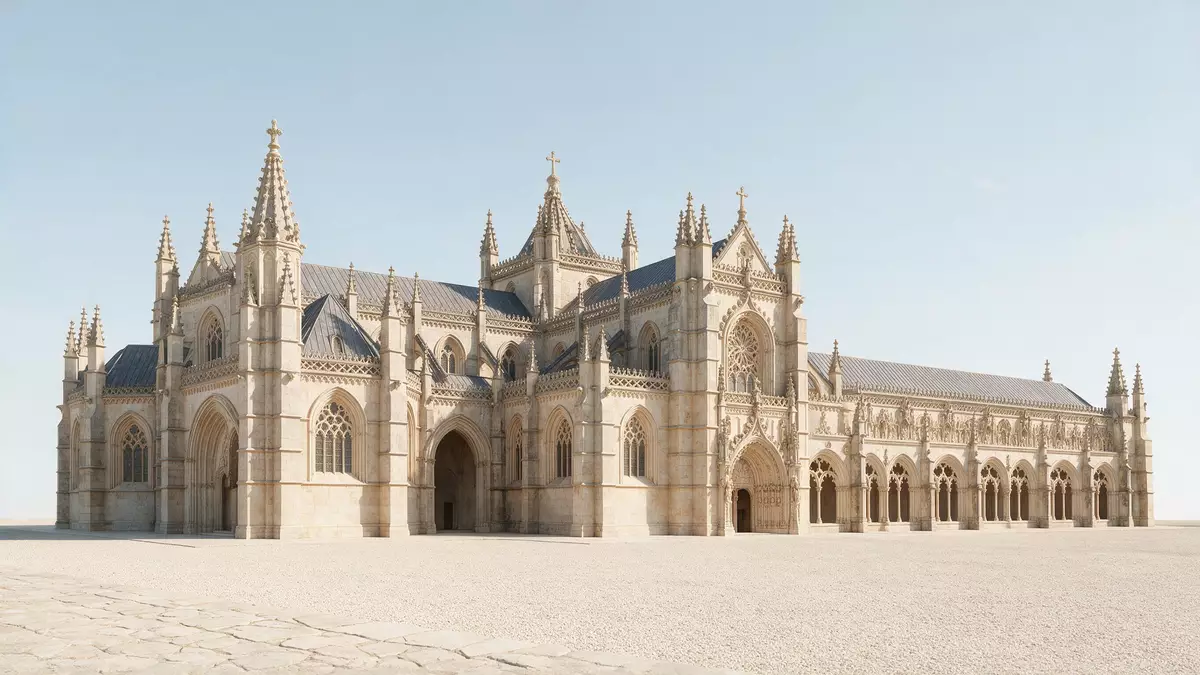
Mosteiro da Batalha in central Portugal is a Dominican monastery raised as a royal memorial to the Battle of Aljubarrota in 1385, where Portuguese forces secured their independence from Castile.Dominican Monastery of Batalha The complex, officially dedicated as the Monastery of Saint Mary of the Victory, grew over more than a century into a vast ensemble of church, cloisters and royal chapels that crystallise the transition from Gothic to the ornate Manueline style.Monastery of Saint Mary of Victory
A royal vow in stone
The story of Mosteiro da Batalha begins with King João I of Portugal, who pledged a church to the Virgin Mary if his army prevailed at Aljubarrota in August 1385.João I vow after Aljubarrota Construction started in the late 1380s under the patronage of João I and continued across the reigns of several Aviz dynasty monarchs, turning the site into both a memorial to the battle and a dynastic pantheon.
The founders’ intentions gave the monastery its formal name, Mosteiro de Santa Maria da Vitória, and its role as burial place for João I, Philippa of Lancaster and their descendants from the Aviz line.Aviz royal pantheon The works extended well into the sixteenth century, which explains how late Gothic structures stand alongside richly carved Manueline additions commissioned under kings such as Manuel I.
Gothic church and cloisters
The heart of Mosteiro da Batalha is its large church, built in the Portuguese interpretation of late Gothic, with a nave flanked by chapels and a high choir that reflects the ambitions of its royal patrons.main church and royal cloister The stone used for the walls has a warm tone, and the elevations are articulated by buttresses and pinnacles that catch the changing light across the day.
Adjoining the church, the primary cloister, often called the Royal Cloister, frames a central courtyard with arcades whose Gothic structure carries Manueline ornament carved into capitals, arches and traceries.Manueline Royal Cloister Beyond this stands a second cloister associated with King Afonso V, more restrained in its decoration yet firmly rooted in the same Gothic vocabulary, giving visitors a clear progression in style as they walk from one courtyard to the next.
Chapels, Unfinished Chapels and UNESCO status
Mosteiro da Batalha contains two major sets of royal chapels: the Founder's Chapel, which serves as the core tomb space for João I and his immediate family, and the so?called Imperfect Chapels, an ambitious funerary complex left structurally open and never fully completed.Founder's Chapel and Imperfect Chapels In the Imperfect Chapels, the Manueline style reaches a high point, with dense stone carving covering supports and cornices, while the absence of a finished roof exposes the sculpted work directly to the sky.
The scale, craftsmanship and historical resonance of the ensemble led to its inscription as a UNESCO World Heritage Site in 1983, recognising both the Gothic architecture and the Manueline details as significant expressions of Portuguese identity.UNESCO World Heritage Site in 1983 Within Portugal, the monastery is also classed as a National Monument, and it appears among the country's widely cited “Seven Wonders” lists, underlining its status in the national imagination.National Monument and Seven Wonders of Portugal
Visiting Mosteiro da Batalha: what travellers from Western Europe should know
- Mosteiro da Batalha stands in the town of Batalha in the Leiria district of central Portugal, with road connections to Coimbra, Leiria and the broader Centro region.located in the centre of the town of Batalha
- Within the complex, movement between the church, cloisters and chapels involves stone stairways and passages, and access to upper levels uses narrow flights that feel enclosed.
- Batalha lies inland in central Portugal, where summer heat can be strong, while the monastery’s stone interiors remain shaded and the open chapels are exposed to the weather.
- The official language is Portuguese and the currency is the euro.
Searching for Mosteiro da Batalha on social platforms
These links open searches for Mosteiro da Batalha on each platform.Frequently asked questions about Mosteiro da Batalha
Where is Mosteiro da Batalha and what kind of place is it?
Mosteiro da Batalha is a Dominican monastery complex in the town of Batalha in central Portugal, built as a memorial to the Battle of Aljubarrota.
What should visitors expect when exploring the monastery?
Visitors move through a large Gothic church, cloisters and royal chapels, with extensive stone carving, enclosed passages and the open Imperfect Chapels exposed above.
What makes Mosteiro da Batalha distinctive among Portuguese sites?
The monastery combines a battle memorial, Aviz dynasty pantheon and major examples of Portuguese late Gothic and Manueline architecture, recognised by UNESCO as World Heritage.


