
Mosquee Hassan II rising between city and ocean
Published on 08/19/2026 at 20:58 | Editorial responsibility: Rafael Müller, Editor-in-Chief AD HOC NEWS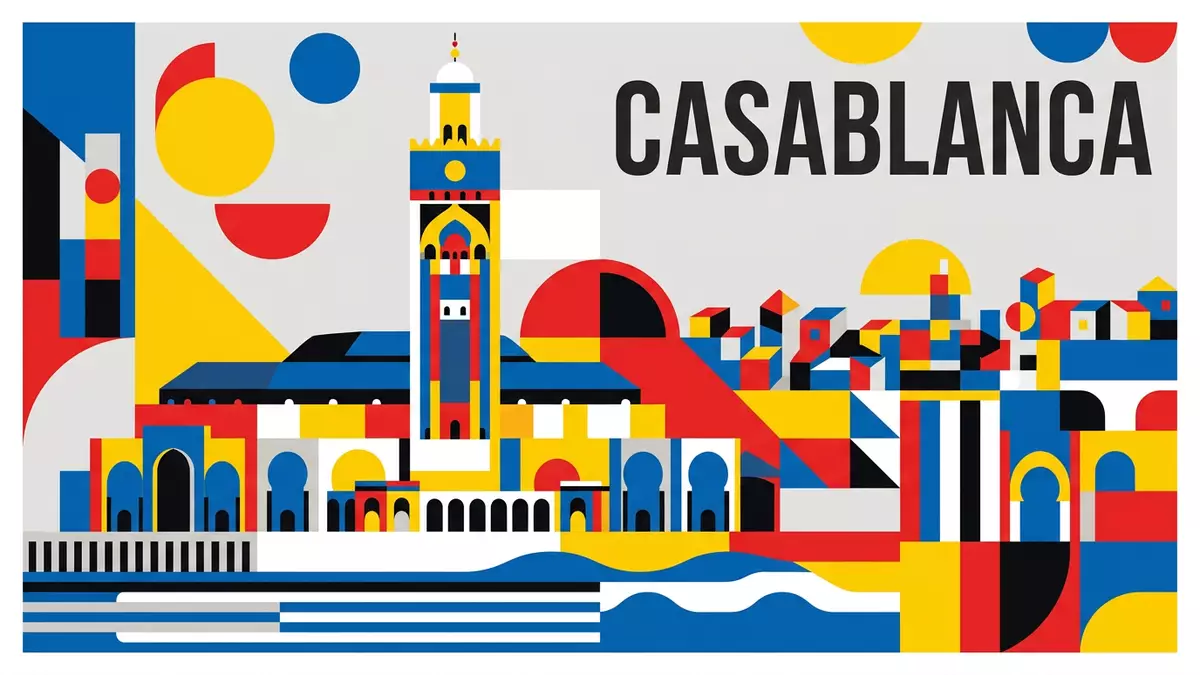
Mosquee Hassan II in Casablanca is a vast waterfront mosque whose tall minaret and ocean?edge prayer hall make it one of Morocco’s defining architectural works of the late twentieth century. Built under King Hassan II and inaugurated in 1993, it brings traditional craftsmanship and large?scale engineering together on a platform reaching out over the Atlantic.
An oceanfront mosque on a projecting platform
Mosquee Hassan II stands on the northern shore of Casablanca, on a headland where the city’s built fabric meets open water. The main body of the mosque occupies a broad esplanade paved in patterned stone, with the prayer hall projecting towards the ocean so that parts of the structure extend above the shoreline. From the terraces and colonnades on the seaward side there are clear views along the Atlantic coast and back towards the city’s streets and apartment blocks, underlining how firmly the mosque belongs to both the urban and maritime landscape.
The decision to place the complex at the water’s edge gives its plan a distinctive outline. A large rectangular platform carries the prayer hall, courtyards and ancillary buildings, with arcades framing the open spaces and enclosing a series of gardens and walkways. Underfoot, broad geometric paving patterns lead from the city side towards the ocean side. The overall impression is of a continuous surface that begins in the dense streets of Casablanca and culminates in a monumental façade facing the Atlantic, with the mosque’s walls rising directly from this shared ground.
Scale, minaret and structural form
The most visible element of Mosquee Hassan II is its square-section minaret, which rises to around 200 to 210 m (656 to 689 ft) above the esplanade, making it one of the tallest religious structures in the world and the highest minaret in Morocco.square-section minaret The tower’s surfaces are covered in intricate tilework and carved plaster, with green?toned ceramic at the upper levels marking its profile against the sky.minaret rises At its summit a laser beam is mounted that projects towards Mecca over a long distance, reinforcing the tower’s role as both a religious and navigational marker.
The main prayer hall beneath the minaret is a large rectangular volume supported by rows of marble and granite columns, with carved cedar wood covering ceilings and cornices.marble and granite columns Above the hall sits a substantial roof structure that can open to the sky, creating an interior that alternates between enclosure and exposure depending on whether the roof segments are closed or retracted.roof structure that can open Along the flanks of the hall, mezzanines provide additional prayer space and are reached by staircases that ascend from the main floor. When the mosque is in full use, worshippers occupy both the ground level and these elevated galleries, with the hall opening westwards towards the Atlantic.
Craftsmanship, materials and late twentieth?century context
Mosquee Hassan II was designed by the French architect Michel Pinseau and built during the reign of King Hassan II, with construction beginning in 1986 and the inauguration taking place on 30 August 1993.designed by Michel Pinseau The period coincided with a wider effort to showcase Moroccan craftsmanship, and thousands of artisans were involved in producing the mosque’s carved wood, zellij tilework, stucco and stone inlay.thousands of artisans Much of the timber and stone used in the complex was sourced within Morocco, including cedar from the Middle Atlas and marble from other regions of the country, giving the building a strong material link to the landscapes beyond Casablanca.
Stylistically, the mosque draws on established forms of Moroccan and Andalusian Islamic architecture, such as horseshoe arches, muqarnas vaulting and intricate geometric ornament, but deploys them at a different scale from historic urban mosques. The prayer hall’s size and the height of the minaret place Mosquee Hassan II among the largest mosque complexes built in the late twentieth century, and its combination of traditional decorative techniques with large concrete and steel structures reflects the engineering capabilities of that era.late twentieth century Alongside the religious spaces, the complex includes educational and cultural facilities, which extend its role beyond daily prayer into teaching and public events.
Visiting Mosquee Hassan II: what travellers from Western Europe should know
- Mosquee Hassan II stands on the Atlantic waterfront in the northern part of Casablanca, and is reached along urban roads linking the city centre with the coastal corniche.
- The complex is built on a broad paved platform with long flights of steps and extensive open courtyards, so a visit involves walking across hard surfaces exposed to sea air and sun.
- The mosque lies within Morocco, where the official language is Arabic and the currency is the Moroccan dirham.
- Entry requirements depend on your nationality; UK travellers can check the FCDO travel advice at gov.uk/foreign-travel-advice, Irish travellers the Department of Foreign Affairs at ireland.ie.
Searching for Mosquee Hassan II on social platforms
These links open searches for Mosquee Hassan II on each platform.
Frequently asked questions about Mosquee Hassan II
Where is Mosquee Hassan II located?
Mosquee Hassan II stands on the Atlantic shore in Casablanca, a major port city on the western coast of Morocco.
What should visitors expect on a visit?
Visitors encounter a large mosque complex with expansive courtyards, a tall minaret, extensive decorative stone and woodwork, and views towards both city and ocean.
What makes Mosquee Hassan II distinctive among mosques?
Its combination of a very tall minaret, retractable roof over the prayer hall, and a platform extending above the Atlantic shoreline makes Mosquee Hassan II distinct among large modern mosques.


