Mont Tremblant: a Laurentian peak between resort and national park
Published on 08/28/2026 at 08:51 | Editorial responsibility: Rafael Müller, Editor-in-Chief AD HOC NEWS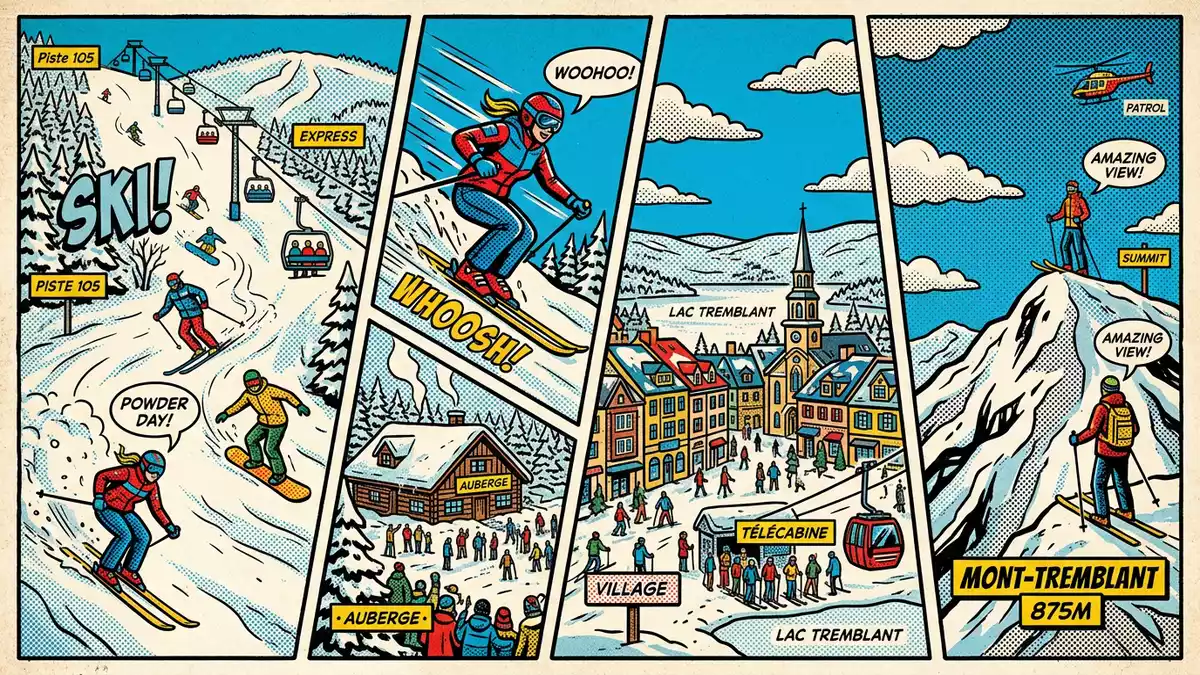
Mont Tremblant rises above Mont-Tremblant in Quebec as a forested Laurentian peak with a long-established ski area on its southern slopes and a protected park around it. The mountain reaches around 932 m (3,058 ft), forming a clear landmark in southern Canada and giving the region its distinct alpine profile.
A mountain shaped by snow, forest and height
Mont Tremblant stands within the Laurentian Mountains, a broad range of rounded peaks and valleys that stretches across southern Quebec north of Montreal. The summit reaches about 932 m (3,058 ft), making it one of the higher points in this part of the province and giving wide views over lakes and mixed woodland when conditions are clear.summit reaches about 932 m The mountain’s flanks drop down towards Lake Tremblant and the valley of Mont-Tremblant, with slopes that have been adapted for skiing on one side and left more natural within the wider park.
The name Mont Tremblant comes from Algonquin language traditions that describe it as a “trembling mountain”, a reminder that the site carried significance long before lifts arrived.“trembling mountain” Around the peak, boreal forest covers ridges and valleys, with conifers and mixed species forming dense cover broken by rock outcrops and river corridors. The broader landscape is marked by numerous lakes, including Lake Tremblant near the resort base, which sit between hills in a pattern typical of the Laurentides.
Resort slopes on the southern side
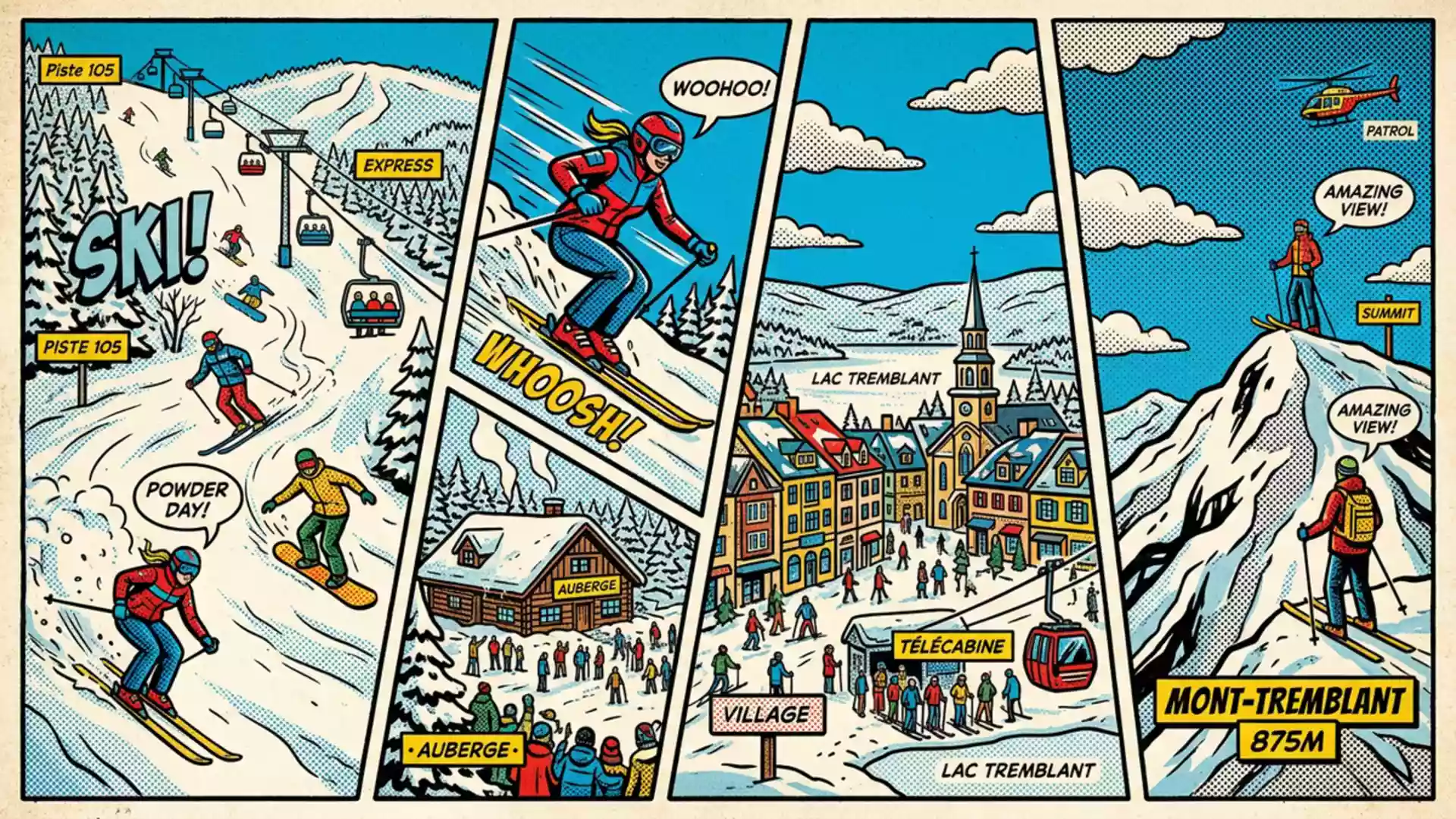
The southern face of Mont Tremblant carries a developed ski area known as Mont Tremblant Resort, with base facilities at the foot of the mountain and lifts rising towards the summit ridge.Mont Tremblant Resort The summit of the resort terrain stands at about 875 m (2,871 ft), and from the top stations the marked descents fall roughly 645 m (2,116 ft) down to the lower base areas on the south side.summit of the resort terrain This height difference is divided among several faces of the mountain, giving a spread of routes that pass through glades, clearings and wider pistes.
The skiable area covers just over 300 ha (around 760 acres), with a long network of trails that together extend for more than 80 km (50 mi).skiable area covers just over 300 ha Lift infrastructure includes gondolas and high-speed chairlifts arranged to reach different sides of the mountain, as well as smaller surface lifts serving shorter runs. Extensive snowmaking equipment covers a large portion of the groomed terrain, with lines of snowguns visible along key pistes when the system is in use.extensive snowmaking equipment Below, a compact pedestrian village at the base brings together accommodation, restaurants and shops, arranged around streets and small squares that face up towards the lifts.
Mont-Tremblant National Park and the wider landscape
Beyond the resort footprint, Mont Tremblant sits within Mont-Tremblant National Park, a protected area that preserves a large tract of Laurentian forest, lakes and river valleys. The park was created in the nineteenth century and today covers more than 1,500 km², making it one of Quebec’s substantial inland conservation areas.created in the nineteenth century Within this area, hundreds of lakes and extensive mixed woodland form a patchwork landscape, with the Diable and Pimbina sectors acting as two main visitor regions connected by the broader terrain.Diable and Pimbina sectors
Trails in the park span valley floors and ridge tops, giving access to viewpoints, waterfalls and quieter lakeshores away from the resort side of the mountain. The protected status of the area limits infrastructure to designated corridors and facilities, leaving large zones of forest and rock with few built structures. Wildlife in the region includes species such as deer and smaller mammals adapted to boreal conditions, and the interplay of river systems and woodland is central to the character of the park landscape.wildlife in the region includes species such as deer
Visiting Mont Tremblant: what travellers from Western Europe should know
- Mont Tremblant lies in Quebec’s Laurentian Mountains north of Montreal, with road access through Autoroute 15 and Route 117 towards the city of Mont-Tremblant and the resort base.
- The mountain combines developed ski slopes on the southern side with forested terrain and park trails elsewhere, so visitors encounter both paved village streets and uneven natural paths and hillside routes.
- The wider area includes Mont-Tremblant National Park with lakes, rivers and woodland, so excursions beyond the resort bring changing terrain underfoot, from shorelines to rocky viewpoints.
- Mont-Tremblant is in Canada, where the official languages are French and English and the currency is the Canadian dollar.
- Entry requirements depend on your nationality; UK travellers can check the FCDO travel advice at gov.uk/foreign-travel-advice, Irish travellers the Department of Foreign Affairs at ireland.ie.
Searching for Mont Tremblant on social platforms
These links open searches for Mont Tremblant on each platform.
Frequently asked questions about Mont Tremblant
Where is Mont Tremblant and what kind of place is it?
Mont Tremblant is a mountain in the Laurentian Mountains of Quebec, Canada, rising above the city of Mont-Tremblant with a ski resort on its southern slopes and a national park around it.
What should visitors expect when they arrive at Mont Tremblant?
Visitors encounter a developed pedestrian village at the base with lifts and groomed pistes on one side, and extensive forest, lakes and park trails on the surrounding slopes and valleys.
What makes Mont Tremblant distinctive among Canadian mountain destinations?
Mont Tremblant combines a resort summit at about 875 m with a higher peak around 932 m within Mont-Tremblant National Park, bringing together sizeable ski terrain and a large protected boreal landscape in one mountain.