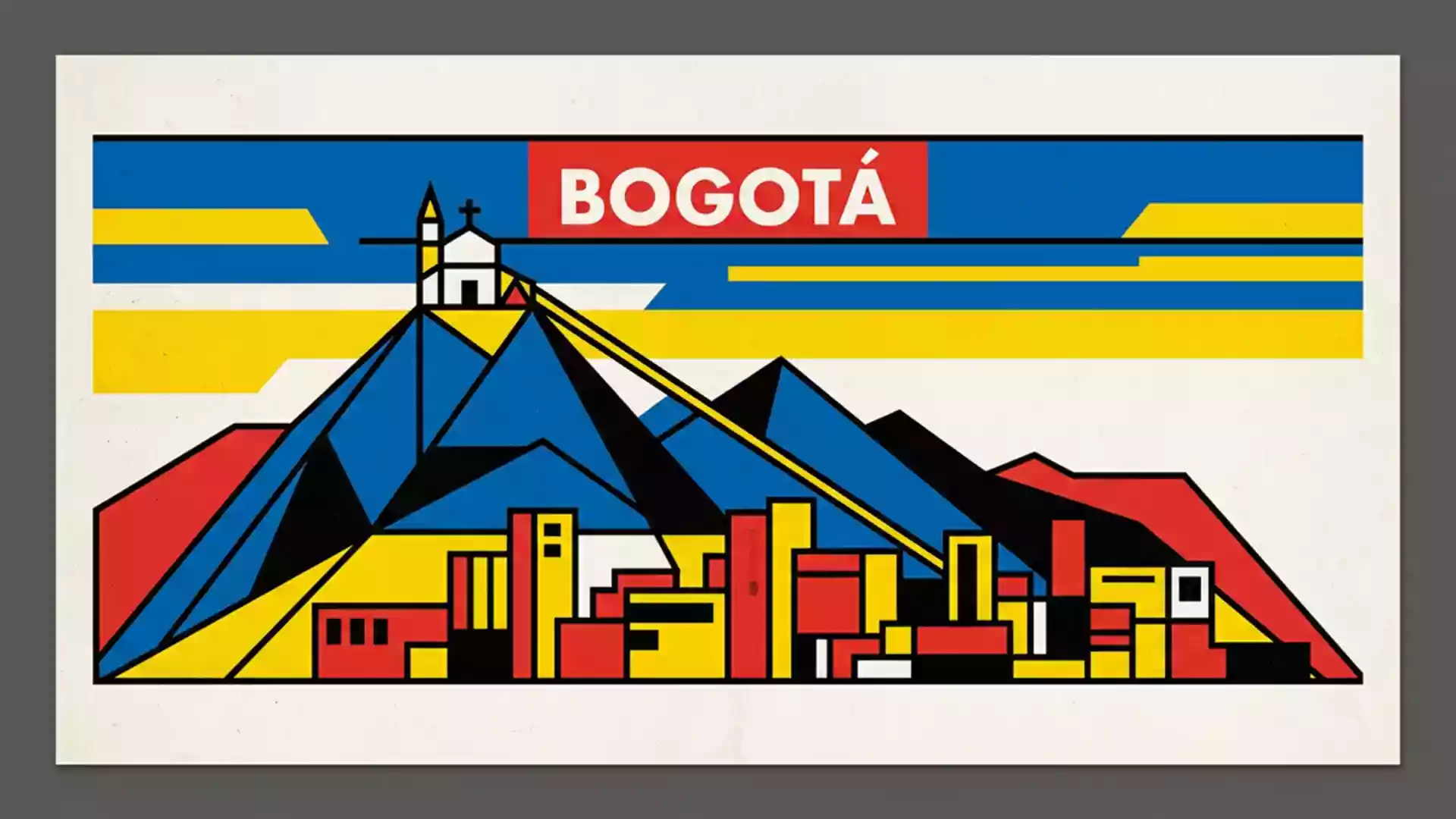
Monserrate, Bogota’s mountain sanctuary above the city
Published on 08/20/2026 at 20:11 | Editorial responsibility: Rafael Müller, Editor-in-Chief AD HOC NEWS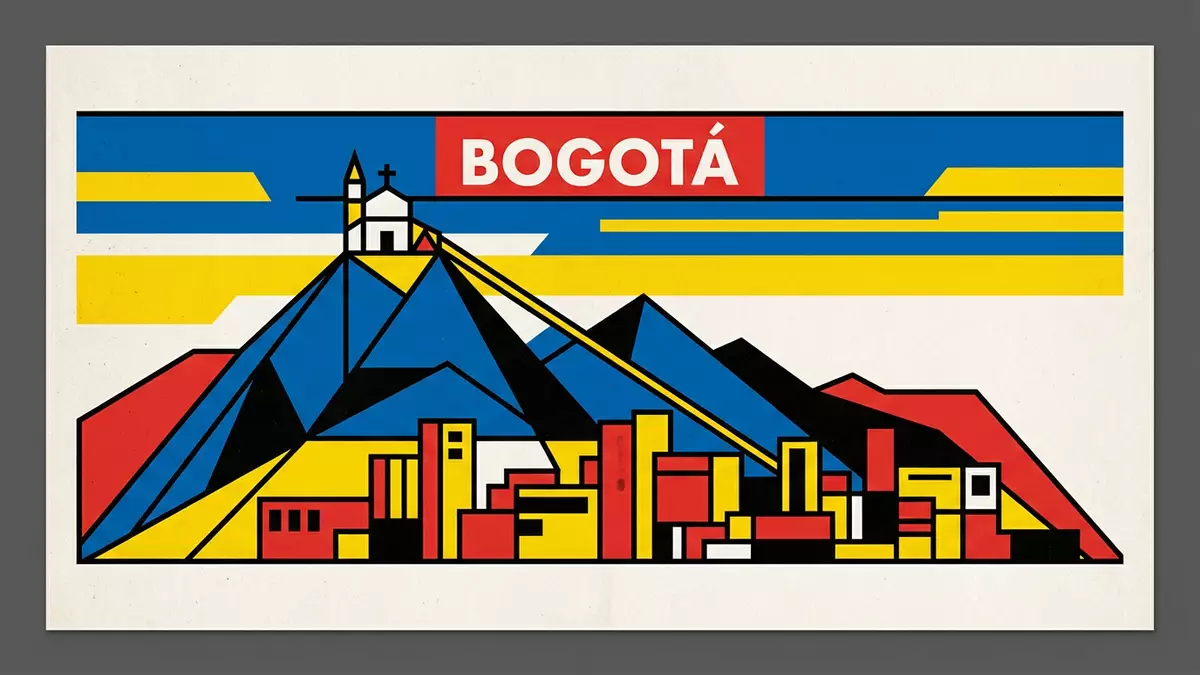
Monserrate is the eastern mountain that rises above central Bogota, crowned by a Catholic sanctuary and terraces overlooking Colombia’s capital at more than 3,100 m (around 10,300 ft) above sea level.Monserrate Sanctuary From the city streets below, the white church and its companion buildings form a constant landmark on the skyline, marking a site that has drawn worshippers and visitors since the seventeenth century.
A mountain, a sanctuary and a city-wide view
The hill of Monserrate forms part of the Eastern Hills of Bogota and rises to an elevation recorded at about 3,152 m (10,341 ft) above sea level.rises to 3,152 m The summit lies a substantial height above the historic centre, with steep slopes dropping towards the city and towards the wider plateau on which Bogota stands.10,000 ft high mountain The terrain and altitude together give the sanctuary and its forecourts far-reaching views: cathedral towers, office blocks and distant suburbs appear below, framed by the line of the surrounding Andes.
At the summit stands the Basilica Sanctuary of the Fallen Lord and Our Lady of Monserrate, a Catholic shrine dedicated to the image known as El Señor Caído.neo-Gothic sanctuary The current church is a neo-Gothic building inaugurated in 1920, replacing earlier hermitages and chapels whose origins lie in the seventeenth century.Sanctuary inaugurated in 1920 Beside the sanctuary are plazas with stone paving, devotional sculptures and gardens planted with highland vegetation, all set along the ridge that forms the mountain’s crest.gardens showcasing highland vegetation
From seventeenth-century pilgrimage site to city symbol
The religious importance of Monserrate dates back to the seventeenth century, when the first sanctuary was constructed and the cult of El Señor Caído became established.built between 1650 and 1657 Construction of the sanctuary is documented between 1650 and 1657, a period when Bogota was part of the Spanish Empire and Catholic devotions shaped much of public and private life.sanctuary built between 1650 and 1657 The image of the Fallen Lord, depicting Christ in the Passion, became a focal point for pilgrims who climbed the mountain to attend Mass and seek spiritual intercession.
Earthquakes and structural changes in the nineteenth century affected the earlier hermitage on Monserrate, leading to the decision in the early twentieth century to build the present neo-Gothic sanctuary.earthquake destroyed the hermitage in 1898 The new church, with its pointed arches and white exterior, stands alongside a series of chapels and stations of the cross set along the summit paths, giving the mountain the character of an extended open-air devotional site.significant religious buildings in Bogotá Over time, the combination of religious function and panoramic outlook has made Monserrate a recognised symbol of Bogota, visible in cityscapes and widely used to represent the capital’s relationship with its surrounding mountains.a symbol of Bogotá
Reaching the summit: trail, cable car and funicular
Access to Monserrate from central Bogota is organised around three main routes: a pedestrian trail, a cable car and a funicular railway.climb on foot, by cable car, or by funicular The trail starts at Carrera 2 Este No. 21-48, near Paseo Bolívar on the edge of the historic centre, and climbs steadily through a series of steps and ramps, gaining several hundred metres in altitude between the city and the summit.entrance to the Monserrate Trail The route has concrete and stone sections, handrails in steeper parts and viewpoints where Bogota’s grid of streets and the plateau beyond can be seen during the ascent.walking track entrance
The funicular and cable car provide alternative ways of climbing Monserrate without following the entire stairway.ascend by cable car or funicular The funicular, a rail-based system inaugurated in 1929, runs on tracks up the mountainside, passing patches of woodland and sections of exposed rock.funicular inaugurated in 1929 The cable car, inaugurated in 1955, spans the slope with pylons and a suspended cabin system, crossing above trees and the lower part of the trail before arriving at the summit station adjacent to the sanctuary complex.cable aéreo inaugurated 1955
Visiting Monserrate: what travellers from Western Europe should know
- Monserrate rises above central Bogota on the city’s eastern side, with access from Carrera 2 Este near Paseo Bolívar and links by road and public transport to the trailhead and station area.
- The approach on foot follows a long stairway and sloping path that climbs several hundred metres in altitude, with concrete and stone underfoot and a sustained gradient that can feel strenuous at high elevation.
- At the summit, the sanctuary and plazas stand at over 3,100 m (around 10,300 ft), so movement involves short climbs and descents on paved surfaces and steps within the religious complex and terrace areas.
- Spanish is the official language and the currency is the Colombian peso.
- Entry requirements depend on your nationality; UK travellers can check the FCDO travel advice at gov.uk/foreign-travel-advice, Irish travellers the Department of Foreign Affairs at ireland.ie.
Searching for Monserrate on social platforms
These links open searches for Monserrate on each platform.
Frequently asked questions about Monserrate
Where is Monserrate and what kind of place is it?
Monserrate is a mountain on the eastern side of Bogota, Colombia, with a Catholic sanctuary and terraces at its summit overlooking the city.
What can visitors expect on a visit to Monserrate?
Visitors encounter a neo-Gothic church, devotional spaces, gardens and extensive views across Bogota, reached by stairway, cable car or funicular from the city below.
What makes Monserrate distinctive among Bogota’s landmarks?
Monserrate combines a seventeenth-century pilgrimage tradition with a high-altitude vantage point, making its sanctuary complex a prominent symbol visible from many parts of Bogota.