
Monestir de Poblet and its walled Cistercian world in Vimbodi
Published on 09/21/2026 at 21:53 | Editorial responsibility: Rafael Müller, Editor-in-Chief AD HOC NEWS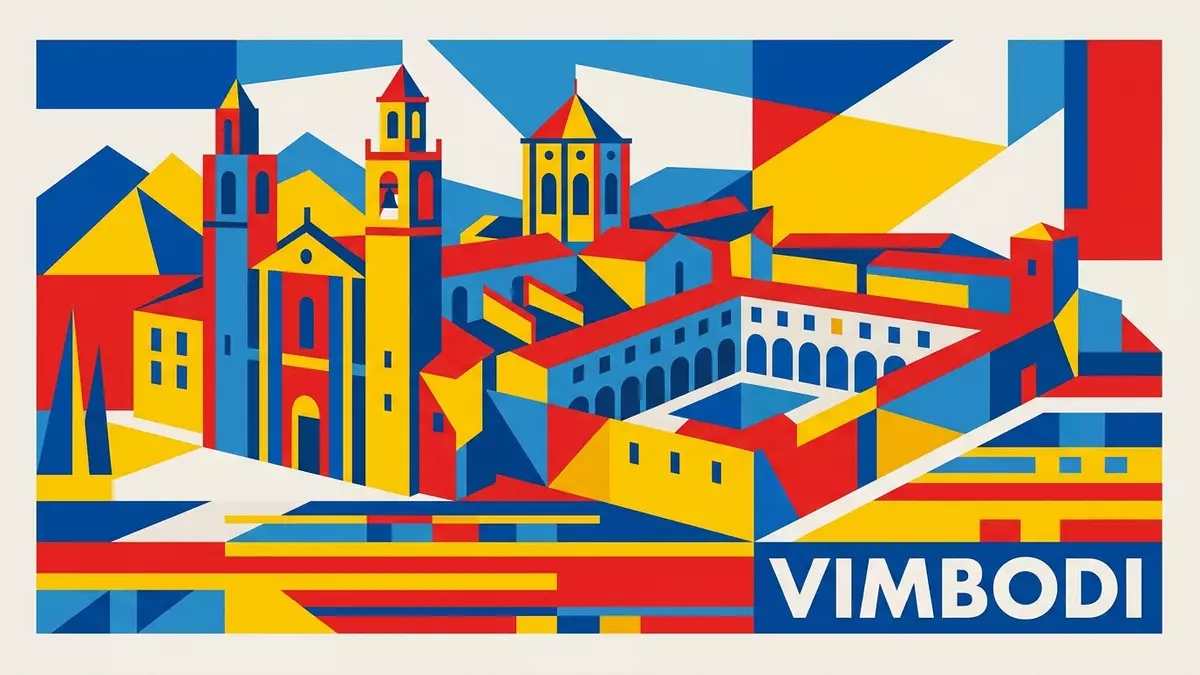
Monestir de Poblet, formally the Royal Monastery of Santa Maria de Poblet, is a Cistercian abbey outside Vimbodi i Poblet in Catalonia, enclosed by defensive walls at the foot of the Prades Mountains. Founded in the twelfth century and later recognised as a World Heritage Site, it brings together stone cloisters, a church and royal tombs in one carefully arranged complex.
A royal Cistercian foundation in rural Catalonia
Monestir de Poblet belongs to the Cistercian order and stands in the municipality of Vimbodi i Poblet in the Conca de Barberà comarca of Tarragona province in north-eastern Spain, backed by the Prades Mountains and surrounded by farmland.Cistercian monastery in Catalonia The monastery is traditionally dated to the mid-twelfth century, when Count Ramon Berenguer IV of Barcelona established a religious house here and entrusted it to Cistercian monks from Fontfroide.foundation by Ramon Berenguer IV
From these origins Monestir de Poblet developed over several centuries into a major religious and dynastic centre connected with the Crown of Aragon, with kings and queens choosing it as their burial place.royal burial site for the Crown of Aragon Construction took place between the twelfth and fifteenth centuries around a church dating from the thirteenth century, creating a layered ensemble in which medieval architecture and monastic planning shape every courtyard and passage.built between the twelfth and fifteenth centuries
Stone walls, cloisters and the royal pantheon
Approached across cultivated land at the eastern edge of Vimbodi i Poblet, Monestir de Poblet appears first as a fortress-like perimeter of stone walls, towers and gateways enclosing the monastic buildings.monastery at the edge of Vimbodi Within this enclosure lie cloisters, refectory, chapter house and domestic ranges arranged around courts, where arcaded walks link the different parts of the abbey and stone surfaces give the complex a consistent material character.complete Cistercian abbey complex
At the centre stands the thirteenth-century church, whose interior houses the pantheon of the kings and queens of Catalonia and Aragon, set beneath sculpted tombs that make dynastic memory a visible presence in the monastic space.thirteenth-century church and royal pantheon Nearby, a fortified royal residence forms part of the ensemble, reflecting the close ties between the monastery and the medieval crown and reinforcing the impression of a self-contained stone world combining spiritual life and royal commemoration.fortified royal residence within the monastery
World Heritage monastery in a protected landscape
Monestir de Poblet stands on flat ground fringed by fields and bordered by the woodland known as the bosc de Poblet, with the lower slopes of the Prades Mountains rising behind the complex.location beside the bosc de Poblet This setting places the monastery within a protected natural area, where the mass of its walls and roofs forms a distinct stone landmark against the backdrop of trees and hills.location in the Prades Mountains area
The cultural significance of Monestir de Poblet led to its inscription on the UNESCO World Heritage List in 1991, recognising both the completeness of the Cistercian abbey and its role as a fortified royal monastery and burial place.UNESCO inscription in 1991 The ensemble shows how religious architecture, rural landscape and royal history intersect in one site, with stone courts, enclosed gardens and monastic ranges forming a continuous architectural sequence from gate to church.
Visiting Monestir de Poblet: what travellers from Western Europe should know
- Monestir de Poblet lies in the municipality of Vimbodi i Poblet in Tarragona province in Catalonia and is reached by road from nearby towns such as l’Espluga de Francolí along the local T-700 route.
- The complex is enclosed by substantial stone walls, and moving between the church, cloisters and other ranges involves walking across paved courtyards and along covered passages.
- The monastery stands on level ground backed by the lower slopes of the Prades Mountains, with cultivated fields and the bosc de Poblet woodland surrounding much of the site.
- The official language is Spanish and the currency is the euro.
Searching for Monestir de Poblet on social platforms
These links open searches for Monestir de Poblet on each platform.
Frequently asked questions about Monestir de Poblet
Where is Monestir de Poblet?
Monestir de Poblet stands in the municipality of Vimbodi i Poblet in the Conca de Barberà comarca of Tarragona province in Catalonia, on the southern side of the Prades Mountains.
What can visitors expect when exploring the monastery?
Visitors encounter a walled Cistercian complex of stone buildings, including cloisters, a thirteenth-century church with royal tombs and monastic ranges arranged around courtyards.
What makes Monestir de Poblet distinctive among Iberian monasteries?
Monestir de Poblet is a UNESCO World Heritage Site that combines a complete Cistercian abbey layout, a fortified royal residence and the pantheon of the kings and queens of Catalonia and Aragon.


