
Monestir de Poblet and its walled Cistercian world in Vimbodi
Published on 09/08/2026 at 19:20 | Editorial responsibility: Rafael Müller, Editor-in-Chief AD HOC NEWS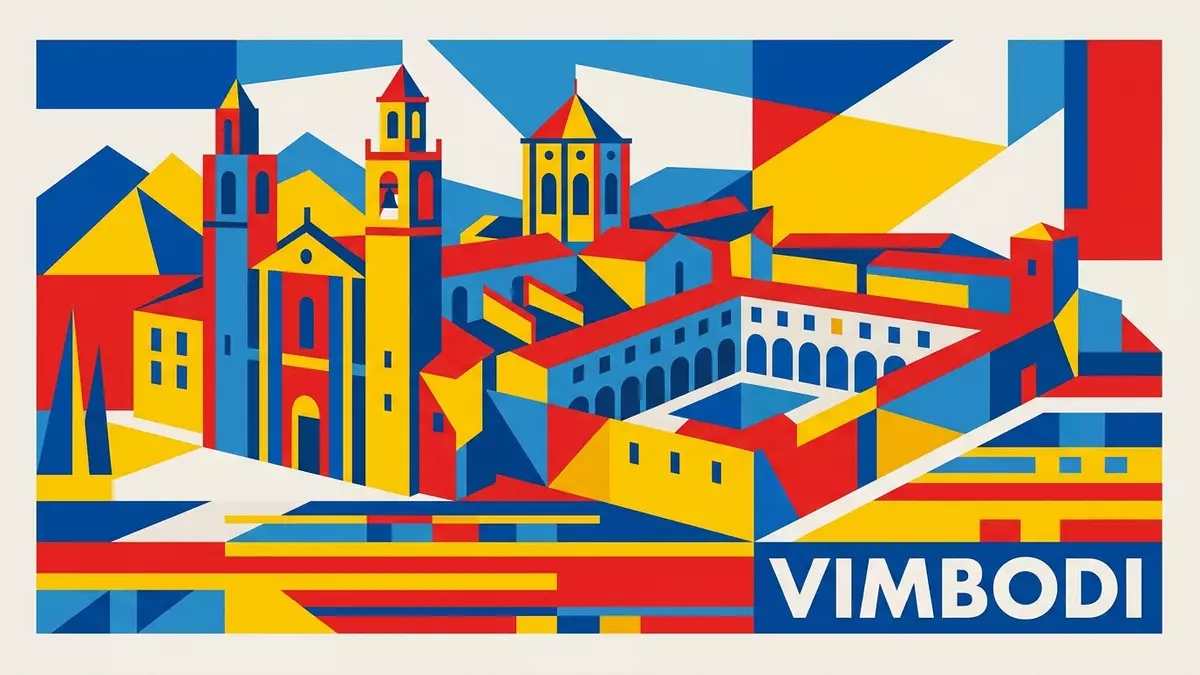
Monestir de Poblet, formally known as the Royal Monastery of Santa Maria de Poblet, is a walled Cistercian complex at the foot of the Prades Mountains in Catalonia. Founded in the twelfth century and recognised as a UNESCO World Heritage Site, it gathers church, cloister, monastic buildings and royal tombs into a single stone ensemble on the edge of Vimbodí i Poblet in north-eastern Spain.
A royal Cistercian monastery in rural Catalonia
Monestir de Poblet stands in the municipality of Vimbodí i Poblet in the province of Tarragona, in the Catalan comarca of Conca de Barberà, where the plain meets the lower slopes of the Prades Mountains.Vimbodí i Poblet in Catalonia The monastery lies near the woodland traditionally known as the bosc de Poblet, with cultivated fields and vineyards spreading out around its outer walls.a plain bordered by the bosc de Poblet
The foundation of Monestir de Poblet dates to the mid-twelfth century, when Ramon Berenguer IV, count of Barcelona, granted land in these newly consolidated territories to Cistercian monks from Fontfroide Abbey in present-day France.Ramon Berenguer IV and the Cistercians Construction began in the decades after 1150, giving Poblet a church and conventual core that followed the sober architectural language associated with the Cistercian order.a twelfth-century Cistercian foundation
Stone church, cloister and royal tombs inside fortified walls
The heart of Monestir de Poblet is its abbey church, built in stone in a style that moves from Romanesque towards Gothic with simple profiles and restrained ornament. Around it lie the cloister and the ranges of monastic buildings, all enclosed by defensive outer walls that give the complex the character of a fortified enclave in the countryside.a fortified monastic ensemble
Within these walls, the Cistercian layout organises daily life around the cloister, with passages leading to the chapter house, refectory and dormitory and with service buildings gathered nearby. In the church, monumental tombs mark the role of Poblet as a burial place for rulers of the Crown of Aragon in the late medieval centuries, so that dynastic memory and monastic life share the same architectural frame.tombs of kings and consorts
From medieval foundation to World Heritage monastery
By the thirteenth and fourteenth centuries, Monestir de Poblet had taken shape as one of the major Cistercian houses in the Iberian Peninsula, with its church and cloister forming a substantial stone complex. The royal burials of the Crown of Aragon during the fourteenth and fifteenth centuries underline the monastery’s status as a political and ceremonial centre in addition to its religious function.royal pantheon for the Crown of Aragon
After periods of decline and change, a monastic community returned to Poblet in the twentieth century, re-establishing Cistercian life among its historic buildings.twentieth-century monastic revival In 1991, UNESCO inscribed the Royal Monastery of Santa Maria de Poblet on the World Heritage List, recognising the outstanding value of its architecture, its fortified layout and its role in the history of the Crown of Aragon.UNESCO World Heritage status since 1991
Visiting Monestir de Poblet: what travellers from Western Europe should know
- Monestir de Poblet stands near Vimbodí i Poblet in Tarragona province, inland in Catalonia, and is reached by road from nearby towns such as l’Espluga de Francolí.
- The monastery complex is enclosed by substantial stone walls, and visiting the monument areas involves walking through courtyards, cloisters and interior stairways.
- Fields, vineyards and the bosc de Poblet woodland lie around the monastery, so approaches on foot or by vehicle pass through a rural landscape rather than dense urban streets.
- The official language in this part of Spain is Catalan alongside Spanish, and the currency is the euro.
Searching for Monestir de Poblet on social platforms
These links open searches for Monestir de Poblet on each platform.
Frequently asked questions about Monestir de Poblet
Where is Monestir de Poblet located?
Monestir de Poblet is in Vimbodí i Poblet in the province of Tarragona, in Catalonia in north-eastern Spain, at the foot of the Prades Mountains.
What can visitors expect when exploring Monestir de Poblet?
Visitors encounter a large stone monastery enclosed by walls, with a church, cloister, courtyards and monastic buildings arranged in a compact Cistercian layout.
What makes Monestir de Poblet distinctive among monasteries?
Its combination of fortified Cistercian architecture, its role as a royal burial place for the Crown of Aragon and its recognition as a UNESCO World Heritage Site makes Poblet distinctive.


