
Monestir de Poblet, a walled Cistercian world in Catalonia
Published on 08/26/2026 at 18:39 | Editorial responsibility: Rafael Müller, Editor-in-Chief AD HOC NEWS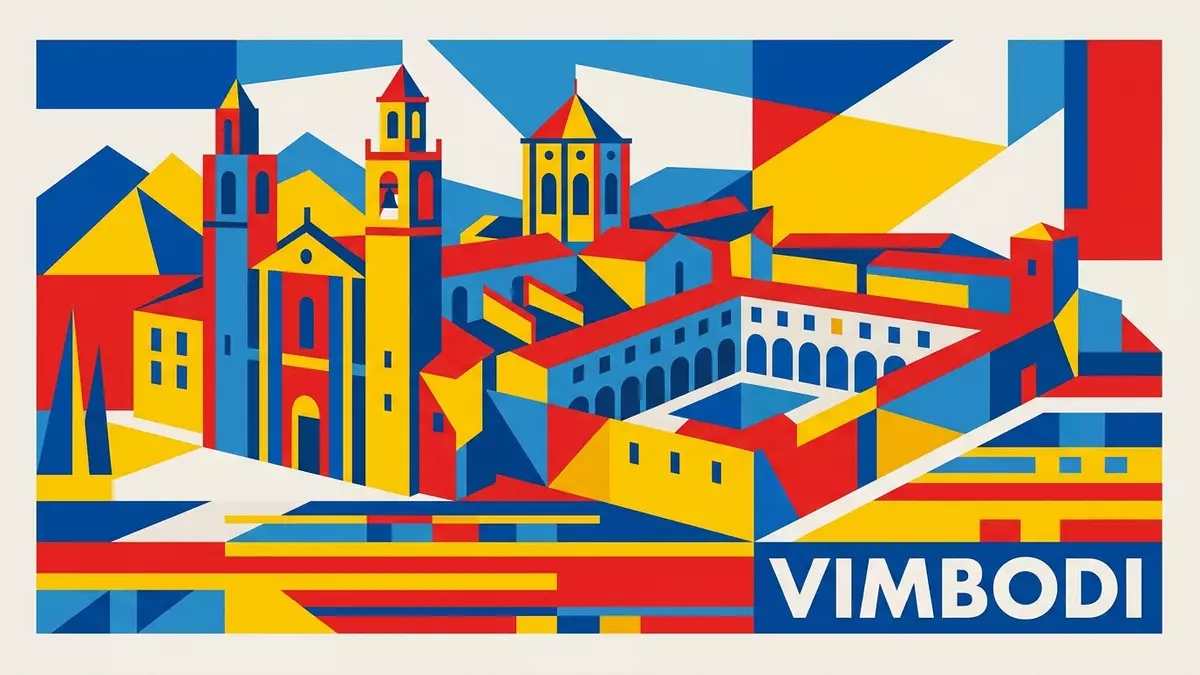
Monestir de Poblet, just outside Vimbodi in Catalonia, is a walled Cistercian world where monastic austerity, royal memory and fortified architecture occupy the same stone enclosure. Founded in the twelfth century and later transformed into a royal pantheon, it presents Western European visitors with a complete medieval monastery that still functions as a living religious community.
A royal Cistercian abbey in the Catalan landscape
Monestir de Poblet stands in the municipality of Vimbodi i Poblet in Catalonia, at the foot of the Prades Mountains in the Conca de Barbera region of north-eastern Spain.Vimbodi i Poblet in Catalonia The monastery is officially known as the Royal Abbey of Santa Maria de Poblet and belongs to the Cistercian order, which spread from France across Europe in the twelfth century.Royal Abbey of Santa Maria de Poblet
Count Ramon Berenguer IV of Barcelona granted land to Cistercian monks from the French abbey of Fontfroide in the 1150s, and Poblet grew from that foundation into an extensive complex of church, cloisters and service buildings.Ramon Berenguer IV of Barcelona In 1991 the monastery was inscribed on the UNESCO World Heritage List as Poblet Monastery, recognised for its cultural importance and for the completeness of its medieval ensemble.inscribed on the UNESCO World Heritage List
Fortified walls, church and cloister
The defining impression of Monestir de Poblet from outside is that of a fortified complex, with walls and defensive towers enclosing the religious buildings and their courtyards.fortified complex Within these walls stands a twelfth-century church that forms the spiritual and architectural centre of the monastery, reflecting the austere Cistercian style that avoids elaborate surface decoration in favour of clear volumes and carefully proportioned spaces.a twelfth-century church
The broader ensemble developed between the twelfth and fourteenth centuries, combining Romanesque and Gothic elements as additional ranges and cloisters were added around the church.between the twelfth and fourteenth centuries Visitors walking through the main gate pass from the outer defensive zone into a sequence of courtyards, arcades and monastic spaces that reveal how the abbey functioned as a self-contained world of prayer, work and governance.
Royal burials and monastic life
Poblet is not only a monastery but also a royal site: it served as a residence and as the pantheon of the kings and queens of the Crown of Aragon, with several royal tombs placed inside the church near the high altar.pantheon of the kings and queens This combination of monastic enclosure and royal memory gives the church interior a distinctive character, where the plain Cistercian architecture frames elaborately carved sepulchral monuments.
The monastic community that once left the site in the nineteenth century returned in the twentieth century, and Poblet again functions as a Cistercian abbey with monks following the order’s rule of life.Cistercian abbey with monks For visitors this means that some spaces remain reserved for the community, while substantial parts of the church, cloister and outer courts can be explored as part of the monumental complex.
Visiting Monestir de Poblet: what travellers from Western Europe should know
- Monestir de Poblet lies near Vimbodi i Poblet in the province of Tarragona in Catalonia, reached by regional roads that run from the nearby town of l’Espluga de Francoli.near Vimbodi i Poblet
- The approach from the road leads across level ground into the walled precinct, and movement inside the monastery includes stone stairways and uneven historic surfaces.
- The monastery stands close to the Poblet Forest and the lower slopes of the Prades Mountains, so weather in the surrounding countryside can vary with altitude even over short distances.Poblet Forest and Prades Mountains
- The official language in this part of Spain is Catalan alongside Spanish, and the currency is the euro.
Searching for Monestir de Poblet on social platforms
These links open searches for Monestir de Poblet on each platform.
Frequently asked questions about Monestir de Poblet
Where is Monestir de Poblet?
Monestir de Poblet is in Vimbodi i Poblet in the province of Tarragona, Catalonia, in north-eastern Spain, near the Prades Mountains and the Poblet Forest.
What can visitors expect to see at Monestir de Poblet?
Visitors encounter a fortified Cistercian monastery with a twelfth-century church, cloistered courtyards, royal tombs and extensive stone precincts surrounded by farmland and woodland.
What makes Monestir de Poblet distinctive among European monasteries?
Monestir de Poblet combines a large, well-preserved Cistercian complex with its role as a royal residence and burial place for the medieval Crown of Aragon.


