
Mogao Ku and the painted cliffs of Dunhuang
Published on 09/24/2026 at 07:06 | Editorial responsibility: Rafael Müller, Editor-in-Chief AD HOC NEWS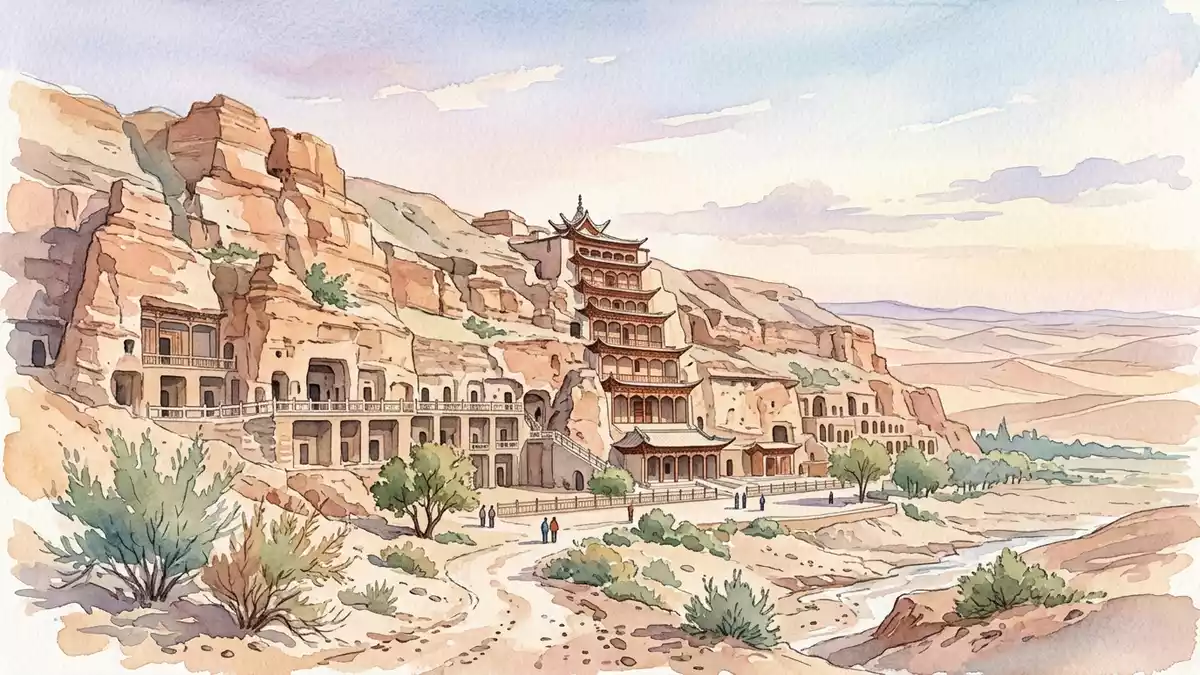
Mogao Ku is a line of Buddhist cave sanctuaries cut into cliffs south-east of Dunhuang in Gansu, China. The site combines architecture, sculpture and mural painting across a rock face, with its visible chambers carrying the artistic history of a millennium.
Mogao Ku: a thousand years in the cliff
The first cave at Mogao Ku was constructed in 366 AD. Work continued from the fourth to the fourteenth century, producing a complex that links Buddhist worship with the cultural traffic of the Silk Road.
The preserved complex contains 492 caves and sanctuaries. Together they hold about 45,000 square metres of murals and more than 2,000 painted sculptures, figures that show the scale of the surviving artistic record. UNESCO’s Mogao Caves entry records the site’s World Heritage status and its artistic span.
Murals, sculptures and Silk Road exchange
The paintings and sculptures present Buddhist stories, sacred figures, processions, landscapes and scenes from daily life. Their styles combine Chinese traditions with influences associated with India, Gandhara, Central Asia, Tibet and other communities connected with Dunhuang.
Individual caves preserve distinct historical evidence. Cave 302 contains a Sui-period image of a camel pulling a cart, while Tang-period caves show agricultural workers and warriors. Cave 61 includes a detailed painted landscape of Mount Wutai, with mountains, rivers, settlements, temples, roads and caravans.
The Library Cave and Mogao Ku’s written record
Mogao Ku also preserves a documentary history beside its painted art. Cave 17, known as the Library Cave, held tens of thousands of manuscripts and other objects when it was discovered in 1900.
The documents include Chinese, Tibetan, Sogdian, Khotan, Uighur and Hebrew material. They reflect the languages, religions and commercial connections that passed through the Dunhuang oasis, where routes across Inner Asia met.
The caves were inscribed on the UNESCO World Heritage List in 1987. The site was also placed among China’s State Priority Protected Sites in 1961, giving its cliffs, sanctuaries, murals, sculptures and movable objects a formal heritage framework. The World Heritage record describes the caves, artworks and historical periods represented within them.
Visiting Mogao Ku: what travellers from Western Europe should know
- Mogao Ku lies south-east of Dunhuang in Gansu Province, above the Dachuan River. Dunhuang is an oasis associated with the historic Silk Road.
- The site occupies cliffs, and the visit involves cave interiors, rock-cut sanctuaries and paths between the cliff face and visitor facilities.
- The official language is Mandarin Chinese and the currency is the Chinese yuan.
- China lies outside the EU. Entry requirements depend on your nationality; UK travellers can check the FCDO travel advice at gov.uk/foreign-travel-advice, Irish travellers the Department of Foreign Affairs at ireland.ie.
Searching for Mogao Ku on social platforms
These links open searches for Mogao Ku on each platform.
Frequently asked questions about Mogao Ku
Where is Mogao Ku?
Mogao Ku is south-east of Dunhuang in Gansu Province, China. The caves are carved into cliffs above the Dachuan River.
What can visitors expect at Mogao Ku?
The site contains rock-cut sanctuaries, painted sculptures and mural-covered interiors. A visit centres on the surviving cave art and the landscape around the cliff complex.
What makes Mogao Ku distinctive?
Its 492 preserved caves contain about 45,000 square metres of murals and more than 2,000 painted sculptures. The complex records Buddhist art and Silk Road exchange from 366 AD through the fourteenth century.


