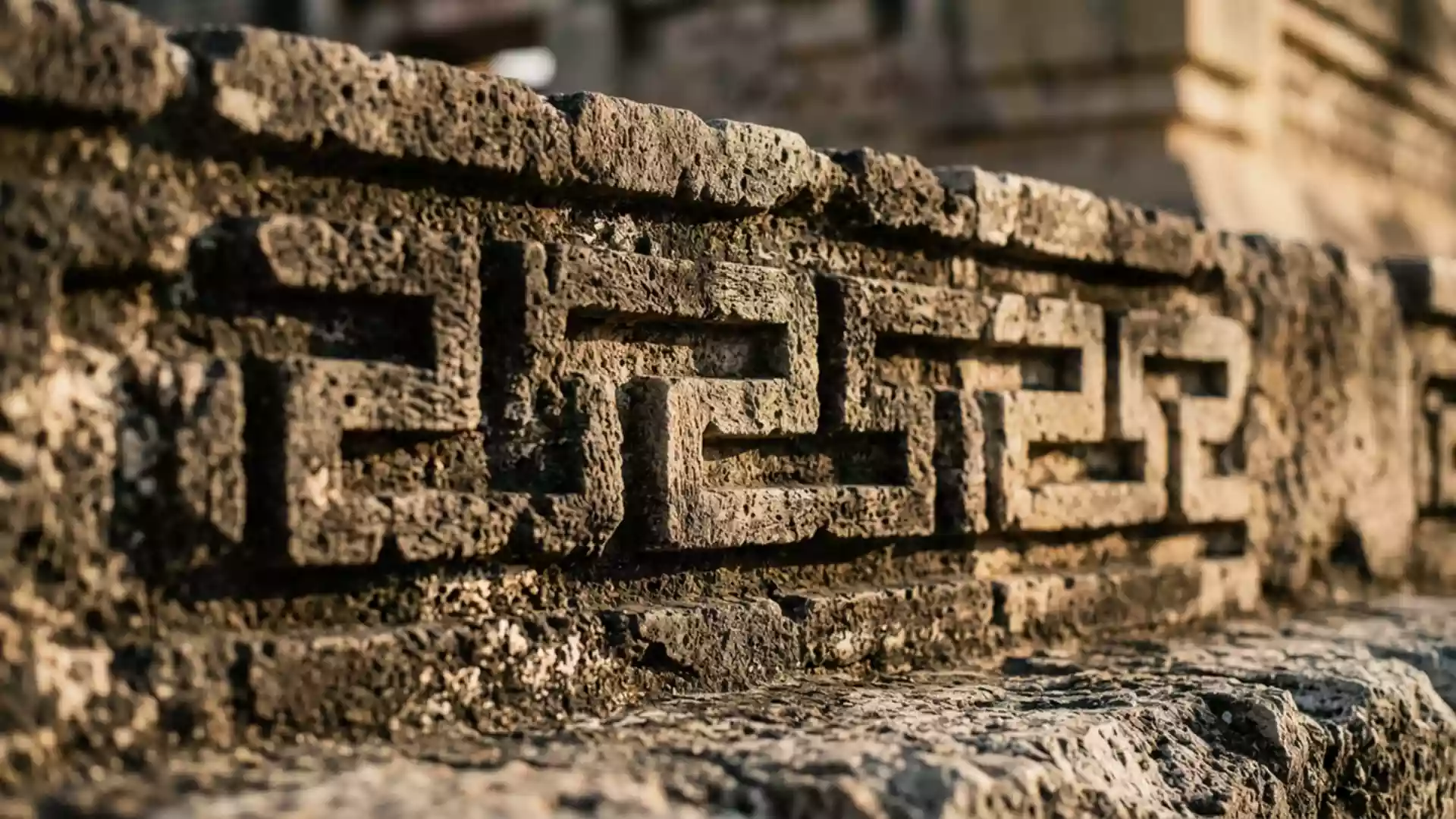
Mitla’s geometric stone mosaics in Oaxaca’s valley of the dead
Published on 09/09/2026 at 20:57 | Editorial responsibility: Rafael Müller, Editor-in-Chief AD HOC NEWS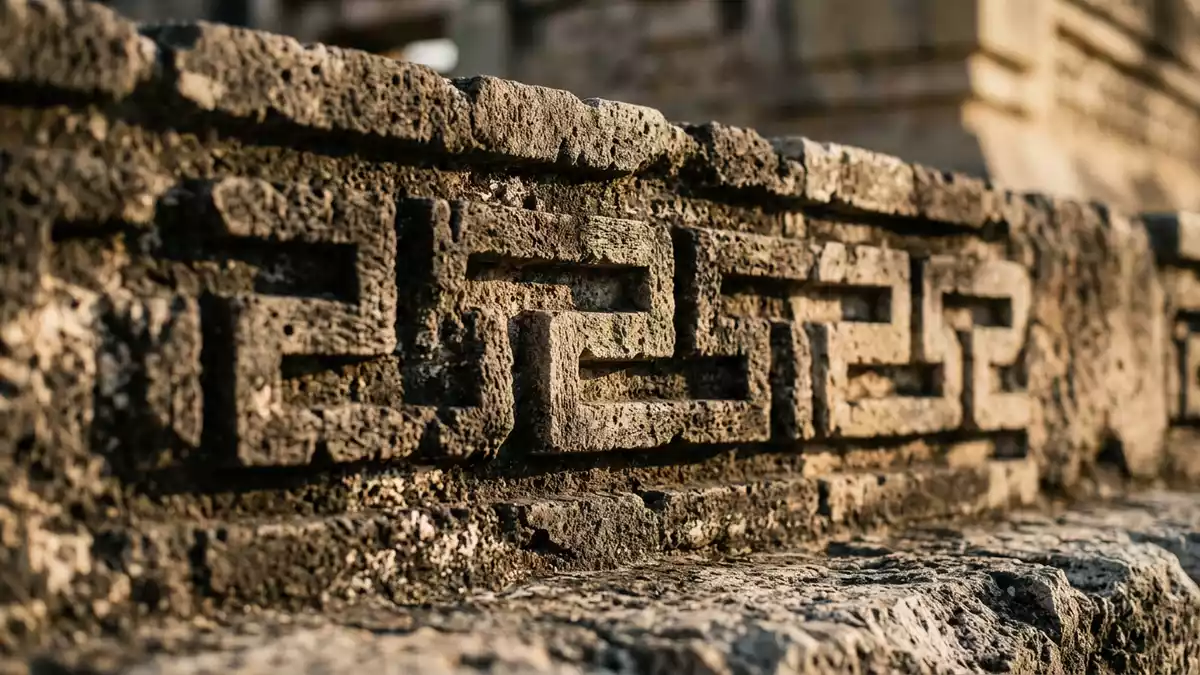
Mitla in Oaxaca, Mexico, is a pre-Hispanic ceremonial centre where entire building facades are clad in geometric stone mosaics that define the character of the site. Set in the Tlacolula Valley east of Oaxaca City, it formed an important religious centre for the Zapotec and later the Mixtec during the Mesoamerican Classic and Postclassic periods.
Stone mosaics as architecture
The most striking feature at Mitla is the way geometry becomes architecture: long walls are covered with bands of fretwork made from thousands of individually cut stones set together with great precision. These mosaics form stepped designs, repeated angles and interlocking patterns that run horizontally across facades in the central groups of buildings, particularly in structures associated with the late Zapotec and Mixtec periods.a mix of Zapotec and Mixtec architectural styles
Unlike many other Mesoamerican sites where sculpted reliefs depict deities or warriors, the decoration at Mitla is dominated by abstract geometry. The mosaics are arranged in panels separated by plain surfaces, so that each band reads almost like a woven textile translated into stone. In the Hall of the Columns, a large rectangular building in the Columns Group, richly carved geometric reliefs and mosaic bands combine with massive stone supports to create one of the clearest expressions of this design language.the Hall of the Columns
Zapotec and Mixtec sacred centre
Mitla lies in the eastern part of the Valley of Oaxaca and was an important centre of the Zapotec civilisation, which emerged in the region during the first millennium BC. Archaeological and historical studies associate the site with the Zapotec name Lyobaa, meaning “place of rest”, and the Nahuatl name Mictlán, “place of the dead”, reflecting its longstanding role as a burial and ceremonial centre for elites.Lyobaa, meaning place of rest
By the Postclassic period, broadly between about AD 1000 and the early sixteenth century, Mitla functioned as a major religious and political centre in the valley, with power and ritual responsibilities shared or transferred to Mixtec groups who left their mark in the architecture and decorative programme.a preeminent Postclassic Zapotec religious centre The broader cultural landscape around Mitla, including prehistoric caves and rock shelters in the Tlacolula Valley, is recognised on the World Heritage List for the continuity it shows between very early occupation and later Zapotec and Mixtec ceremonial sites.Prehistoric Caves of Yagul and Mitla
Layout in the Tlacolula Valley
The ruins of Mitla stand within the modern municipality of San Pablo Villa de Mitla, in the Tlacolula Valley east of Oaxaca City, at an elevation of about 1,480 m (4,855 ft) above sea level.an elevation of 4,855 feet The site is framed by the slopes and ridges of the Sierra Madre del Sur, giving many of the patios and courtyards clear views towards surrounding hills.
Archaeologists describe Mitla as consisting of five main groups of structures: the Columns Group, the Churches Group, the Arroyo Group, the Adobe Group and the Southern Group.five main groups of structures The Columns Group, where the Hall of the Columns stands, preserves some of the most elaborate mosaics and offers a sequence of enclosed patios, corridors and rooms. The Churches Group incorporates colonial-period church buildings constructed over part of the pre-Hispanic platform, making the overlap between indigenous and Spanish sacred architecture visible in stone and masonry.
Visiting Mitla: what travellers from Western Europe should know
- Mitla lies in the Tlacolula Valley in southern Mexico, within the town of San Pablo Villa de Mitla east of Oaxaca City, reached by road along the valley.
- The archaeological zone is laid out in groups of courtyards and platforms, with stone steps and uneven surfaces that require steady footing when moving between levels.
- The surrounding landscape forms part of a wider cultural area recognised with World Heritage status, with prehistoric caves and rock shelters located in nearby hills.
- The official language is Spanish and the currency is the Mexican peso. Entry requirements depend on your nationality; UK travellers can check the FCDO travel advice at gov.uk/foreign-travel-advice, Irish travellers the Department of Foreign Affairs at ireland.ie.
Searching for Mitla on social platforms
These links open searches for Mitla on each platform.
Frequently asked questions about Mitla
Where is Mitla located?
Mitla is located in southern Mexico in the Tlacolula Valley east of Oaxaca City, within the municipality of San Pablo Villa de Mitla.
What can visitors expect from a visit to Mitla?
Visitors encounter a compact archaeological zone with courtyards, stone platforms and buildings whose walls are decorated with extensive geometric stone mosaics.
What makes Mitla distinctive among Mesoamerican sites?
Mitla is distinctive for its emphasis on abstract geometric mosaics and for its documented role as a major Zapotec and Mixtec ceremonial and burial centre in the Valley of Oaxaca.