
Mitla and the stone mosaics of Oaxaca
Published on 09/24/2026 at 02:47 | Editorial responsibility: Rafael Müller, Editor-in-Chief AD HOC NEWS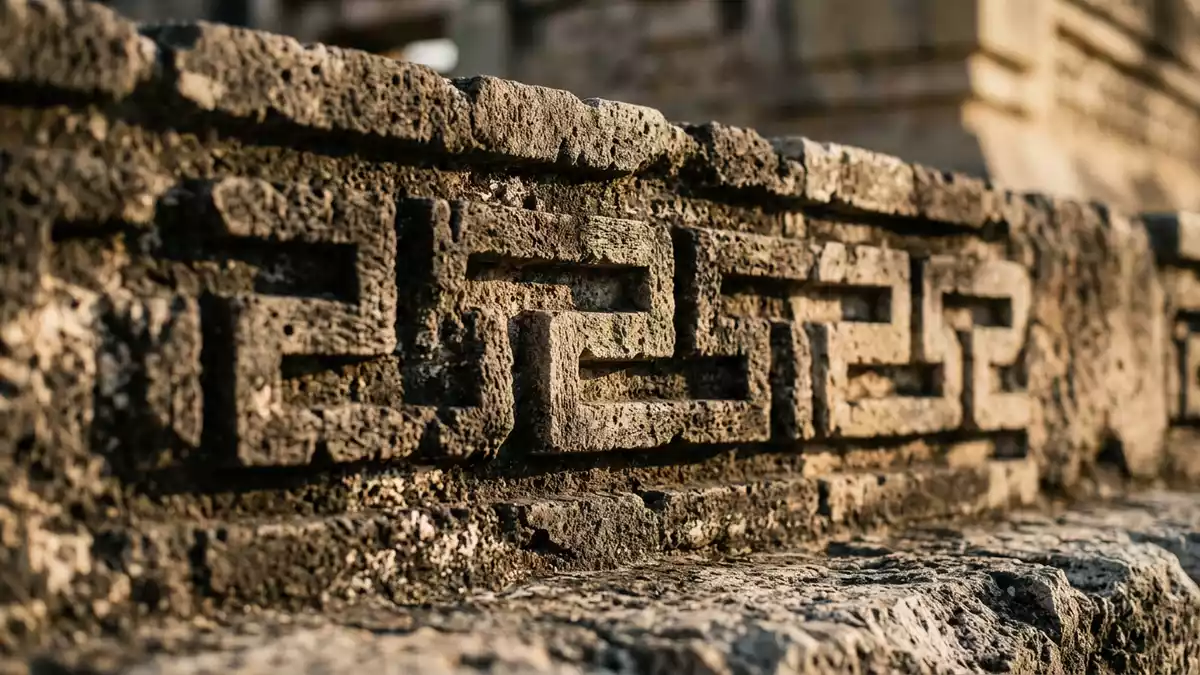
Mitla is an archaeological site in Oaxaca where palace walls carry geometric mosaics made from carefully cut stone. The settlement belongs to the cultural history of the Zapotec and Mixtec peoples, and its surviving architecture combines courtyards, columned halls and patterned wall panels.
Mitla’s walls assembled from small stones
The most distinctive surfaces at Mitla are the grecas, bands of interlocking geometric forms set into the walls of palace compounds. Small pieces of volcanic tuff were cut and fitted into ordered patterns, creating panels that differ from plain masonry and from painted decoration.
The patterns appear across façades and raised platforms in the principal architectural groups. Their repeated angles, steps and turns create a strong visual language across the site, while the surrounding walls remain massive and restrained. The contrast between the compact mosaic pieces and the large blocks beneath them gives the compounds their particular character.
A Zapotec centre in the Valley of Tlacolula
Mitla lies at the eastern edge of Oaxaca’s central valleys, in the Valley of Tlacolula and within the town of San Pablo Villa de Mitla. Mitla in the Valley of Tlacolula places the ruins within a landscape of dry hills, cultivated valley floors and settlements shaped by long agricultural traditions.
Zapotec groups began settling the site around 200 AD. Mitla gained greater importance after the decline of Monte Albán in the ninth century, and the settlement reached a high point around 1200. Mixtec influence also appears in the surviving buildings, linking the site to the changing political and cultural history of Oaxaca.
Palaces, courtyards and the name of the dead
The name Mitla comes from the Nahuatl Mictlán, associated with the place of the dead. In Zapotec, the settlement was known as Lyobáa, a name connected with rest and the dead. These names reflect the site’s association with burial and sacred practice, while its architecture records an urban centre with palaces and ceremonial spaces.
The archaeological zone includes the Columns Group, the Churches Group, the Arroyo Group, the Adobe Group and the Southern Group. The five principal architectural groups contain courtyards, platforms, passageways and halls. The Columns Group is known for its large columned hall, while the Churches Group preserves the close relationship between pre-Hispanic structures and colonial religious architecture.
Spanish forces reached the region in 1521, beginning a new phase in Mitla’s history. Colonial buildings stand beside the archaeological remains, and the town continues to surround the ancient compounds. The result is a layered place where stone palaces, church architecture and living settlement occupy the same valley.
Visiting Mitla: what travellers from Western Europe should know
- Mitla is in San Pablo Villa de Mitla, at the eastern edge of Oaxaca’s central valleys. Road transport from Oaxaca City reaches the town through the Valley of Tlacolula.
- The archaeological zone contains uneven stone surfaces, raised platforms, courtyards and narrow passages. Visitors encounter substantial masonry and steps within the palace groups.
- The site is inland, surrounded by the dry valley landscape of Oaxaca and the mountains of the Sierra Madre del Sur.
- The official language is Spanish and the currency is the Mexican peso.
- Entry requirements depend on your nationality; UK travellers can check the FCDO travel advice at gov.uk/foreign-travel-advice, Irish travellers the Department of Foreign Affairs at ireland.ie.
Searching for Mitla on social platforms
These links open searches for Mitla on each platform.
Frequently asked questions about Mitla
Where is Mitla?
Mitla lies in San Pablo Villa de Mitla, at the eastern edge of Oaxaca’s central valleys. The archaeological zone is in the Valley of Tlacolula, east of Oaxaca City.
What can visitors see at Mitla?
Visitors see palace compounds, courtyards, columned halls, platforms and stone walls decorated with geometric grecas. Colonial religious architecture stands close to the pre-Hispanic remains.
What makes Mitla distinctive?
Its walls contain carefully fitted mosaics of small volcanic stones arranged in repeating geometric patterns. The site also preserves Zapotec and Mixtec architectural features within a settlement associated with the dead.


