Mirski zamok and the layers of Mir Castle
Published on 09/02/2026 at 06:58 | Editorial responsibility: Rafael Müller, Editor-in-Chief AD HOC NEWS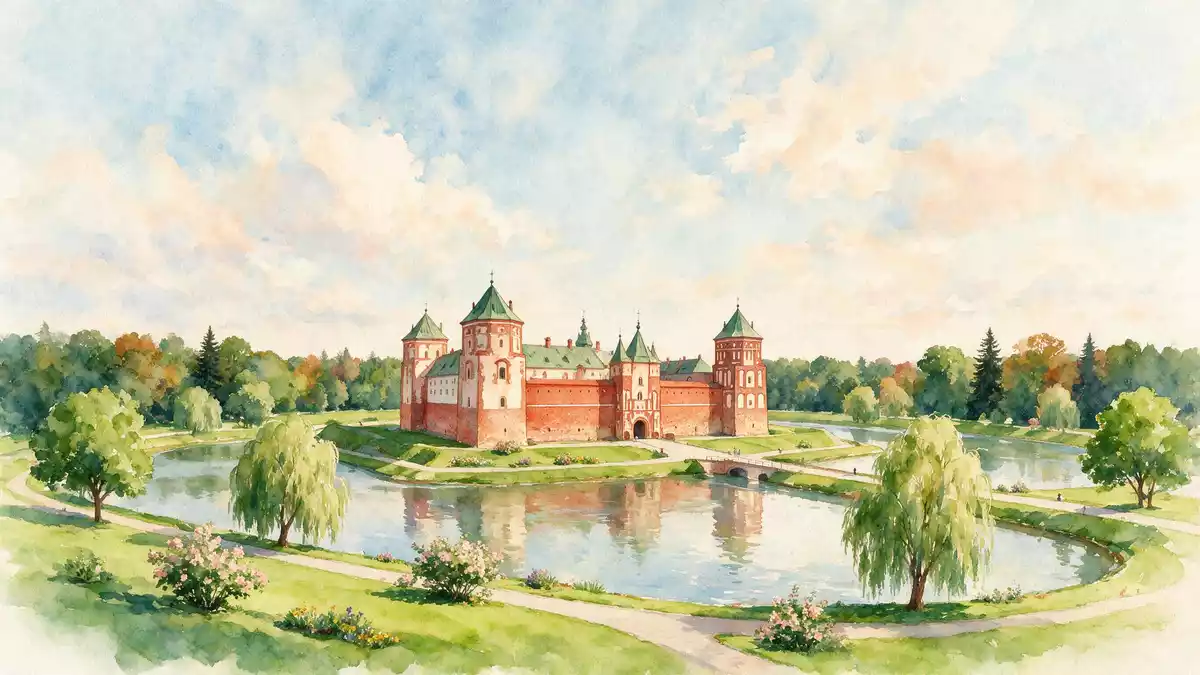
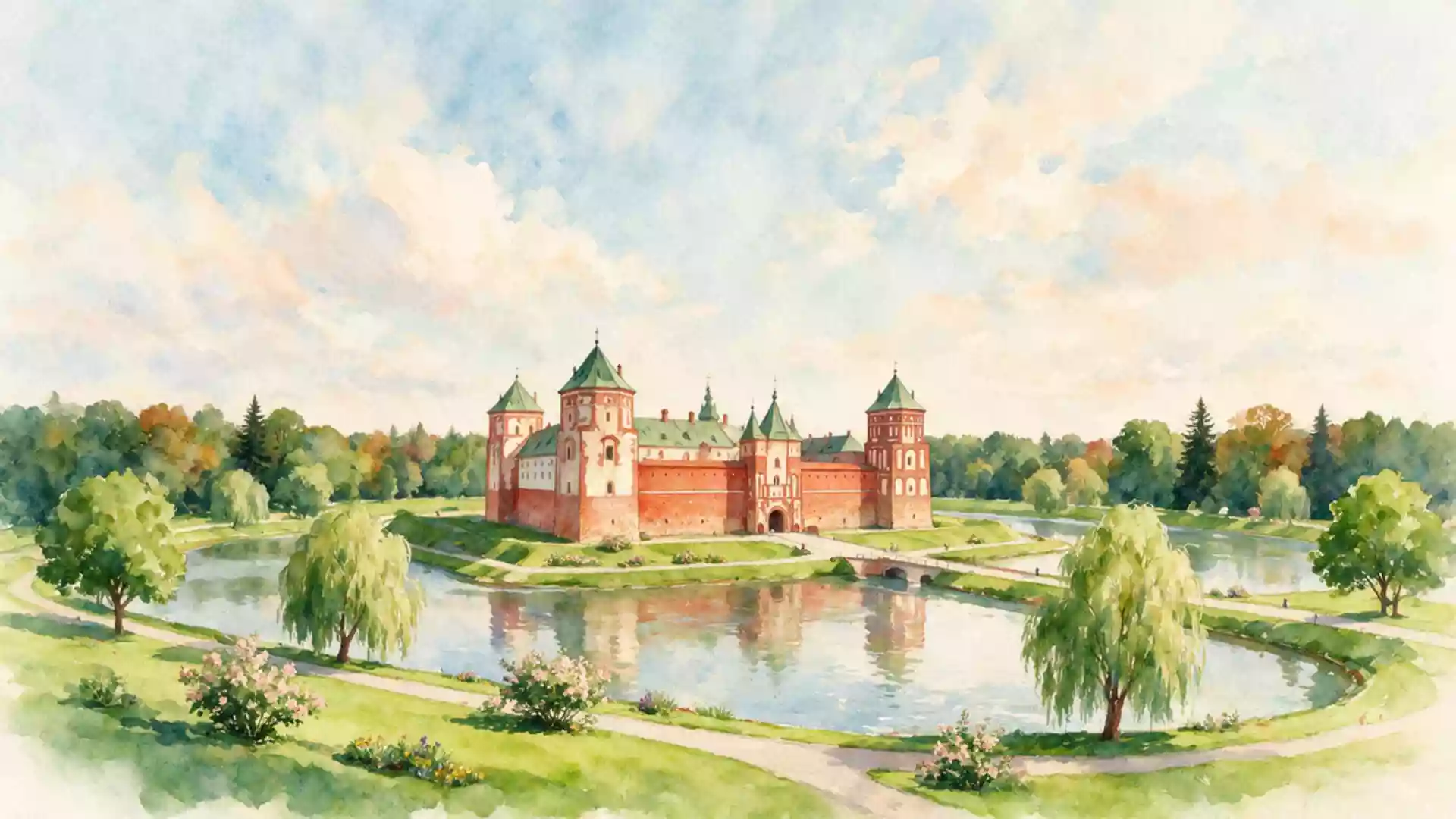
Mirski zamok rises in Mir as a brick castle complex shaped by Gothic, Renaissance and Baroque phases. It is a UNESCO World Heritage Site and one of Belarus’s best-known historic ensembles.
Brick, towers and a changing outline
The castle began at the end of the fifteenth century, in Gothic style, and later took on Renaissance and Baroque features. The result is a compact complex with corners, walls and towers that read as separate layers of one place.
The UNESCO record describes its present form as the product of extension, reconstruction and restoration, followed by landscaping around the castle. That sequence matters because the site is not a single-period monument, but a built record of successive centuries.
From fortification to castle ensemble
The core identity of Mirski zamok is tied to defence and residence. Duke Ilinich began the construction in the 1520s, and Mikolay Radziwil later continued the Renaissance phase; the name of the Radziwills remains part of the castle’s history.
The castle complex includes a palace along the walls, earthworks with bastions and parkland around the main structure. Its fabric mixes brick masonry with later additions, so the visitor reads the site as a sequence rather than a single gesture.
The UNESCO listing of the Mir Castle Complex in 2000 gives the place formal status beyond local heritage. That designation also reflects the way Gothic, Baroque and Renaissance forms sit together in one ensemble.
Mir, the wider setting and the castle’s grounds
Mirski zamok stands in the town of Mir in the Grodno region of Belarus, close to the Miranka river. The setting is part castle, part landscaped estate, with water, walls and planted ground around the core masonry.
The surrounding area includes an artificial lake and historic garden elements. Those features broaden the site from a fortress into a larger architectural landscape.
Visiting Mirski zamok: what travellers from Western Europe should know
- The castle stands in Mir, in the Grodno region of Belarus. It is reached by road from the Minsk–Brest corridor, with Mir on the Minsk-Novogrudok bus route.
- The terrain is flat around the castle, but the site includes walls, earth ramparts and towers. The ensemble reads as a brick fortress set within a designed landscape.
- The main building combines Gothic massing with later Renaissance and Baroque layers. The complex also includes parkland, a lake and a palace wing along the walls.
- The official language is Belarusian and the currency is the Belarusian rouble. Entry requirements depend on your nationality; UK travellers can check the FCDO travel advice at gov.uk/foreign-travel-advice, Irish travellers the Department of Foreign Affairs at ireland.ie.
Searching for Mirski zamok on social platforms
Frequently asked questions about Mirski zamok
Where is Mirski zamok?
It stands in Mir, in the Grodno region of Belarus, beside the Miranka river.
What does a visit involve?
The site presents a castle, earthworks, towers, parkland and water within one ensemble. Its layers of masonry and landscape are visible in the grounds.
What makes it distinctive?
Its combination of Gothic, Renaissance and Baroque phases gives the castle a layered appearance. The UNESCO World Heritage designation recognises that historical mix.