
Mezquita-Catedral de Cordoba and its layered stone interior
Published on 09/21/2026 at 12:12 | Editorial responsibility: Rafael Müller, Editor-in-Chief AD HOC NEWS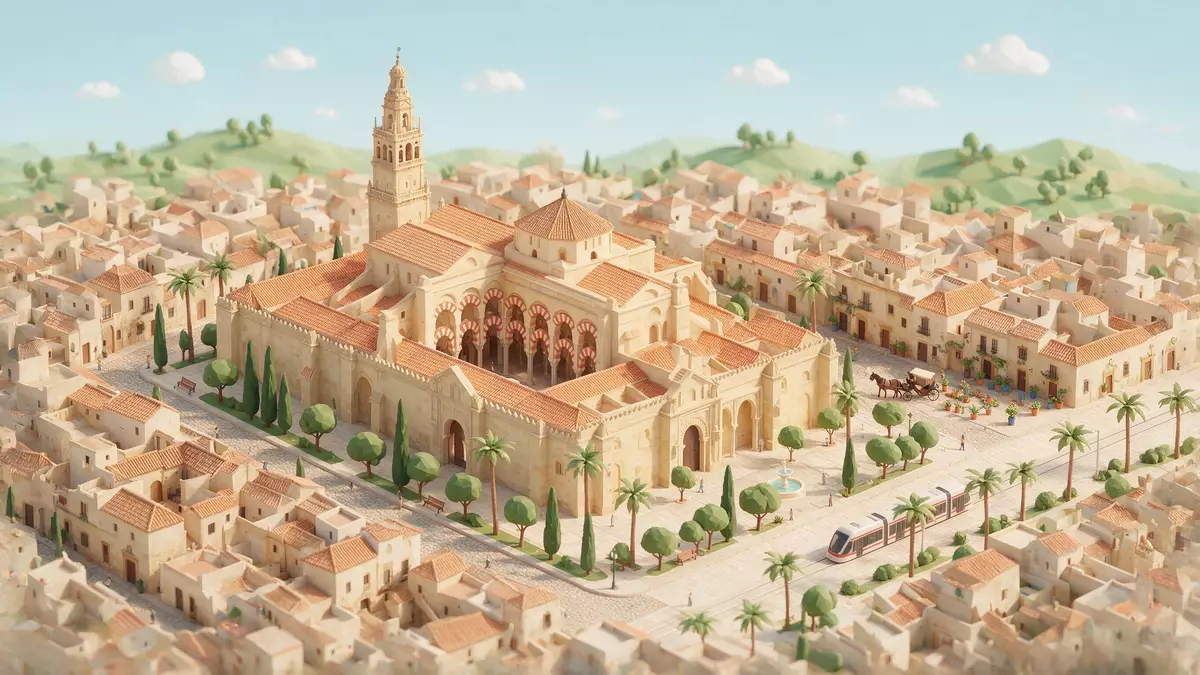
Mezquita-Catedral de Cordoba is a layered monument in Cordoba, marked by Umayyad arches, a Christian nave and a long sequence of additions. Its core story runs from Abd al-Rahman I to 1236, with a building that keeps both faiths visible in its fabric.
Umayyad arches and the hypostyle hall
The oldest surviving parts belong to the mosque begun under ?Abd ar-Ra?m?n I in the late eighth century. The interior is a hypostyle hall, with rows of columns and double-tiered arches in red and pale stone.
That repeated rhythm gives the monument its strongest visual identity. The arcades stretch through a broad forest of supports, and the eye keeps moving between the horizontal lines and the vertical shafts.
The Christian crossing inside the mosque
The later cathedral intervention sits inside the earlier shell, and the contrast is immediate. A Renaissance nave rises through the centre, while chapels and choir elements occupy the Christian layers added around it.
The result is not a seamless blend, but a building that keeps two major architectural languages in view at once. The mosque’s columned order remains legible beside the higher, more enclosed cathedral core.
From caliphal mosque to cathedral
The mosque was expanded under later Umayyad rulers, including Al-Hakam II, whose work left a pronounced mark on the sanctuary end. The building became a cathedral after the Christian conquest of Córdoba, and its later history is one of successive additions rather than replacement.
That continuity makes the monument more than a single-period church or mosque. It is a record of Cordoba’s changing religious and political history, written in stone, arches and inserted volumes.
Visiting Mezquita-Catedral de Cordoba: what travellers from Western Europe should know
- The monument stands in Cordoba’s historic centre, within walking reach of the old river district and the streets around the former medina.
- The interior is large and visually dense, with long arcades, side chapels and a central cathedral core. The floor plan rewards slow movement through the different layers.
- The building combines stone, marble and brick in repeated arches and later ecclesiastical additions. That mix is the main thing to notice from the first steps inside.
- English is not the official language. The official language is Spanish and the currency is the euro.
Searching for Mezquita-Catedral de Cordoba on social platforms
These links open searches for Mezquita-Catedral de Cordoba on each platform.
Frequently asked questions about Mezquita-Catedral de Cordoba
Where is Mezquita-Catedral de Cordoba?
It stands in Cordoba, in southern Spain, within the historic centre near the Guadalquivir. The monument sits within the old urban fabric rather than in an isolated compound.
What should a visit expect inside?
The interior combines a vast mosque hall with later cathedral additions. Columns, arches and chapels appear in close succession, and the change of scale is visible as the route moves inward.
What makes Mezquita-Catedral de Cordoba distinctive?
It preserves an Umayyad mosque structure beneath a Christian cathedral body. The meeting of those two phases is visible in the same building, rather than in separate museum spaces.


