
Metzada, the desert fortress above the Dead Sea
Published on 09/16/2026 at 18:33 | Editorial responsibility: Rafael Müller, Editor-in-Chief AD HOC NEWS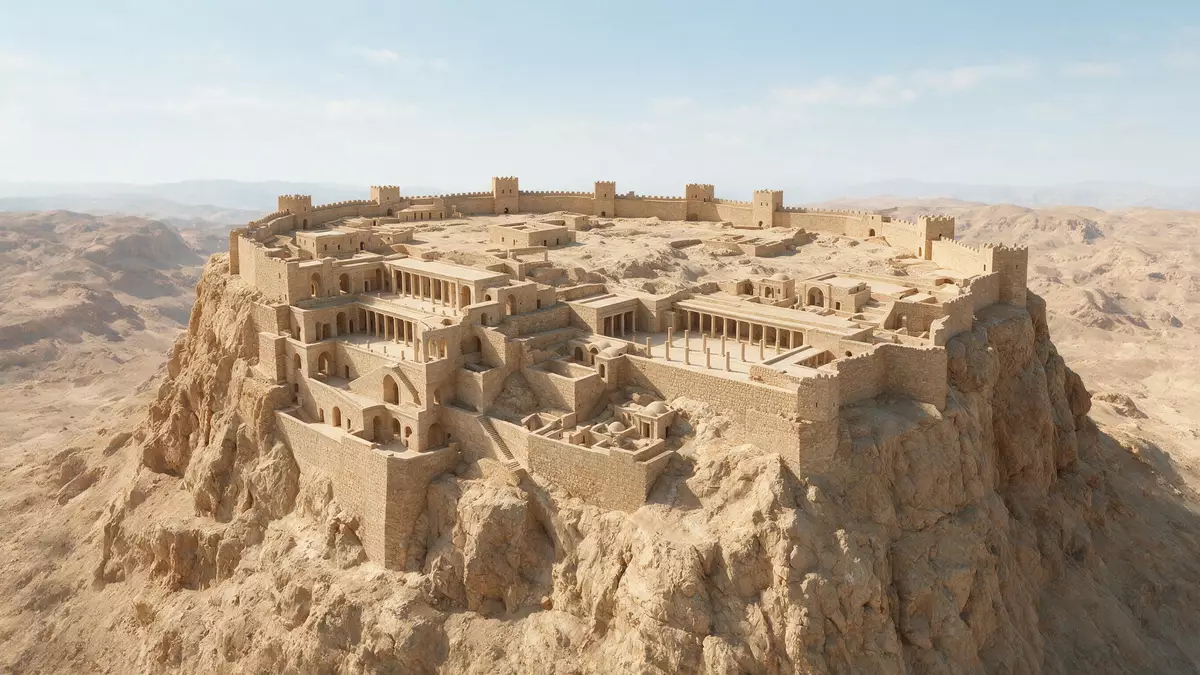
Metzada, best known internationally under the name Masada, is an ancient fortress complex on a high plateau overlooking the Dead Sea in southeastern Israel. Rising above the Judaean Desert, it combines stark geology with the remains of royal palaces and military defences from the first century BC and the first century CE.
A fortress on an isolated plateau
Metzada occupies the summit of an isolated mesa at the western edge of the Judaean Desert, near the south-western shore of the Dead Sea in Israel. The rhomboid-shaped plateau forms a flat summit area of several hectares, rising more than 400 m (about 1,300 ft) above the surrounding terrain and towering hundreds of metres above the level of the Dead Sea.ancient mountaintop fortress The cliffs fall steeply to deep gorges, giving the site a naturally fortified character that later builders reinforced with walls and towers.isolated rock cliff
The rock of Metzada is part of the desert escarpment that borders the Dead Sea basin, composed of strata including chalk, dolomite and marl that weather into pale, broken slopes beneath the summit. From the plateau, the surrounding landscape stretches away in muted colours: the Dead Sea to the east, desert hills and canyons to the west and north. The shape of the plateau itself, with long and short axes forming a rhomboid outline, determined the arrangement of the fortress buildings along its edges and interior.mesa-like plateau is flat and rhomboid-shaped
Herod’s desert palaces and defences
The first major phase of construction at Metzada is associated with Herod the Great, king of Judea under Roman rule, who developed the site in the late first century BC. Herod built an elaborate fortress complex that included palaces, bathhouses, storerooms and extensive water systems, turning the remote plateau into a royal refuge supported by substantial infrastructure.Herod the Great, King of Judea The fortifications followed the edge of the summit, enclosing the plateau within a casemate wall, a double wall divided into internal rooms and punctuated by towers.casemate wall
Among the best-known remains are the palace structures attributed to Herod, which stepped down the northern slope of the plateau and combined built rooms with open terraces. On the summit itself, levelled areas accommodated additional palace buildings and service quarters, while large cisterns cut into the rock and plastered inside formed part of a system designed to store water brought up from the surrounding desert. Inside the perimeter walls, traces of storerooms, administrative spaces and soldiers’ quarters form a dense archaeological landscape that reflects both royal use and later military occupation.ancient palaces and fortifications
Siege remains and World Heritage status
Metzada is closely linked with the first-century Jewish Revolt against Rome, when the plateau became a stronghold for rebels after the fall of Jerusalem in 70 CE. Roman forces besieged the mountain in the early 70s CE, building a circumvallation wall, several camps around the base and an assault ramp up one side of the cliff. Elements of these siege works, including the outlines of the camps and the massive ramp, remain visible in the desert around the rock and form part of the wider archaeological ensemble.last stand of the Zealots
The significance of Metzada as a combined natural and cultural site was reflected in its inscription as a UNESCO World Heritage Site in 2001.rugged natural fortress of majestic beauty The listing highlights the dramatic setting above the Dead Sea, the extensive remains of Herodian palaces and fortifications, and the evidence of the Roman siege that ended the rebels’ occupation in the first century CE. Together, the plateau fortress and the siege installations in the surrounding desert offer a rare combination of royal, military and geological features concentrated in a single landscape.
Visiting Metzada: what travellers from Western Europe should know
- Metzada lies in the southern Judaean Desert of Israel near the western shore of the Dead Sea, reached by roads that also connect to Ein Gedi and other Dead Sea sites.roads from the east and west
- The ascent from the foot of the cliffs to the summit involves a significant height gain of several hundred metres, and the plateau itself is a broad, exposed expanse of rock and archaeological remains.
- Metzada stands in a desert environment where summer heat can be intense and winter conditions are drier and cooler; the open summit offers little natural shade away from built structures.
- The official language is Hebrew and the currency is the Israeli new shekel.
- Entry requirements depend on your nationality; UK travellers can check the FCDO travel advice at gov.uk/foreign-travel-advice, Irish travellers the Department of Foreign Affairs at ireland.ie.
Searching for Metzada on social platforms
These links open searches for Metzada on each platform.Frequently asked questions about Metzada
Where is Metzada?
Metzada is in southeastern Israel on a high plateau at the western edge of the Judaean Desert, near the south-western shore of the Dead Sea.
What should visitors expect on a visit to Metzada?
Visitors encounter a broad, exposed summit covered with archaeological remains of palaces, fortifications and water systems, surrounded by steep cliffs and desert gorges.
What makes Metzada distinctive among historic sites?
Metzada combines a dramatic mesa above the Dead Sea with extensive Herodian palace ruins and visible Roman siege works, all recognised in its UNESCO World Heritage status.


