Meteora's monasteries rise from sandstone pillars
Published on 08/09/2026 at 15:04 | Editorial responsibility: Rafael Müller, Editor-in-Chief AD HOC NEWS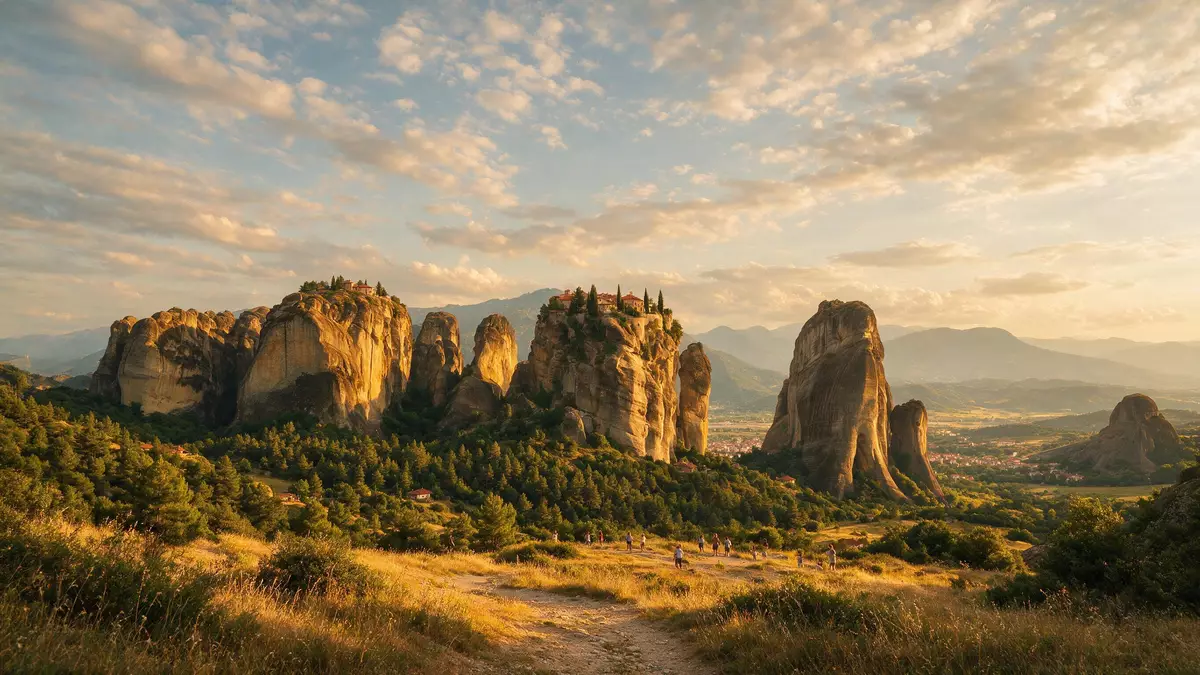
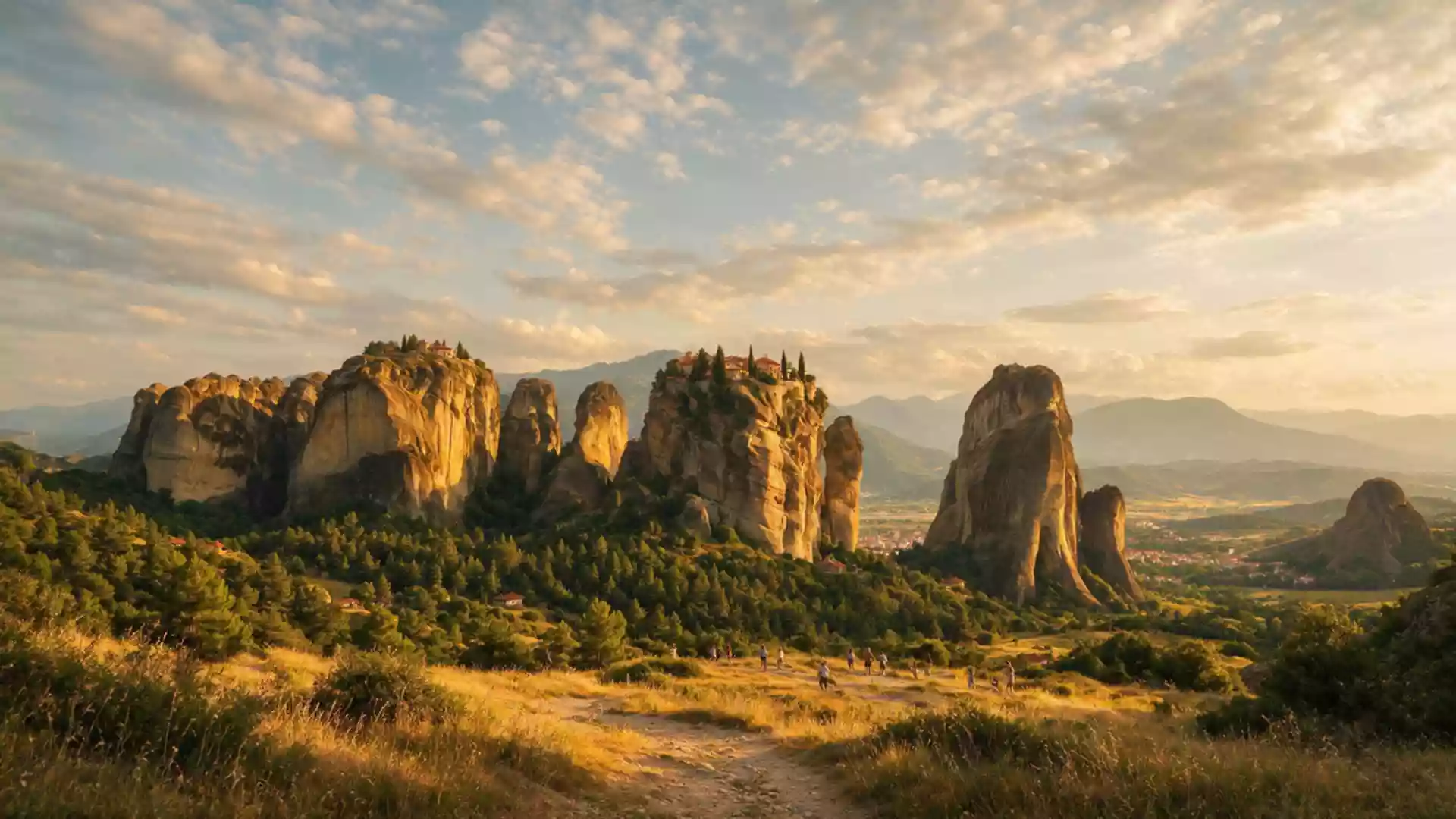
Meteora rises above Kalambaka as a cluster of Byzantine monasteries perched on sandstone pillars. The site combines vertical rock, monastic architecture and long views across the Thessalian plain.
Meteora’s stone pillars and monastic skyline
The name Meteora refers to the remarkable rock formations that dominate the landscape above Kalambaka. Their steep sides and flat tops create a natural stage for monasteries founded here in the Middle Ages.
The monastic buildings sit on ledges and summits, with masonry walls, tiled roofs and courtyards set against bare rock. The contrast between built space and cliff face is the defining visual feature of the site.
Byzantine monastic life in Thessaly
Meteora became a monastic centre in the fourteenth century, when hermits and communities settled among the rocks. The Great Meteoron monastery is traditionally linked with Athanasios the Meteorite, whose name remains central to the history of the place.
Other monasteries followed, including Varlaam, Roussanou, Holy Trinity, St Stephen and St Nicholas Anapausas. Together they reflect the endurance of Orthodox monastic practice in a landscape that is both severe and carefully ordered.
Rock, access and the human scale of the site
Paths, stairways and bridges connect the monasteries to the road above Kalambaka and the village of Kastraki. Visitors move between rock, masonry and open air, with each monastery framed by different cliffs and valleys.
The site entered the UNESCO World Heritage list in 1988. That designation reflects both the natural setting and the preserved monastic ensembles, which remain the most immediate way to read the history of Meteora.
Visiting Meteora: what travellers from Western Europe should know
- It lies above Kalambaka in central Greece and is reached by road and rail from Athens and Thessaloniki.
- Admission arrangements and opening hours are set by the site's operator and change with the season; the official website is the only binding source.
- Spring and autumn suit the softer light on the rocks, while early morning and late afternoon give the clearest views.
- Expect steps, sloping paths and short walks between viewpoints and monasteries.
- Greek is the local language, and cash and cards are both useful in Kalambaka and the nearby villages.
- Entry requirements depend on your nationality. UK travellers should check the FCDO travel advice at gov.uk/foreign-travel-advice; Irish travellers the Department of Foreign Affairs at ireland.ie; EU and EEA citizens their own national foreign ministry.
Searching for Meteora on social platforms
These links open searches for Meteora on each platform.
Frequently asked questions about Meteora
Where is Meteora?
Meteora is in central Greece above Kalambaka, on a landscape of sandstone pillars and monastery terraces. It forms part of the Thessalian plain’s northern edge.
What does a visit involve?
Expect road access, stairways, viewpoints and short walks between separate monasteries. The experience combines religious architecture with open rock scenery.
What makes Meteora distinctive?
The monasteries sit directly on steep rock towers and preserve a strong Byzantine and Orthodox character. The setting makes the whole complex legible from a distance and close up.